Thahbib Rahman
Research Analyst
Bitcoin rallied sharply alongside broader risk-on assets following news of a conditional US–Iran ceasefire. The announcement came just 90 minutes before President Trump’s Tuesday 8pm ET deadline – avoiding an ultimatum for Iran that had raised the risk of further escalation if terms were not met.

Bitcoin rallied sharply alongside broader risk-on assets following news of a conditional US–Iran ceasefire. The announcement came just 90 minutes before President Trump’s Tuesday 8pm ET deadline – avoiding an ultimatum for Iran that had raised the risk of further escalation if terms were not met.
The fragile agreement, which stipulated the immediate reopening of the Strait of Hormuz, helped catalyse a relief rally in crypto assets. BTC even posted a 3-week high and recovered back above $70K as the geopolitical risk premium eased.
The recovery in BTC spot, alongside rising open interest, suggests that market participants are actively adding risk as macro conditions improve.
Crypto led the move overnight, outperforming traditional assets as markets repriced lower near-term tail risks. While liquidations did contribute (with data showing that ~$56M cleared on Bybit BTC perpetuals), derivatives data suggests the rally was not driven purely by forced closure of bearish positions.
Open interest increased alongside the price move, indicating fresh positioning rather than a purely mechanical unwind of shorts positions.
Funding rates also remained relatively contained, lacking the sharp spikes typically associated with aggressive positioning shifts.
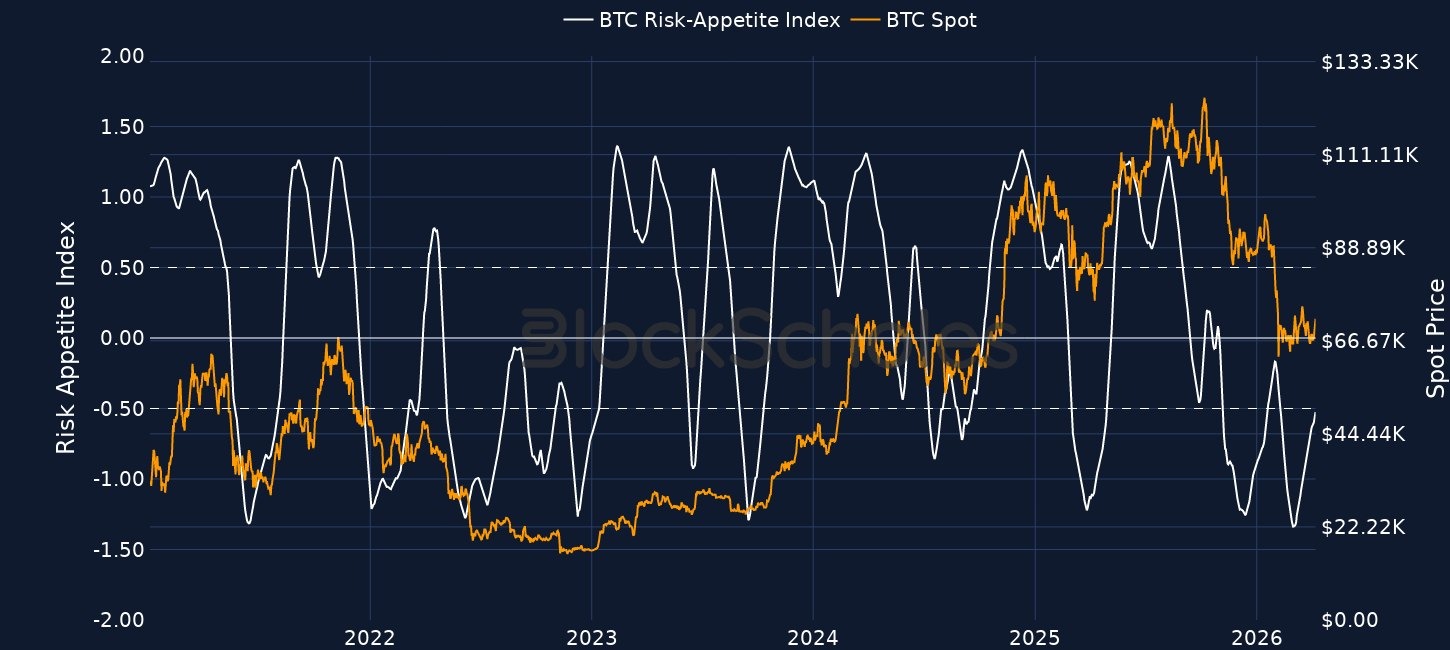
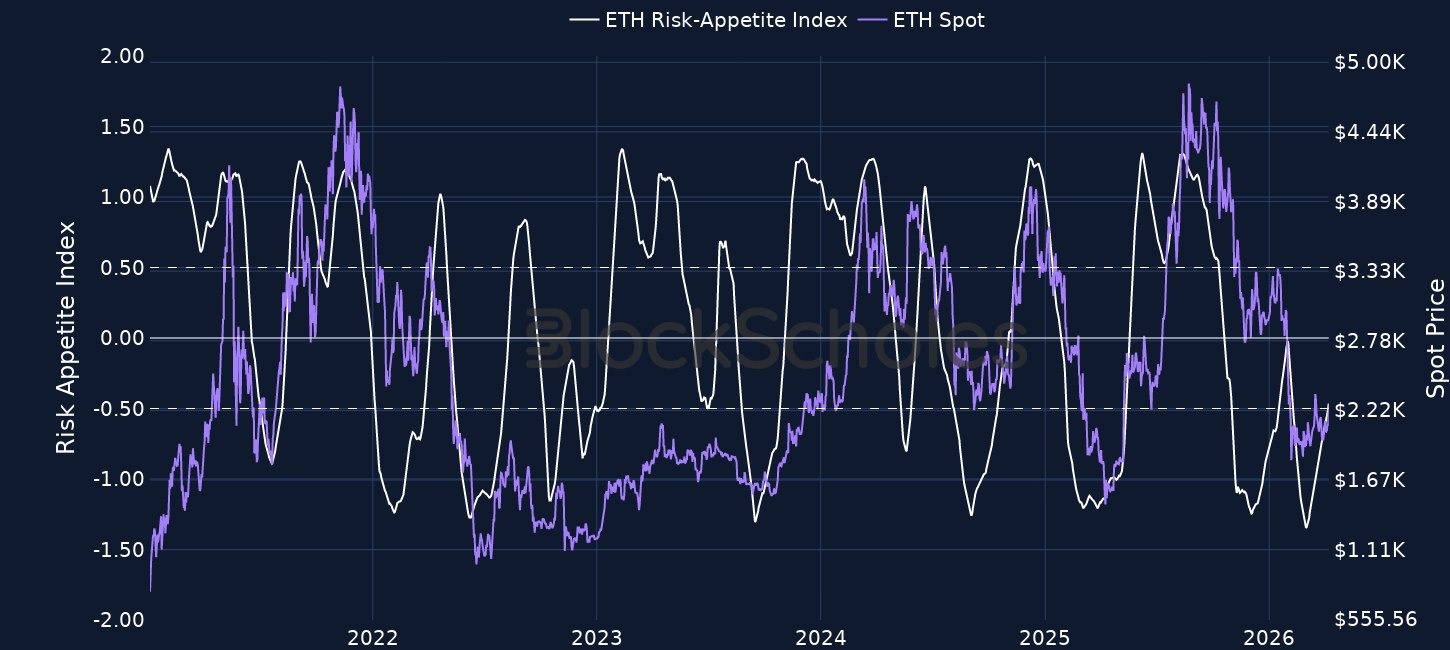
Block Scholes’ Risk Appetite Index measures the level of euphoria (above 1) or panic (below -1) in the spot market. Momentum in this index shows a strong relationship to spot returns.
As President Trump’s Tuesday 8pm ET deadline quickly approached, the President announced at 6.32pm ET that Iran had agreed to a “double sided CEASEFIRE” of two weeks, a period in which the two states could reach terms for a lasting peace deal and end the war in the Middle East.
Crucially for US and western interests, one of the conditions of the ceasefire was “the COMPLETE, IMMEDIATE, and SAFE OPENING of the Strait of Hormuz” to international commercial traffic.
The prospects of ending Iran’s chokehold of a vitally important shipping lane for oil exports from the Gulf region were broadly celebrated by markets.
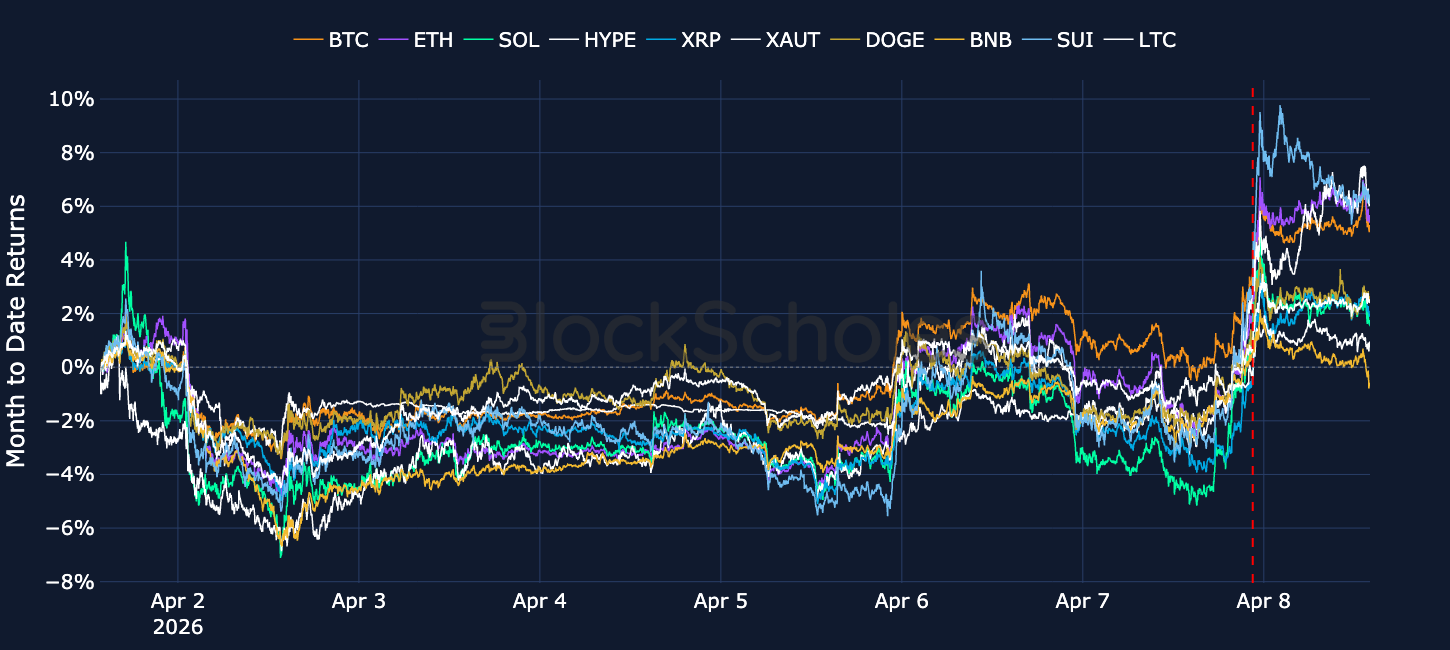
The move across assets actually preceded the post by some minutes. BTC recovered its early April losses to trade back above $70K for the first time since March 26. Gold (whose price is shown here as the XAUT perpetual swap contract traded on Bybit) also caught a bid, trading at April highs of $4.8K following the news of a ceasefire.
However, while Coinglass sources indicate that up to $56M of short positions were liquidated on Bybit’s BTC perps, the sharp repricing of risk higher was not driven solely by the forced closure of short positions.
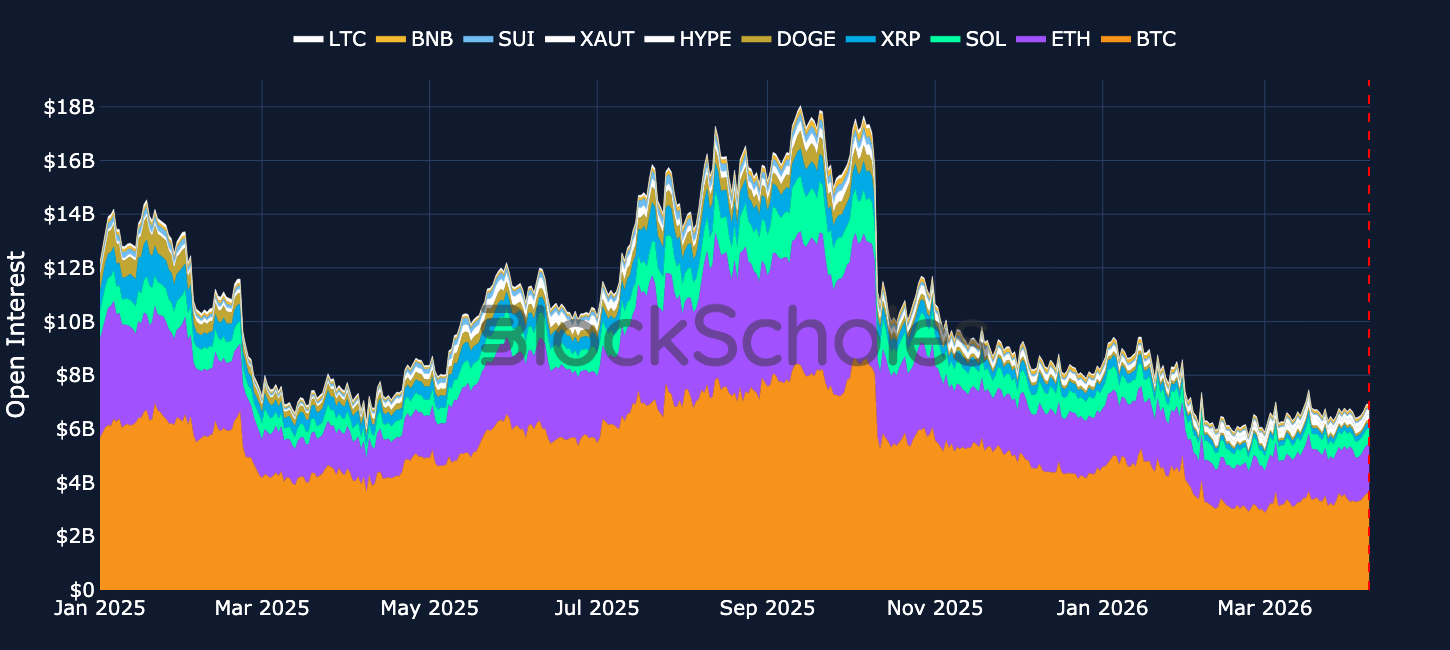
Open interest (while strongly depressed from its October 2025 highs of ~$18B) actually appears to have increased since the move, rather than fall dramatically in the way we saw in historically significant liquidation events such as Oct 10, 2025. We see this in the chart above, which displays the open interest levels of the perpetual swaps with the largest OI levels on the Bybit exchange.
This suggests that there was not the same magnitude of build up of highly-levered short positioning in these perps.
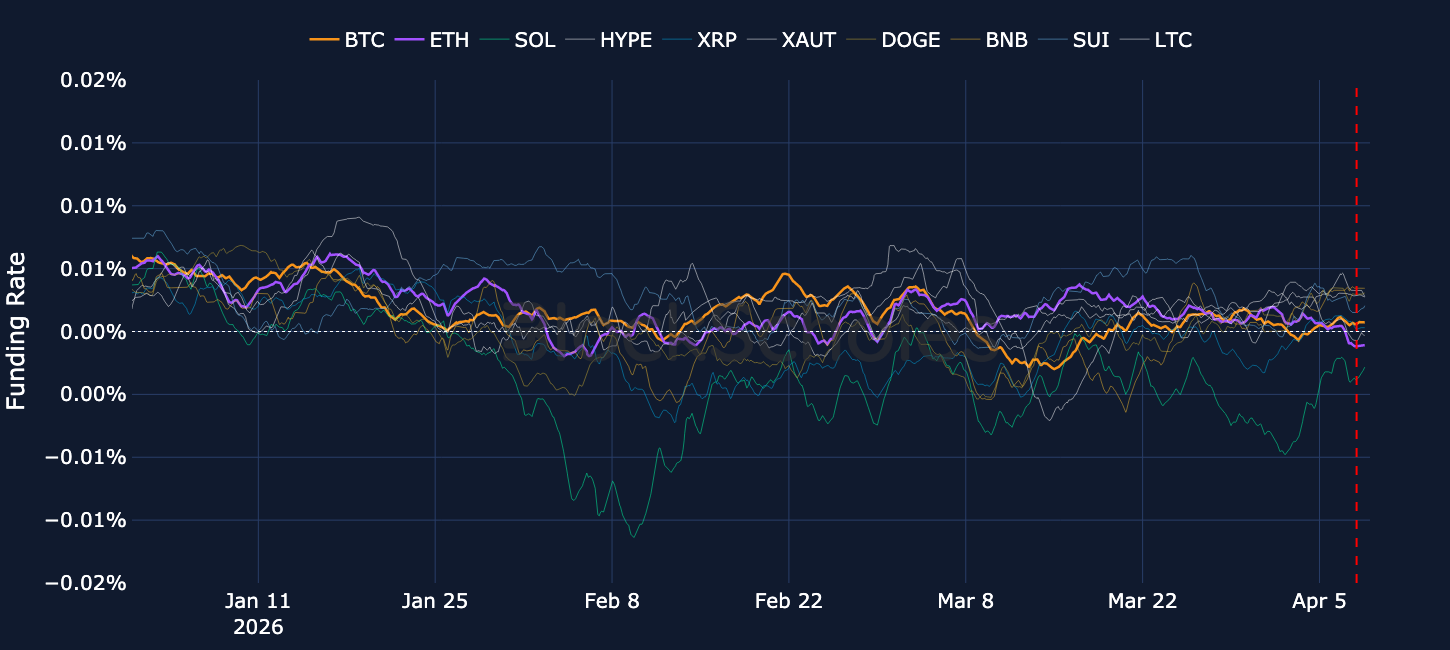
Funding rates of those same perpetual swap contracts paint a similar picture – while average funding rates have indeed been depressed since the initial strikes on Iran on Feb 28, 2026 (and for some tokens more than others), there was not a sharp spike higher that we would expect from the liquidation of short positions.
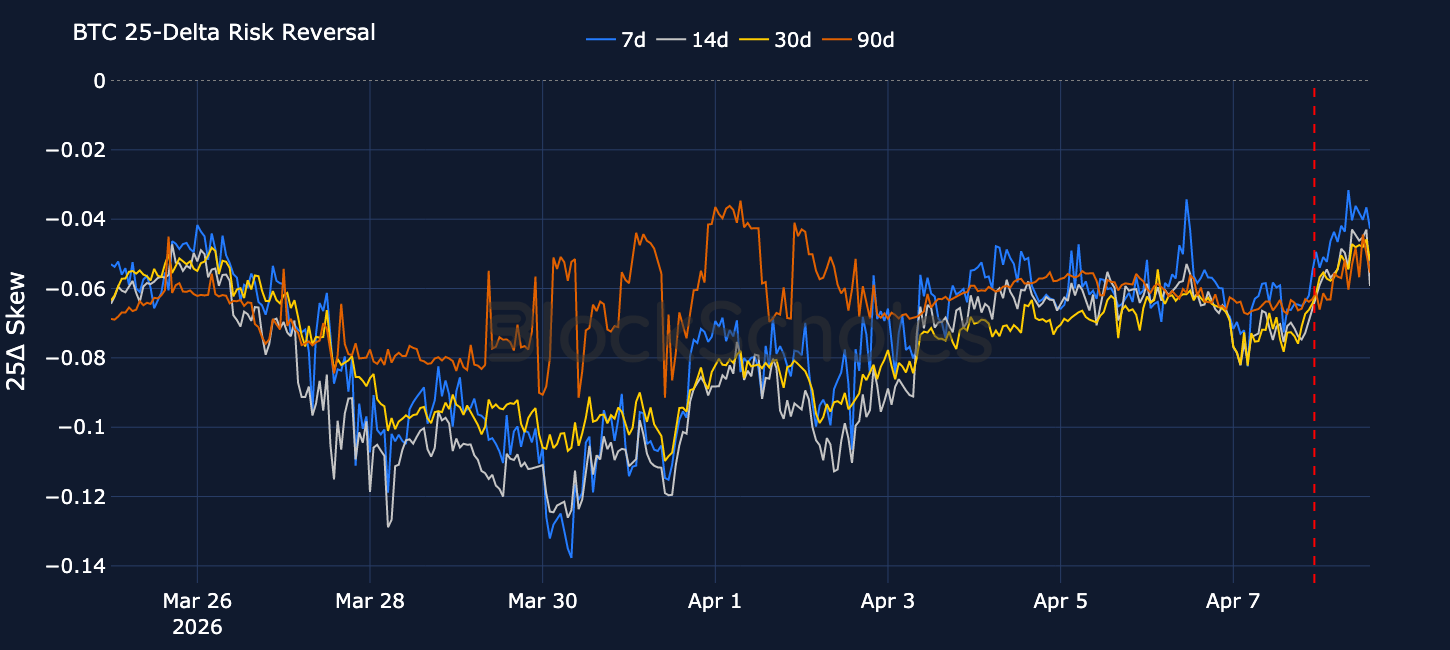
As shown in the chart above, which shows that the premium assigned to puts (i.e. a negative 25-delta skew) has narrowed notably since the news broke. Not only is that move at short tenors in reaction to the immediate spot rally – puts at tenors up to 3 months are all trading with less of a relative premium.
However, no tenor has flipped to bullish, suggesting a see-it-to-believe-it approach to promises of lasting peace and conditions sustainably favourable to a broader risk-on rally.
The $286M exploit of Solana-based decentralised exchange Drift unfolded on April 1, 2026, following what has since been revealed as a highly coordinated, months-long infiltration.
This immediately triggered a sell off in the protocol’s native token, Drift which dropped from $0.070 pre-announcement to lows of $0.033.
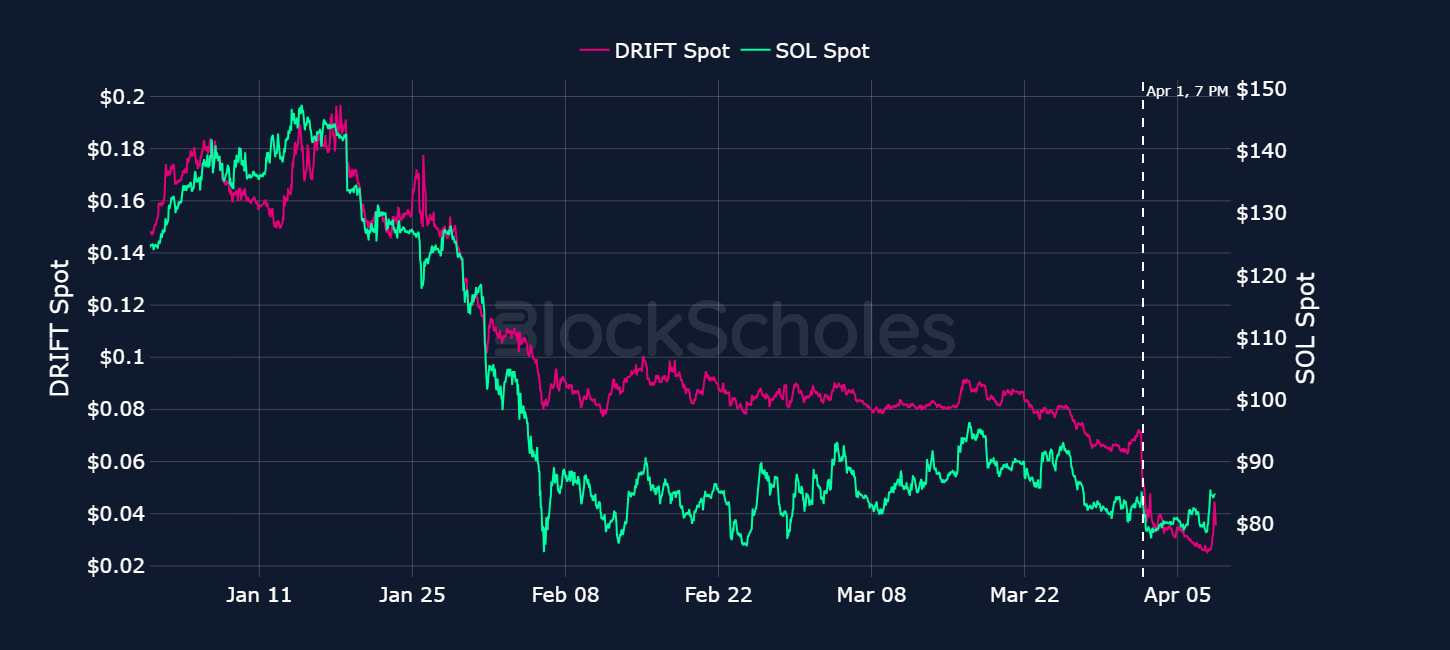
According to Drift’s April 5 update, the exploit was not opportunistic, but the result of a highly coordinated, multi-month infiltration that can be traced back to as early as Q3 2025.
Attackers (believed to be linked to a North Korean state-affiliated group) first approached contributors in person at industry conferences.
Over the following months, they built credibility through repeated interactions and technical discussions, deploying over $1M of capital into a Drift ecosystem vault and engaging across multiple workstreams.
Leveraging this trust, they introduced malicious code through shared repositories and applications, ultimately exploiting the protocol to pre-sign and delay transaction execution, enabling a sudden takeover of administrative control.
SOL’s spot price had already been trending lower into late March, meaning the immediate price reaction to the exploit was more muted than prior sell-offs.
However, the incident still triggered a clear divergence: SOL underperformed relative to ETH in the hours following the announcement, reflecting idiosyncratic risk tied specifically to the Solana ecosystem rather than a broader market move.
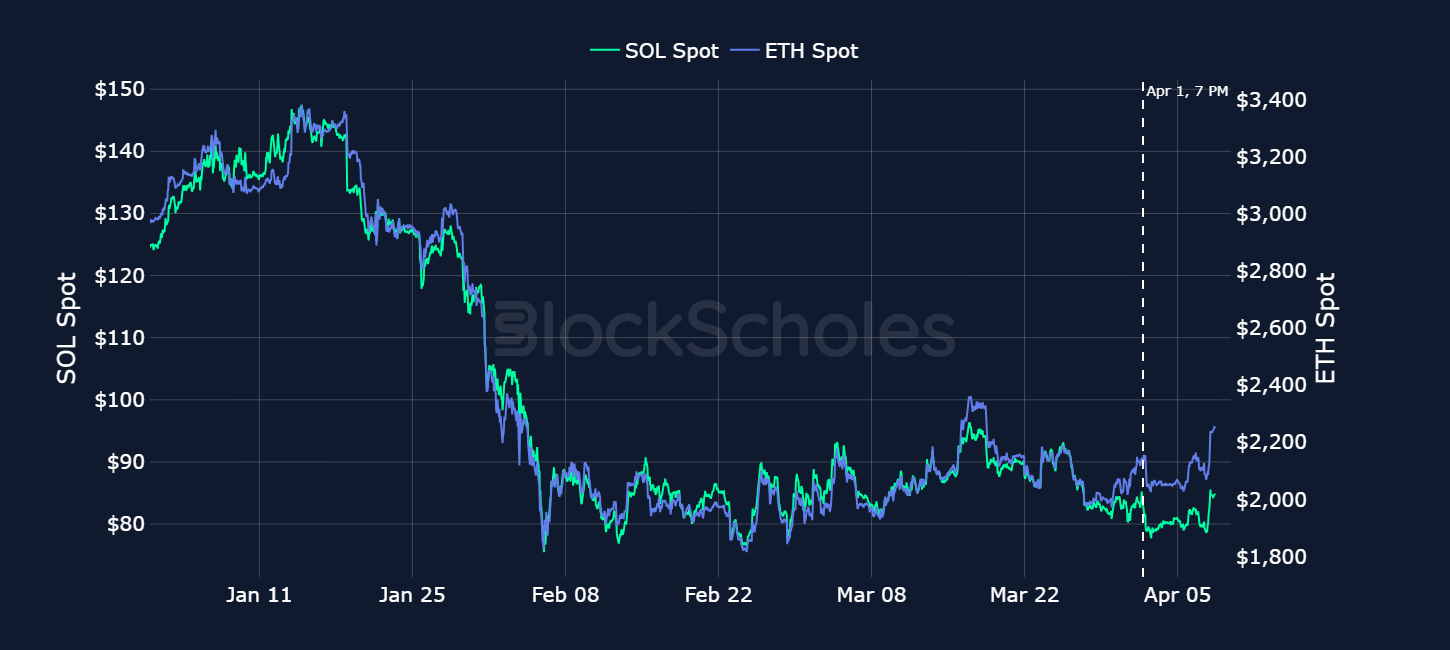
Notably, implied volatility moved lower in the sessions following the announcement, despite the scale of the exploit. While this may appear counterintuitive, implied volatility reflects forward-looking expectations of uncertainty rather than the severity of the event itself.In this case, the realised move in SOL was limited relative to prior drawdowns, and there was no sustained follow-through in price dislocation.
As a result, short-term hedging demand faded quickly, and options positioning was unwound, pushing implied volatility lower.
On the back of the $285M exploit of Drift, the Solana Foundation has announced new security initiatives, including STRIDE, a program led by Asymmetric Research to assess DeFi protocols against an eight-pillar framework, publish the results publicly, and provide enhanced security support based on scale.
Protocols with over $10M TVL that pass will receive ongoing 24/7 threat monitoring, while those above $100M TVL will also undergo formal verification of smart contracts. Drift have confirmed participation in the STRIDE program to strengthen their long-term security.It also launched the Solana Incident Response Network (SIRN), a membership-based group including firms such as Asymmetric Research, OtterSec, Neodyme, Squads, and ZeroShadow, focused on coordinating real-time incident response and facilitating threat intelligence sharing across the ecosystem.
Alongside this, the foundation is offering free access to a comprehensive suite of security tools and services, including:
all to help protocols detect, monitor, and mitigate risks more effectively.
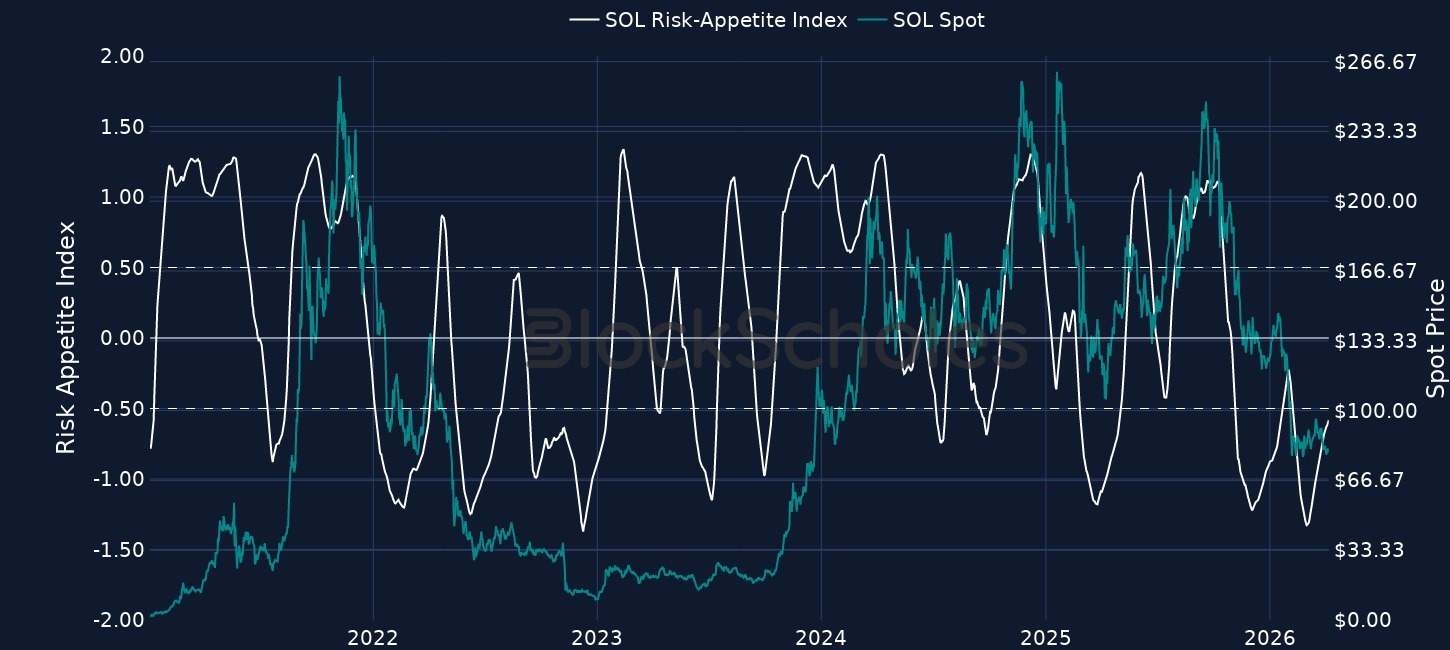
Although SOL has seen a knock-on drop in spot price following the exploit, Block Scholes’ Risk Appetite Index continues to edge higher. The indicator, which measures levels of euphoria (above 1) and panic (below -1), is now approaching the -0.5 level indicating a softening of cautious sentiment.
The latest purchases reduced its average cost basis slightly to $75,644 per BTC (vs. $75,694 on March 31).
For Q1 2026, the firm recorded a $14.46B unrealised loss on its bitcoin position, according to its latest 8-K filing which translates into a $2.42B deferred tax asset.
This latest acquisition places Metaplanet as the third-largest publicly traded holder of bitcoin, still well behind Strategy’s 762,099 BTC but narrowing the gap with Tether-backed Twenty One, which holds 43,514 BTC.
As of April 5, 2026, the firm holds 4,803,334 ETH, representing 3.98% of total supply, alongside 198 BTC, $864M in cash, and additional crypto positions.
Of this, 3,334,637 ETH (~69% of holdings) is staked, valued at $7.1B, generating approximately $196M in annualised staking revenue with a ~2.78% yield. Total crypto, cash, and other holdings stand at $11.4B.
He dismissed banking industry warnings about deposit flight on the back of incentivising stablecoin, as largely speculative, noting there’s still no real-world evidence to support those claims.
Grewal pointed to a potential Senate committee markup within weeks, setting the stage for a broader vote.
Coinbase continues to push back against any provisions that would restrict rewards on idle stablecoin balances, framing them as a threat to innovation and user benefits.
The upgrade will introduce a new Conditional Token Framework Exchange V2, a simplified order structure, faster order matching, and support for EIP-1271 signatures (which allow smart contract wallets to sign and validate trades).
The investment comes as Binance revealed it is testing an in-app prediction market feature in collaboration with Predict.fun, which is built on BNB Chain and previously went through YZi Labs’ incubation program.
Predict.fun is targeting the next phase of growth by improving capital efficiency, converting idle collateral into yield-generating assets via DeFi integration and creating a liquidity flywheel to maximize capital use.
The launch will include AVAX futures (5,000 AVAX) and Micro AVAX futures (500 AVAX), as well as SUI futures (50,000 SUI) and Micro SUI futures (5,000 SUI).
$BASED is the native utility token of the Based ecosystem. Based is a non-custodial DeFi application layer that aggregates multiple financial services into a single interface. Built on top of existing infrastructure such as Hyperliquid, it provides access to perpetuals trading, spot trading, and prediction markets through integrations to the platform. Users interact through a single wallet and retain full custody of their funds while accessing these services.
Based also offers a Visa Platinum card that enables users to spend crypto and trading gains anywhere Visa is accepted which provides cashback rewards in $BASED on purchases.
$BASED has a fixed total supply of 1,000,000,000 tokens, allocated as:
Of the Genesis Distribution (360 million tokens), 24% was released at the Token Generation Event (TGE) on 30 March 2026.
The utility of $BASED is embedded across the protocol, with holding and staking serving different roles.
Bybit listed $BASED on the Spot trading platform on 30 March 2026.
Open interest and trading volume data are sourced “as is” from the Bybit exchange platform API exclusively, and as such do not represent a comprehensive picture of the sum of trading activity across all derivatives markets or exchanges. The data visualized in this report consists of hourly and daily snapshots, recorded over the previous 30 days. Daily (hourly) snapshots of trade volume record the total sum of the notional value of trades recorded in the 24H (1 hour) period, beginning with the snapshot timestamp.
If not explicitly labeled as derived from another exchange, the input instrument prices to all derivatives analytics metrics in this report are sourced from the appropriate endpoints of Bybit’s public exchange platform API. In the event that data is labeled or referred to as representing the market on another exchange source, that data is sourced from the appropriate endpoint of each respective exchange’s public API.
Macroeconomic charts and data are sourced “as is” from the Bloomberg Terminal. Exchange data is sourced “as is” from publicly available exchange APIs. Block Scholes makes no claims about the veracity of public third-party data.
After acquisition of underlying-denominated raw data for open interest and trading volume on the Bybit exchange platform from Bybit’s API endpoint, equivalent dollar-denominated figures are calculated using the concurrent value of Block Scholes’s Spot Index for the relevant underlying asset.
Block Scholes’s Spot Index represents the aggregate Spot mid-price for a given currency across the top five CEXs by volume (with USD-quoted markets). It considers the proportion of total volume in the instrument on the exchange, as well as the deviation of a data point from those on other exchanges.
Futures prices are used for Block Scholes’s futures-implied yields calculation services in order to derive the constant-tenor annualized yields displayed in the Futures section of this report.
Options prices are used for Block Scholes’s implied volatility calculation services in order to calibrate volatility surfaces, from which all derivatives volatility analytics displayed in the BTC Options and ETH Options sections of this report are calculated. Volatility smiles are constructed by calibrating to mid-market prices observed in Bybit options markets. As part of the calibration process, prices go through rigorous filtration and cleaning steps, which ensures that the resulting volatility surface is arbitrage-free and has exceptional fit to the market observables.