The Five-Year Treasury Yield Passed Its 2023 Peak to Reach 5.03% After a Weak $70B Auction
The yield on five-year US Treasuries rose as much as 20bps to 5.03%, above its 2023 peak, after a weak $70B auction drew the highest yield since 2006, while the 10-year yield climbed to 5.13%, its highest since July 2007. Brent crude rose back above $100 a barrel, the S&P Global flash US composite PMI climbed to 58.4, and Fed Governor Michael Barr said further rate hikes are likely, as BTC fell below $84K. Bitcoin miner Hut 8 won the bidding for Poolin's two Texas data center sites with a $140M offer, and Blockchain.com and the NYSE agreed to explore tokenized US stock trading.
The S&P Global flash US composite PMI climbed to 58.4 in September, its highest since July 2021, and fed funds futures now price a 75.3% chance of an October rate hike, up from 55.4% a week ago.
Blockchain.com and the NYSE signed an agreement to explore giving Blockchain.com users access to tokenised US stocks and ETFs through the NYSE's planned 24/7 digital trading platform.
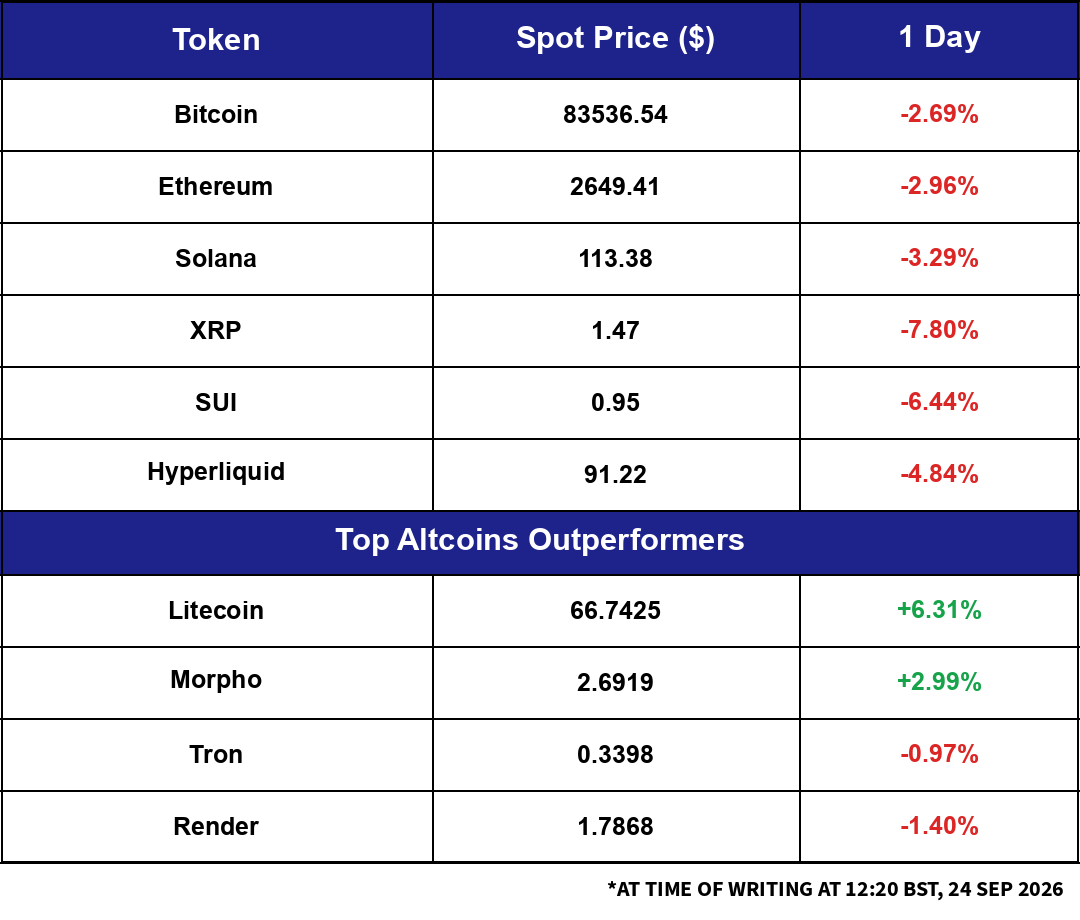
Market Snapshot: Overnight Moves
Macro & Markets
After a major rally through $87K, crypto assets joined US equities and treasuries lower after a rebound in oil prices and strong US economic data both reinforced the possibility of additional interest rate hikes by the Federal Reserve.
BTC fell below $84K while a decline in equities dragged the S&P 500 away from its near-record levels and down 0.75% for the day.
The Nasdaq-100 declined 0.85% while a gauge of chipmakers fell the most (-1.23%).
Brent crude rose back above $100 a barrel and is currently settled around $103, while the selloff in US treasuries picked up steam again.
The yield on five-year Treasuries rose as much as 20bps yesterday to 5.03%, surpassing the 2023 high of 4.99% at the peak of the Fed’s hiking cycle, and is now at levels last seen nearly two decades ago. That came after a weak $70B auction of five-year notes which drew the highest yield since 2006.
The slump was not just limited to the five year tenor however, yields were lifted across maturities by more than 10 basis points, with the 10-year yield rising almost 17bps to 5.13%, its highest level since July 2007.
The upward move in yields across the curve coincided with the rebound in Brent crude after Iranian President Masoud Pezeshkian told the United Nations that his country will not allow freedom of navigation through the Strait of Hormuz as long as US sanctions and blockades remain.
Pezeshkian added that Iran is ready to negotiate but will not respond to threats, and while it isn't interested in building an atomic weapon, it won't give up the right to develop nuclear technology for economic reasons.
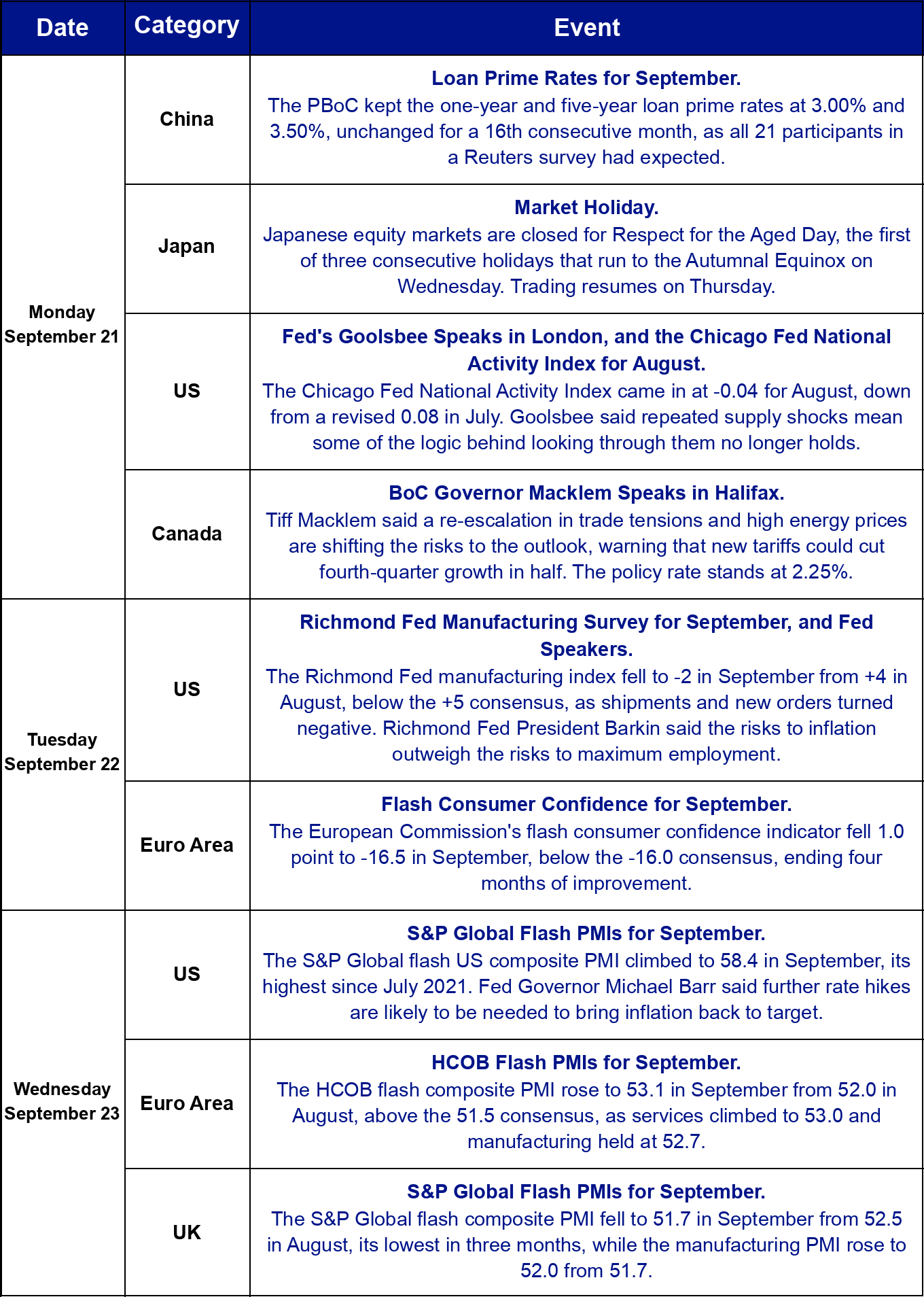
Higher yields also coincided with the S&P’s latest monthly business report which showed business activity in the US climbing at its fastest pace in over five years.
According to the report, the S&P Global flash US composite purchasing managers index climbed to 58.4 in September, a level last seen back in July 2021 as robust demand pushed up new orders and employment at manufacturers and service providers.
Chief business economist at S&P Global Market Intelligence said that "Business is clearly booming now in both manufacturing and services. However, this growth is being accompanied by some of the most severe supply chain bottlenecks seen in the near-two-decade survey history if the pandemic is excluded, with companies also reporting increasing problems finding suitable staff".
They then rose even further after Fed Governor Michael Barr, a voting member on the FOMC, said the central bank is “likely” to raise interest rates again in order to bring down inflation in the US.
According to Barr, the unanimous decision to raise the benchmark interest rate by a quarter point was the “right” one and “In my base case, further policy adjustments are likely to be needed to ensure inflation comes down to target in a timely fashion”.
He added that, “We needed to recalibrate monetary policy to reflect the balance of risks to our mandate goals”, referencing the economic risks stemming from the Iran war, the Russia-Ukraine conflict and a “surge in investment demand to support” the artificial intelligence buildout.
Fed fund futures pricing now indicates a 75.3% probability of a rate hike in the October FOMC meeting, up from 55.4% only a week ago.
Even an announcement from the US Treasury yesterday that it will purchase up to $6B of longer-dated government debt at 20-to-30 year maturities today, as part of the second operation under Treasury Secretary Scott Bessent's expanded bond buyback program, did not help bring yields down. The first operation on September 9 also targeted a maximum purchase size of $6B, though the Treasury ultimately ended up buying around $5.2B of debt maturing in 10-to-20 years.
Both 20 and 30-year yields rose following the announcement, with the latter hitting a session high of 5.38%, inches away from its peak earlier this month of almost 5.40% (the highest since 2007).
DeFi / Web3 / Altcoins / Crypto
Hut 8 has won the bidding for bankrupt crypto miner Poolin’s two Texas data center sites with a $140M offer, nearly three times the combined $52M opening bids.
The bid covers Poolin’s Pyote and Tarbush sites and still requires approval from the U.S. Bankruptcy Court for the District of New Jersey, with a sale hearing scheduled for Sept. 29.
Poolin filed for Chapter 11 bankruptcy in July after winding down mining and hosting operations at the sites.
Court filings put Poolin’s obligations at around $173.1M, including roughly $163.7M in unsecured IOUs owed to Poolin Wallet users after withdrawals were frozen in 2022.
The acquisition would expand Hut 8’s data center footprint as the company continues shifting from BTC mining toward AI infrastructure.
Hut 8 said its development pipeline had reached about 8.7 GW in Q2, up roughly 300 MW quarter-on-quarter.
The company has also secured 949 MW of contracted AI infrastructure capacity, representing an estimated $26.6B in expected contract value across its River Bend and Beacon Point campuses.
Privy, a Stripe-owned wallet infrastructure provider, has expanded its support for TRON, adding tools for developers to build wallets, stablecoin payment systems and treasury applications.
Developers can construct, sign and broadcast supported TRON transactions through Privy.
The integration also adds policy controls including spending limits, recipient allowlists and transaction approval or restriction rules.
Privy’s transfer APIs allow supported TRON assets to be moved programmatically, while webhooks can monitor wallet balances, transactions and other onchain activity in real time.
The tooling can be used for stablecoin payments, treasury workflows, wallets and other financial applications on TRON.
TRON said total transfer volume on the network is approaching $30T, with Onafriq and Paystack among the companies using Privy and TRON for wallet and treasury use cases.
Privy says more than 2,000 developers and businesses use its infrastructure across more than 160M accounts.
Blockchain.com and the NYSE have signed an agreement to explore giving Blockchain.com users access to tokenized U.S. stocks and ETFs through NYSE’s planned digital trading platform.
The service is not live and remains dependent on the launch of NYSE’s digital alternative trading system and regulatory approvals.
If launched, users could trade tokenized versions of U.S.-listed stocks and ETFs outside regular market hours.
NYSE’s planned platform is designed to support 24/7 trading, fractional shares, stablecoin funding and immediate onchain settlement.
It would support tokenized versions of traditional shares as well as shares issued directly as digital tokens, with holders retaining rights such as dividends and voting.
The agreement also covers market data sharing, with ICE Data Services planning to distribute Blockchain.com crypto data and Blockchain.com adding selected ICE and NYSE market data to its app.
Blockchain.com already offers tokenized U.S. stocks and ETFs outside the U.S. through Ondo Finance in selected markets.
The companies have not disclosed a launch date, the securities that would be available or the financial terms of the agreement.
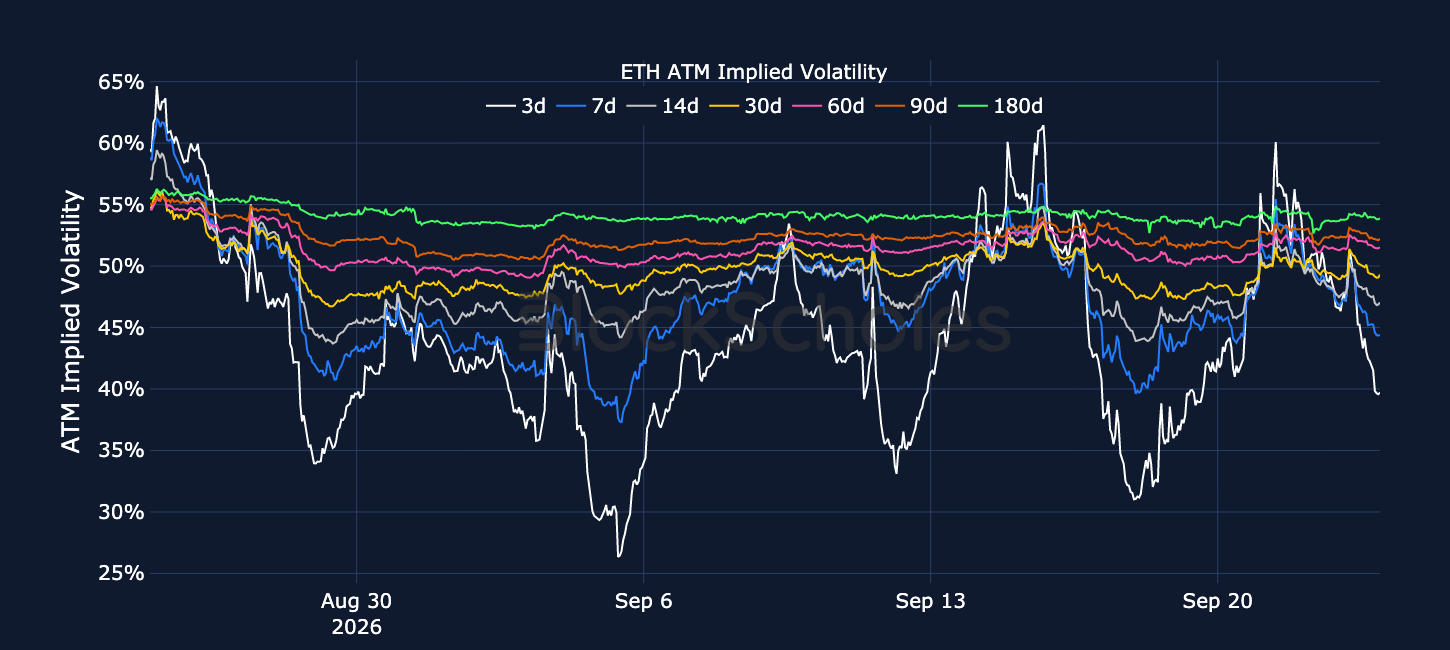
Figure 4. ETH at-the-money implied volatility across selected tenors. Source: Deribit, Block Scholes.
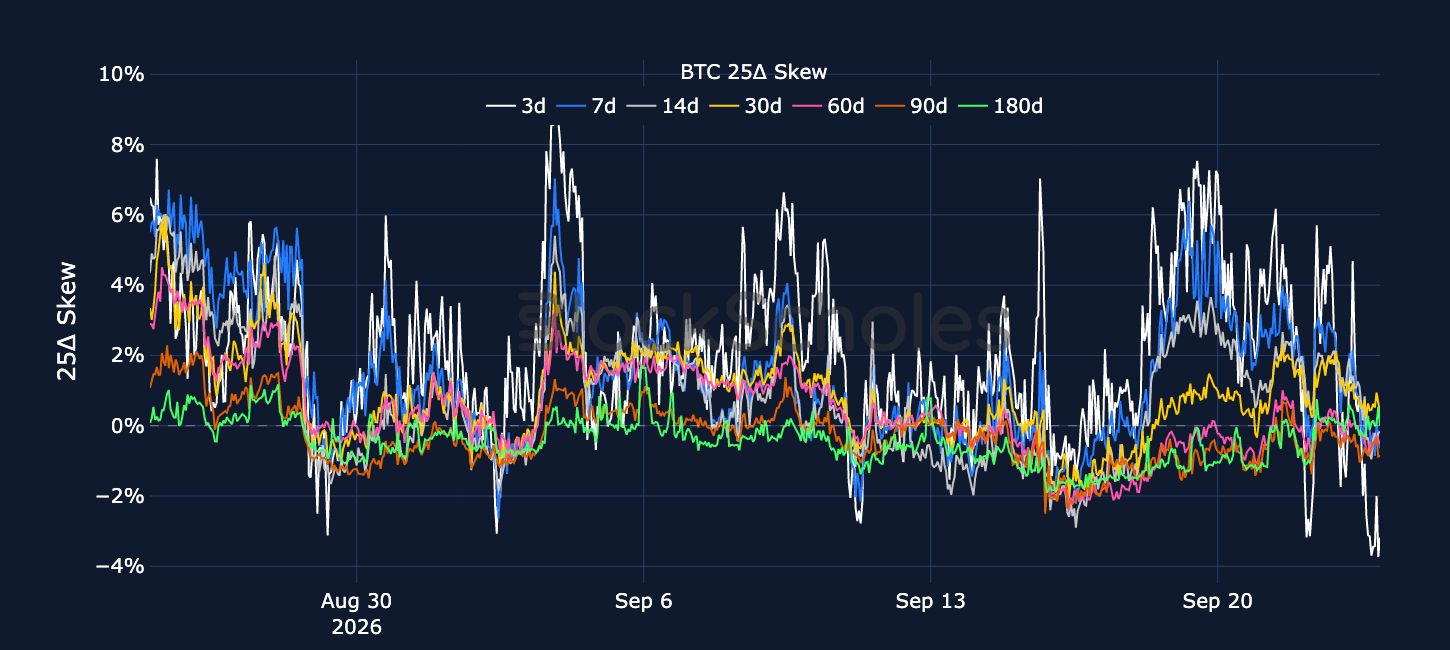
Figure 5. BTC 25-delta put-call skew ratio across selected tenors. Source: Deribit, Block Scholes.
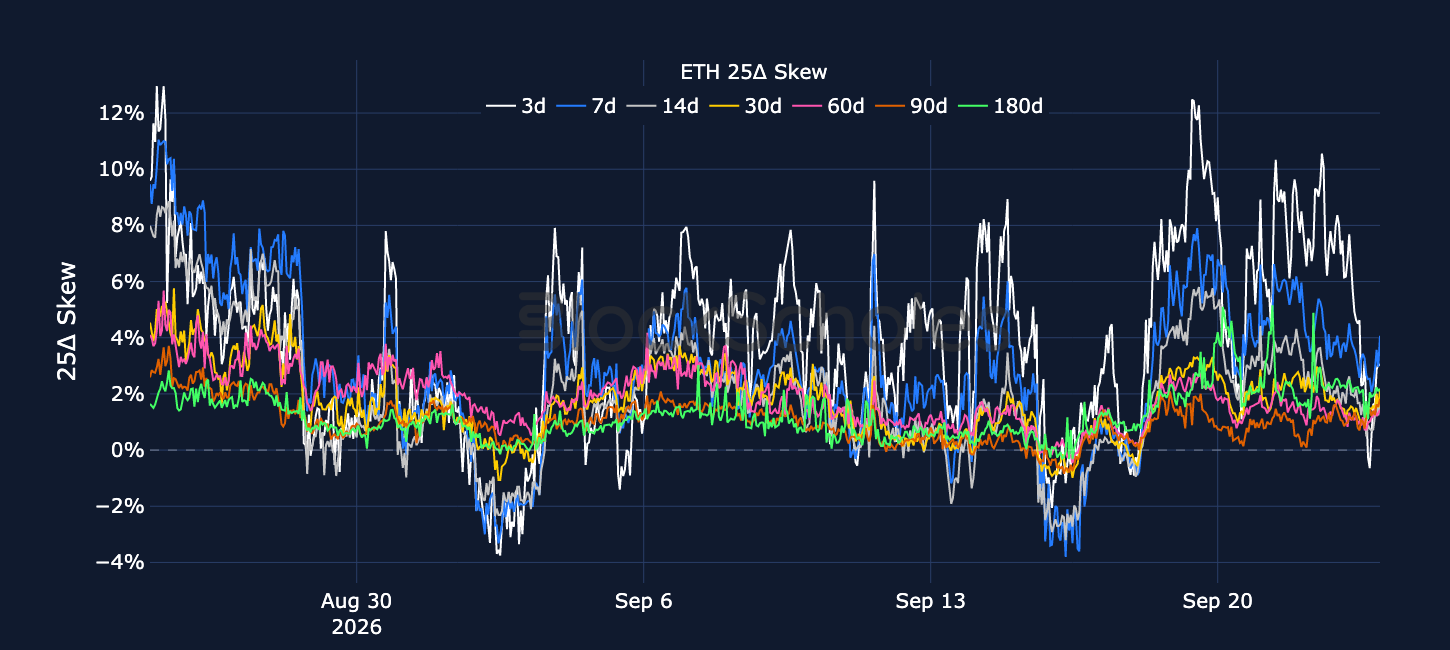
Figure 6. ETH 25-delta put-call skew ratio across selected tenors. Source: Deribit, Block Scholes.
Block Scholes is an FCA-regulated institutional crypto derivatives analytics platform. Live data, IV surfaces, and backtesting available via blockscholes.com.
The S&P Global flash US composite PMI climbed to 58.4 in September, its highest since July 2021, and fed funds futures now price a 75.3% chance of an October rate hike, up from 55.4% a week ago.
Blockchain.com and the NYSE signed an agreement to explore giving Blockchain.com users access to tokenised US stocks and ETFs through the NYSE's planned 24/7 digital trading platform.
Market Snapshot: Overnight Moves
Macro & Markets
After a major rally through $87K, crypto assets joined US equities and treasuries lower after a rebound in oil prices and strong US economic data both reinforced the possibility of additional interest rate hikes by the Federal Reserve.
BTC fell below $84K while a decline in equities dragged the S&P 500 away from its near-record levels and down 0.75% for the day.
The Nasdaq-100 declined 0.85% while a gauge of chipmakers fell the most (-1.23%).
Brent crude rose back above $100 a barrel and is currently settled around $103, while the selloff in US treasuries picked up steam again.
Don't miss what's next
Upgrade your Block Scholes account to unlock this article and other exclusive insights
The S&P Global flash US composite PMI climbed to 58.4 in September, its highest since July 2021, and fed funds futures now price a 75.3% chance of an October rate hike, up from 55.4% a week ago.
Blockchain.com and the NYSE signed an agreement to explore giving Blockchain.com users access to tokenised US stocks and ETFs through the NYSE's planned 24/7 digital trading platform.
Market Snapshot: Overnight Moves
Macro & Markets
After a major rally through $87K, crypto assets joined US equities and treasuries lower after a rebound in oil prices and strong US economic data both reinforced the possibility of additional interest rate hikes by the Federal Reserve.
BTC fell below $84K while a decline in equities dragged the S&P 500 away from its near-record levels and down 0.75% for the day.
The Nasdaq-100 declined 0.85% while a gauge of chipmakers fell the most (-1.23%).
Brent crude rose back above $100 a barrel and is currently settled around $103, while the selloff in US treasuries picked up steam again.
Don't miss what's next
Upgrade your Block Scholes account to unlock this article and other exclusive insights
Premium
$30/mo
Access previous and future reports, market insights & deep dives.
The yield on five-year US Treasuries rose as much as 20bps to 5.03%, above its 2023 peak, after a weak $70B auction drew the highest yield since 2006, while the 10-year yield climbed to 5.13%, its highest since July 2007. Brent crude rose back above $100 a barrel, the S&P Global flash US composite PMI climbed to 58.4, and Fed Governor Michael Barr said further rate hikes are likely, as BTC fell below $84K. Bitcoin miner Hut 8 won the bidding for Poolin's two Texas data center sites with a $140M offer, and Blockchain.com and the NYSE agreed to explore tokenized US stock trading.
Binance bought a $100M stake in Circle through a private placement and signed a five-year agreement to promote USDC on its platform, replacing deals signed in 2024 and 2025. Boston Fed President Susan Collins and Richmond Fed President Tom Barkin backed last week's rate hike, with Barkin saying the risks to inflation outweigh those to employment, while Brent crude fell below $100 a barrel for a sixth straight day. Canada's six largest banks are jointly exploring a Canadian-dollar tokenised deposit system, and Raiffeisen Bank International will offer crypto to 18M customers through Bitpanda.