US Banking Associations Are Building a Shared Blockchain for Tokenised Deposits
Thirty-nine US state banking associations, representing 3,283 banks with about $21.8T in assets, formed the BankChain Alliance, a bank-owned blockchain network for tokenised deposits and regulated stablecoins targeted for launch in 2027. Brent fell almost $10 to around $85 after Tehran restarted talks with Oman on a navigational corridor through the Strait of Hormuz, while BTC met resistance above $80K and trades near $78K.
Thirty-nine US state banking associations, representing 3,283 banks with about $21.8T in assets, formed the BankChain Alliance — a nationwide, bank-owned blockchain network for tokenised deposits, regulated stablecoins and programmable payments, targeted for launch in 2027.
Brent fell almost $10 to settle around $85 after Tehran said it had restarted talks with Oman on a 'joint temporary navigational corridor' through the Strait of Hormuz. BTC met resistance above $80K and trades near $78K, still up more than 20% on the week.
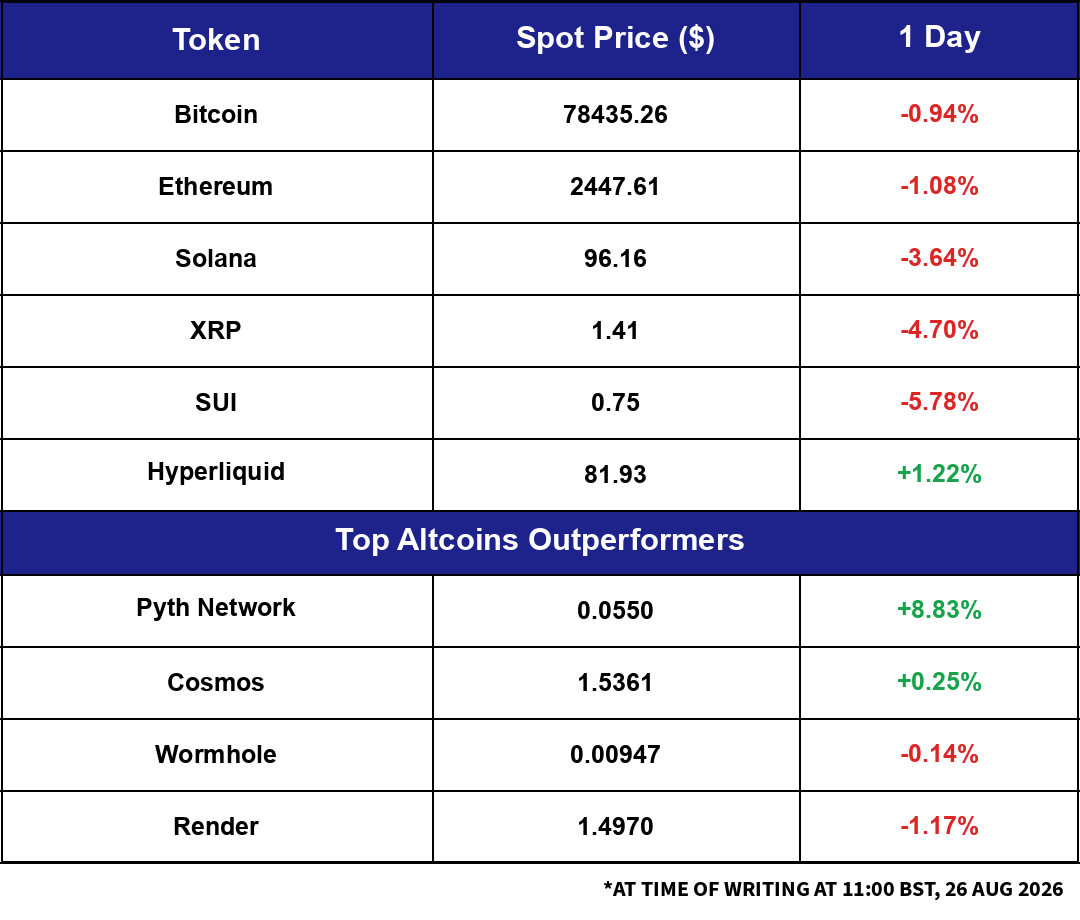
Market Snapshot: Overnight Moves
Macro & Markets
After running up past $80K, BTC is facing some resistance at the psychological level and has since given up some of its gains to trade around $78K. Nonetheless, over the past week, it is still up more than 20%.
US equities rose in trading yesterday amidst a drop in oil prices and lower bond yields, as traders await Nvidia Corp.’s earnings report later today for signs on the robustness of the AI-trade.
The S&P 500 finished yesterday’s session up 0.32%, with the Nasdaq-100 rising 0.64% and a gauge of chipmakers rebounding to end a seven-day losing streak.
Brent crude fell by almost $10 per barrel and has now settled around $85 as talks between Iran and Oman revived hopes that the Strait of Hormuz could reopen and an article from the New York Times claimed the US is preparing to send diplomats back into the Middle East.
After Treasury Secretary Scott Bessent announced ‘Operation Economic Outcast’, a form of maximum economic pressure on Iran and any of its trading partners, Tehran announced that it had restarted talks with Oman to manage the strait.
The two countries had already held intermittent discussions for weeks over the past few months, though a conclusive agreement has to be finalised.
On Tuesday both countries said that they discussed "a joint temporary navigational corridor" through the strait and agreed to clear it of mines.
While those discussions were focused on the waterway only, talks to end the conflict entirely are also in progress, Pakistan and Iran made "significant progress" in talks according to Pakistan's interior minister on Tuesday.
In China, President Xi Jinping’s government has suggested that the US’s economic isolation plan for Iran will not disrupt Iran-China trade.
Hours after the US sanctioned dozens of Chinese entities for aiding Iran, Beijing responded that its relationship with Iran “should not be disrupted or undermined.” Foreign Ministry spokesperson Lin Jian warned that China will take “all necessary measures” to safeguard its interests.
Longer-dated US treasury yields declined in trading yesterday, with the 30-year US yield currently at 5.18% compared to last week’s multi-year highs of 5.31%.
During a speech yesterday, Richmond Fed President Tom Barkin warned that if the US government’s debt continues to grow on its current path, it will eventually force a reckoning.
Asked directly about total US public debt having surpassed $40T, Barkin cautioned that investors will not have an indefinite appetite to finance the government’s borrowing, "At some point, people stop buying your debt and that's the risk out there".
DeFi / Web3 / Altcoins / Crypto
Japan’s Financial Services Agency, Ministry of Finance and Bank of Japan plan to work with domestic financial institutions on a blockchain-based system that could reduce settlement times for stocks and Japanese government bonds from two days to near real time, partly by tokenizing a portion of banks’ BOJ account balances for settlement.
The agencies expect to outline the blockchain’s design, institutional responsibilities and development roadmap by early 2027, with a potential launch within several years and full implementation targeted for the early 2030s, according to Nikkei.
Thirty-nine U.S. state banking associations, collectively representing 3,283 banks with about $21.8T in assets, have formed the BankChain Alliance to build a nationwide, bank-owned blockchain network targeted for launch in 2027, with Florida Bankers Association CEO and former CFPB Director Kathy Kraninger serving as interim chair.
The network is intended to give community and regional banks shared infrastructure for tokenized bank deposits, regulated stablecoins, programmable payments and automated settlement, allowing smaller institutions to offer onchain financial services without each having to develop their own blockchain.
The alliance is still selecting its technology provider, but plans for the system to interoperate with other blockchain networks and remain owned and governed by participating banks, positioning it as the banking industry's response to the growth of stablecoins and other blockchain-based payment rails.
TRON, a Layer 1 blockchain network founded by Justin Sun, has surpassed 400 million total accounts, up from 300 million in April 2025, according to TRON DAO; the figure represents blockchain accounts rather than 400 million unique individual users.
The network says it has processed more than 15.2 billion transactions and nearly $30T in cumulative transfer volume, with stablecoins a major use case and more than $94B of circulating USDT currently hosted on TRON.
Grayscale, a crypto asset manager owned by Digital Currency Group, launched ZCSH on NYSE Arca as the first U.S. ETF offering direct exposure to Zcash. The fund holds ZEC, with each share representing a fractional interest in the trust’s ZEC holdings, less expenses and liabilities; Coinbase Custody serves as custodian.
The ETF charges a 2.5% annual sponsor fee paid in ZEC, meaning the amount of ZEC backing each share gradually declines as fees are deducted; Grayscale has committed the fee it receives for up to the first 12 months to initiatives supporting the Zcash ecosystem.
The launch followed a roughly 45% rise in ZEC, while a separate DCG subsidiary has been discussing a potential acquisition of about 200,000 ZEC through the fund, though that transaction was nonbinding when disclosed.
Revolut, the UK-headquartered digital bank and payments company, has launched EURR, a euro-backed stablecoin initially available to eligible customers in Denmark, Poland and Portugal, marking the first product in a broader planned stablecoin strategy.
Revolut plans to introduce stablecoins linked to additional fiat currencies, aiming to use the tokens for cross-border payments and business transactions as it expands blockchain-based settlement within its financial-services platform.
Kalshi, a CFTC-regulated prediction-market platform that lets users trade contracts on real-world event outcomes, has raised about $1.12B through private equity sales since April 3, according to its latest SEC Form D, out of a planned offering of nearly $1.5B.
The total may include its previously announced $1B Series F led by Coatue at a $22B valuation, backed by investors including Sequoia Capital, Andreessen Horowitz, Paradigm, Morgan Stanley and Ark Invest, while Kalshi has since reportedly been seeking another $750M at a $40B valuation.
LayerZero, a blockchain interoperability protocol used to move data and assets across networks, unveiled ATLAS, exchange infrastructure built on its Zero blockchain that lets exchanges, brokers and financial institutions use a shared backend for trade matching, clearing, settlement and risk management while retaining their own customer-facing platforms.
ATLAS will support both open and permissioned institutional markets spanning assets such as spot tokens, perpetuals, stocks, commodities and prediction markets, and is expected to launch later this year; Zero was developed for financial markets with collaborators including Citadel Securities, DTCC, ARK Invest and Intercontinental Exchange (ICE).
ZRO rose more than 16% following the announcement as LayerZero detailed new utility for the token: ZRO will be used for Zero’s network security, gas and governance, while ATLAS venues can stake it for higher fee rebates and 75% of remaining Open ATLAS fees, after venue rebates, will fund ZRO buybacks and burns.
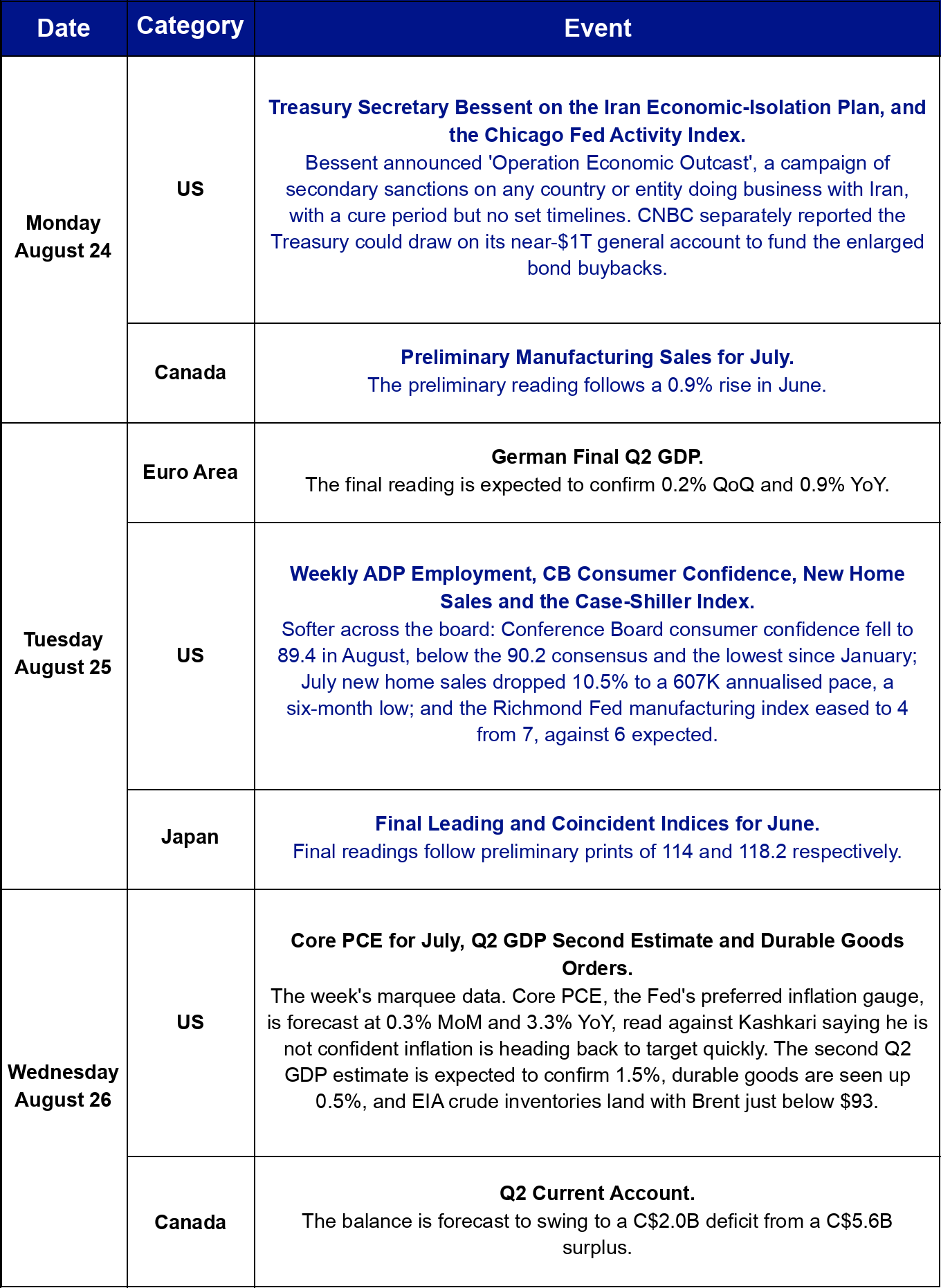
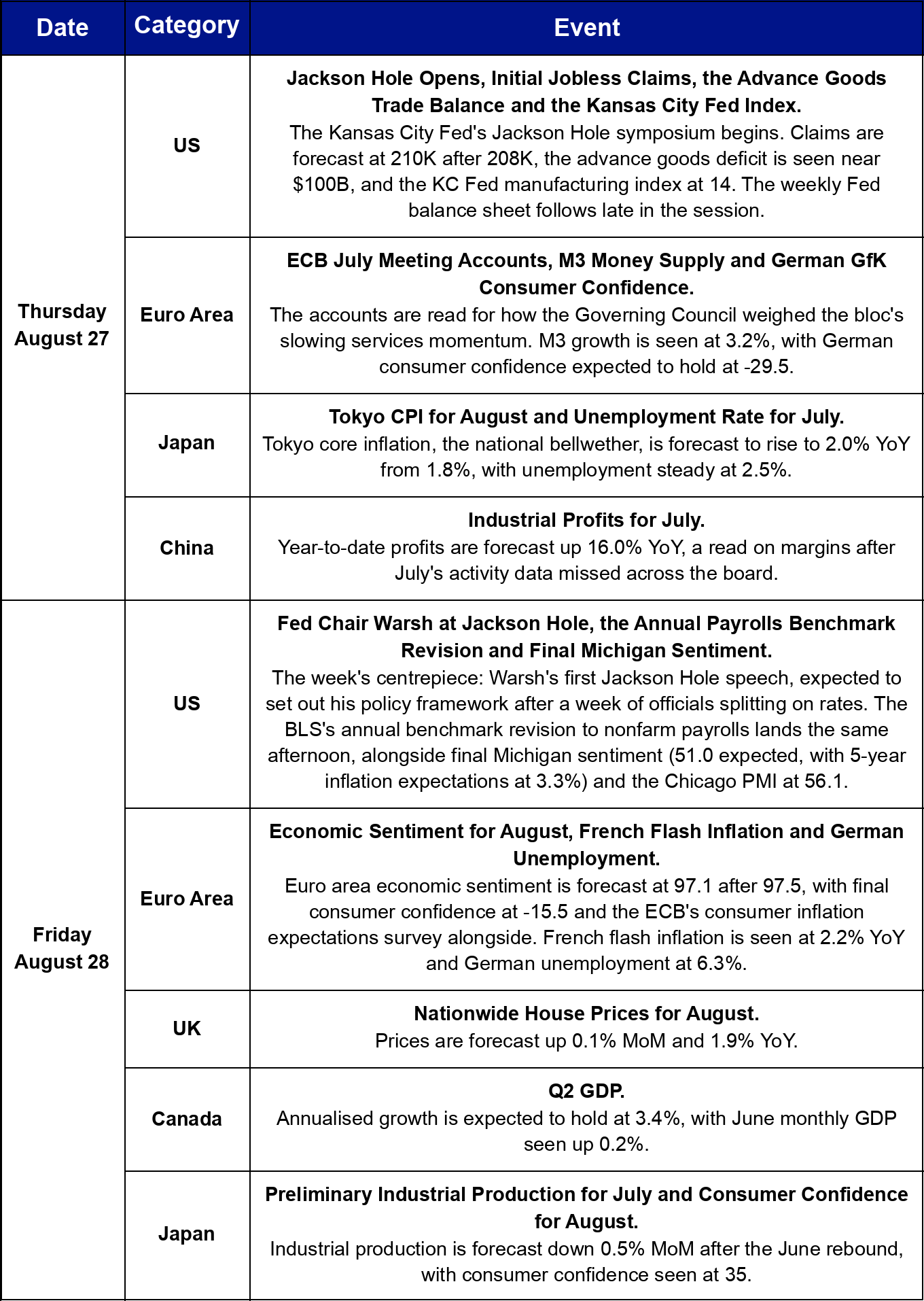
This Week's Calendar
Charts of the Day
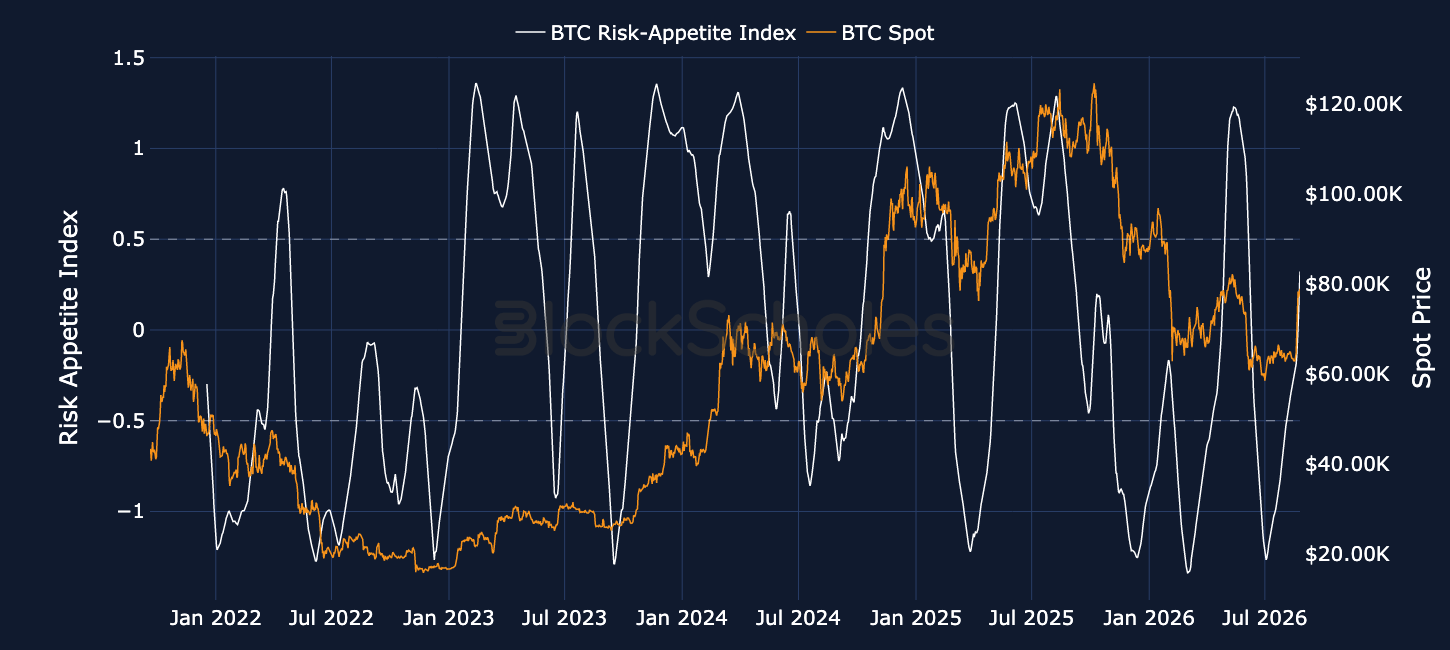
Figure 1. Block Scholes BTC Risk-Appetite Index (white, left-hand axis) and BTC spot price (orange, right-hand axis).
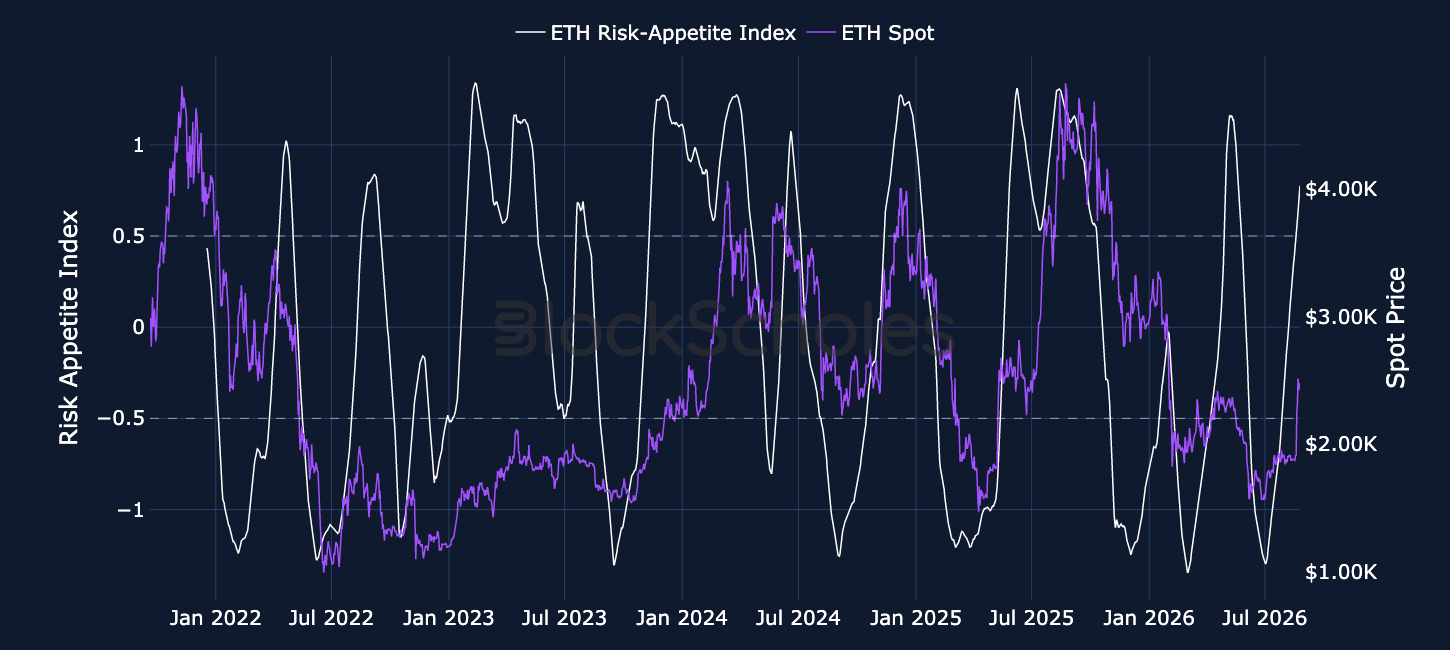
Figure 2. Block Scholes ETH Risk-Appetite Index (white, left-hand axis) and ETH spot price (purple, right-hand axis).
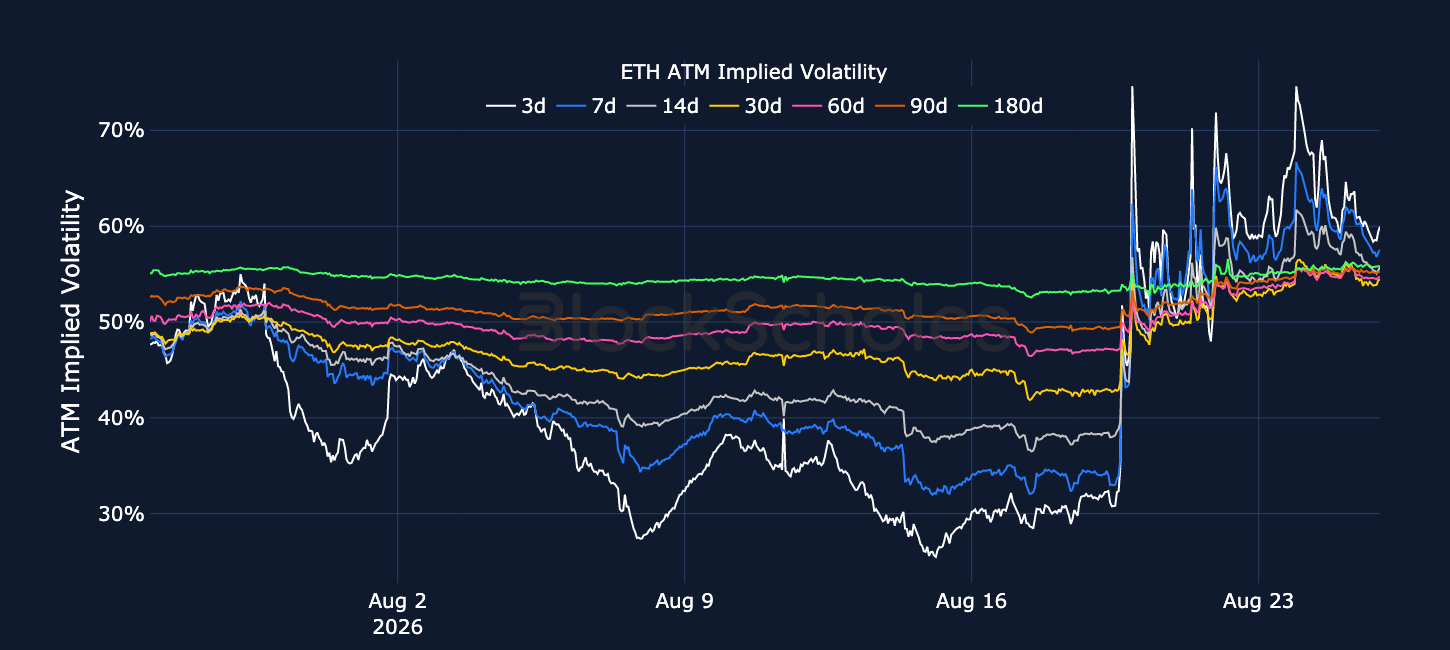
Figure 4. ETH at-the-money implied volatility across selected tenors. Source: Deribit, Block Scholes.
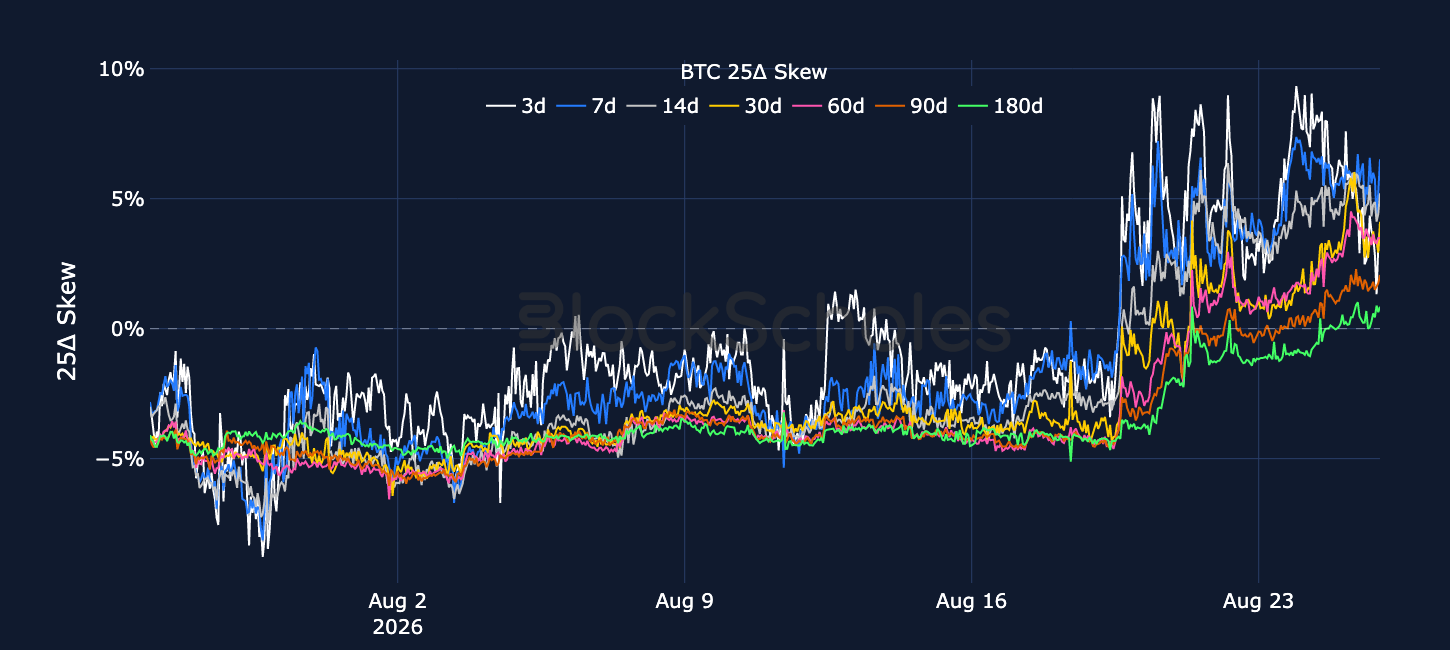
Figure 5. BTC 25-delta put-call skew ratio across selected tenors. Source: Deribit, Block Scholes.
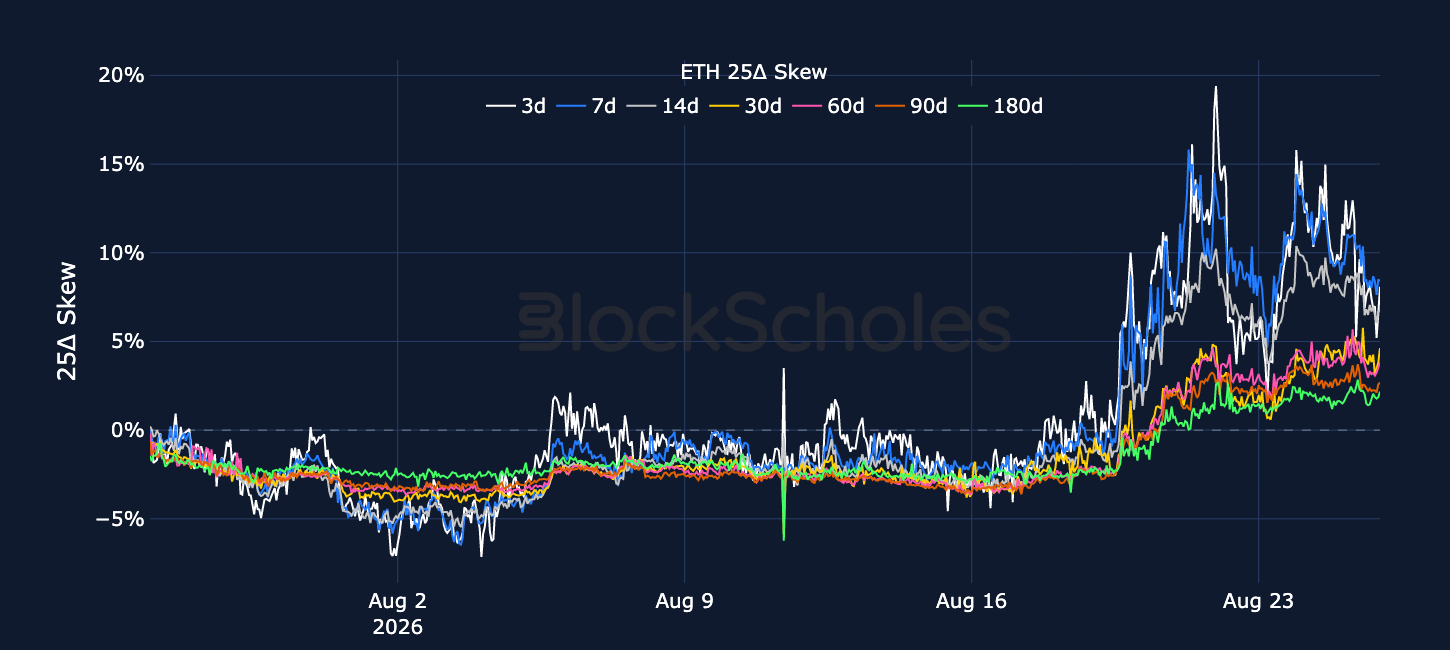
Figure 6. ETH 25-delta put-call skew ratio across selected tenors. Source: Deribit, Block Scholes.
Block Scholes is an FCA-regulated institutional crypto derivatives analytics platform. Live data, IV surfaces, and backtesting available via blockscholes.com.
Thirty-nine US state banking associations, representing 3,283 banks with about $21.8T in assets, formed the BankChain Alliance — a nationwide, bank-owned blockchain network for tokenised deposits, regulated stablecoins and programmable payments, targeted for launch in 2027.
Brent fell almost $10 to settle around $85 after Tehran said it had restarted talks with Oman on a 'joint temporary navigational corridor' through the Strait of Hormuz. BTC met resistance above $80K and trades near $78K, still up more than 20% on the week.
Market Snapshot: Overnight Moves
Macro & Markets
After running up past $80K, BTC is facing some resistance at the psychological level and has since given up some of its gains to trade around $78K. Nonetheless, over the past week, it is still up more than 20%.
US equities rose in trading yesterday amidst a drop in oil prices and lower bond yields, as traders await Nvidia Corp.’s earnings report later today for signs on the robustness of the AI-trade.
Don't miss what's next
Upgrade your Block Scholes account to unlock this article and other exclusive insights
Thirty-nine US state banking associations, representing 3,283 banks with about $21.8T in assets, formed the BankChain Alliance — a nationwide, bank-owned blockchain network for tokenised deposits, regulated stablecoins and programmable payments, targeted for launch in 2027.
Brent fell almost $10 to settle around $85 after Tehran said it had restarted talks with Oman on a 'joint temporary navigational corridor' through the Strait of Hormuz. BTC met resistance above $80K and trades near $78K, still up more than 20% on the week.
Market Snapshot: Overnight Moves
Macro & Markets
After running up past $80K, BTC is facing some resistance at the psychological level and has since given up some of its gains to trade around $78K. Nonetheless, over the past week, it is still up more than 20%.
US equities rose in trading yesterday amidst a drop in oil prices and lower bond yields, as traders await Nvidia Corp.’s earnings report later today for signs on the robustness of the AI-trade.
Don't miss what's next
Upgrade your Block Scholes account to unlock this article and other exclusive insights
Premium
$30/mo
Access previous and future reports, market insights & deep dives.
AI-spending worries after a softer OpenAI revenue report sent the Nasdaq-100 down 1.39% and chipmakers 3.39% lower, while BTC slipped 0.2% to $82.6K and ETH fell 2.1% to $2,504 overnight.
US equities eased from record highs as Fed minutes showed no urgency for an October hike, and BTC fell 1.3% to $82.8K while ETH dropped 2.0% to $2,558 overnight. Robinhood added $25M in BTC and plans US perpetuals, Samsung Wallet is integrating USDC on Solana and Sui, and Sui is launching Hashi, its native BTC collateral layer.




.jpg)