The White House Calls the Latest CLARITY Act Draft Its Final Offer Ahead of Today's Key Senate Vote
A note from Anthropic CEO Dario Amodei, endorsed by Sam Altman and Elon Musk, urging AI labs to slow capability gains sent the Philadelphia Semiconductor index down 5.86%, while President Trump dismissed the warnings. The 10-year Treasury yield rose to 5.02%, its highest since 2007, and BTC slipped back to $77K as the odds of the CLARITY Act passing this year fell to 18% ahead of today's Senate procedural vote. In crypto, Ethereum and Base developers ended efforts to merge their account-abstraction proposals, and Bitmine lifted its treasury to 5.96M ETH.
A 3,800-word note from Anthropic CEO Dario Amodei, endorsed by OpenAI's Sam Altman and Elon Musk, urged AI labs to slow the pace of capability gains. The Philadelphia Semiconductor index fell 5.86% on the day, while President Trump dismissed the warnings.
Ethereum and Base developers have stopped trying to merge their competing account-abstraction proposals, EIP-8141 and EIP-8130, concluding that a single design would force trade-offs between Ethereum's censorship resistance and Base's focus on scale and compliance.
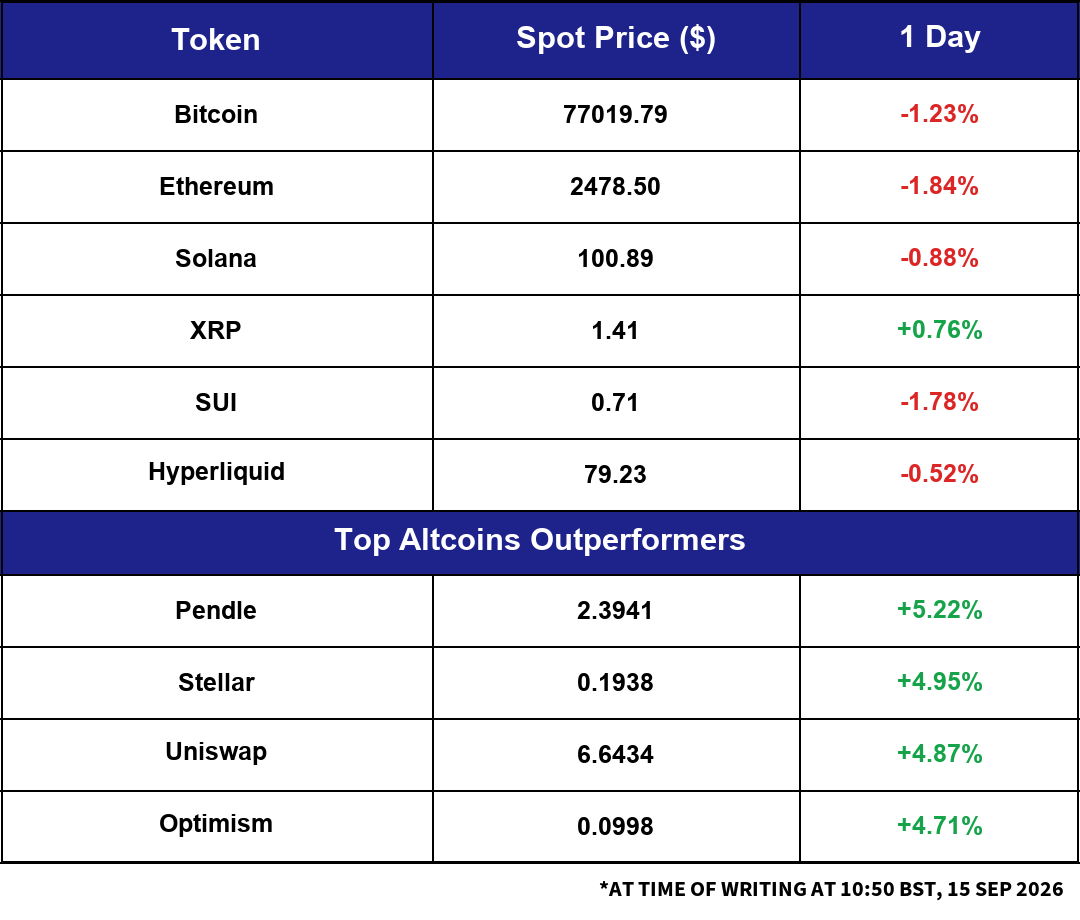
Market Snapshot: Overnight Moves
Macro & Markets
Comments from leaders of AI frontier labs arguing for a slowdown in the technology’s development weighed on risk-sentiment, dragging down chipmakers and US equities alongside a continued move higher in oil prices.
A 3,800-word note by Anthropic PBC Chief Executive Officer Dario Amodei, which was endorsed by both OpenAI CEO Sam Altman and SpaceX CEO Elon Musk, said the development of the most-advanced systems must be slowed in order to prevent AI slipping beyond human control and inflicting catastrophic harm.
Amodei wrote that AI companies “must slow the pace at which we improve the capabilities of AI models” as “AI brings risks, and because it is such a powerful technology, these risks are serious. Some risks include “losing control of AI systems, misuse of AI for cyberattacks and bioterrorism, and serious economic disruption.”
Major AI-firms such as Nvidia Corp. and Broadcom Inc. fell 3.36% and 4.77%, dragging the Philadelphia Semiconductor Sector index lower by 5.86%.
Benchmark US stock indexes all traded lower on the day also, the Nasdaq-100 fell as much as 1.8% intraday while the S&P 500 nearly fell 1%.
However, a rally in software and cybersecurity stocks then helped the major indexes pare back their losses and by the end of the session, the Nasdaq-100 finished at -0.82% and the S&P 500 closed -0.48%.
President Trump downplayed the warnings from AI leaders in a series of posts on social media, arguing that any necessary action at the federal level would be small.
In one post Trump wrote “The only control or ‘guardrails’ that AI needs is a STRONG AND SMART (High IQ!) PRESIDENT, and the U.S.A. has that, in spades!”. He added that the US government already has “tremendous CRIMINAL and REGULATORY power over these companies! There is a SICK conspiracy going on against AI and Data Centers, and the only one that is happy about it is China. WHOEVER WINS AI, WINS! We are leading China, and all others, and will continue to do so.”
Meanwhile, after briefly rallying close to $80K, BTC sold off to $77K as the odds of the Clarity Act passing this year, which had jumped above 30% earlier in the day yesterday, fell back to 18%.
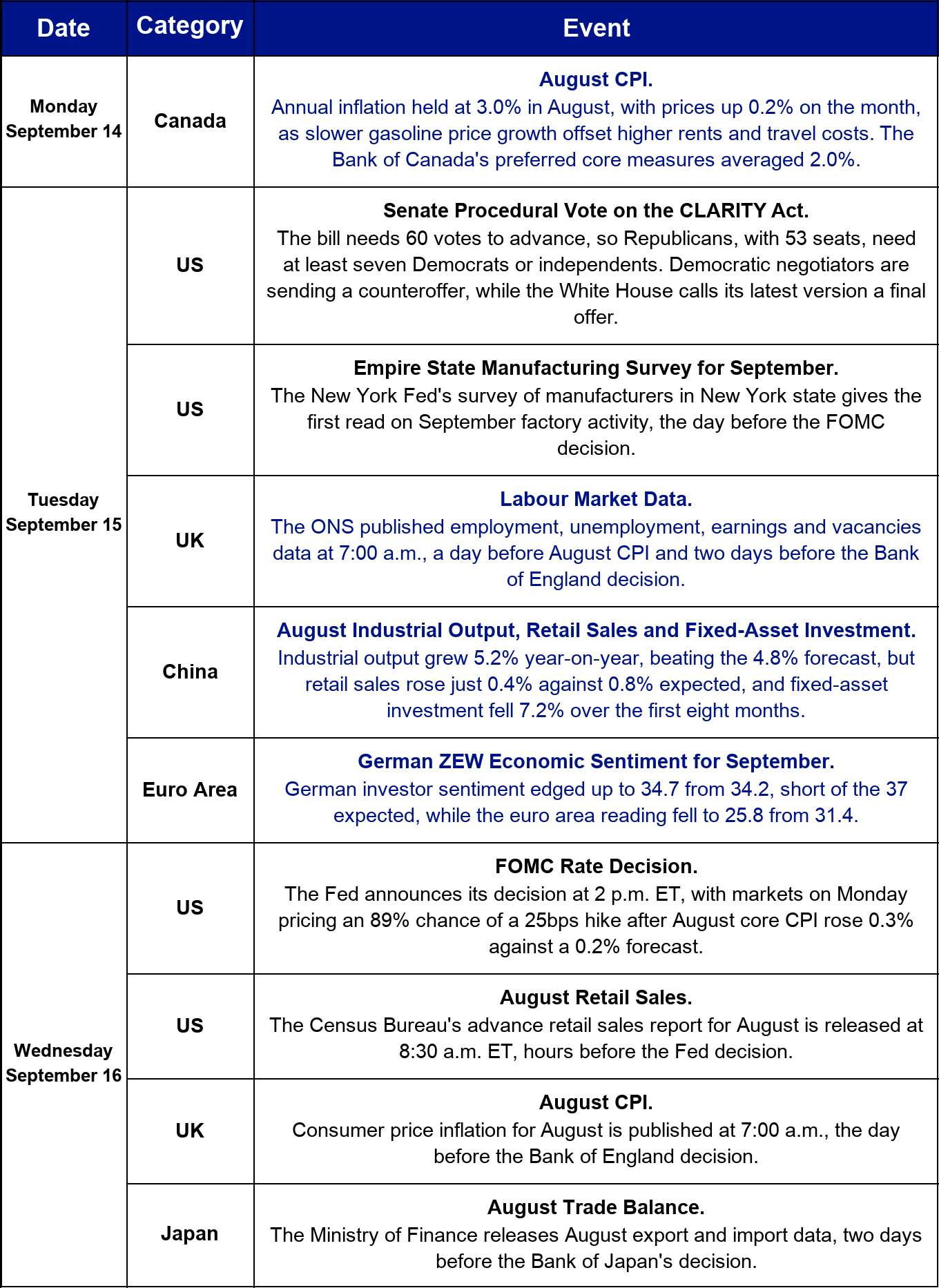
US Senator Mark Warner told reporters that a group of Democratic negotiators would send a counteroffer to Republicans ahead of the procedural vote on the Clarity Act today.
Senate Majority Leader John Thune told reporters earlier in the day that progress had been made in recent days, but wasn’t sure if it would be enough to get the required number of votes to advance the bill. The measure needs 60 votes to advance, meaning Republicans, who hold 53 seats, will require support from at least seven Democrats or independents if all Republicans vote yes.
White House crypto adviser Patrick Witt said he feels “very good” about the vote, arguing that the administration has worked through the major concerns raised during negotiations and describing the latest version as the White House’s final offer.
The revised bill addresses three major disputes: crypto-related conflicts of interest for public officials, stablecoin rewards, and protections for blockchain software developers; it gives state attorneys general a role in ethics enforcement and allows the Treasury secretary to temporarily restrict stablecoin rewards if they cause substantial deposit outflows from community banks.
Despite the concessions, passage remains uncertain as some Democrats say the ethics provisions are insufficient, banks want tighter restrictions on stablecoin rewards, and crypto advocates object to the removal of certain criminal-law protections for non-custodial developers, leaving the Senate vote as a key test of whether the bill has enough bipartisan support to move forward.
Markets are also dealing with a continued move higher in US treasury yields, which is weighing down on borrowing costs across the economy.
The yield on the 10-year US Treasury rose four basis points to 5.02%, surpassing a peak from 2023 to hit its highest level since 2007 in a continuing of the global bond selloff that has been driven by surging energy prices, mounting debt, inflation, the AI-build out and more.
Yields rose across the globe, with the rate on two-year gilts jumping six basis points to 4.95%.
DeFi / Web3 / Altcoins / Crypto
Ethereum and Base, an Ethereum Layer 2 (L2) blockchain, developers have ended efforts to merge their separate account-abstraction proposals, EIP-8141 and EIP-8130, after concluding that a single design would force compromises between Ethereum’s focus on censorship resistance, privacy and security and Base’s emphasis on scale, customization and compliance.
Both proposals aim to make wallets easier to use by supporting features such as gas sponsorship, passkey-style authentication and bundled actions, but if both are adopted, wallet developers may need to support two different native transaction formats.
Ethereum has designated EIP-8141, or Frame Transactions, as a “must-ship” proposal for the Hegotá upgrade, while Base is continuing with EIP-8130 and its onchain keystore model for account abstraction.
Bitmine Immersion Technologies, the world’s largest corporate ether holder, acquired 27,180 ETH over the past week, increasing its treasury to 5.96M ETH worth about $15B, or 4.9% of Ethereum’s 122M-token supply.
Tom DeMark, founder of DeMark Analytics and a Bitmine adviser, said he expects ETH to make a “sharp upward move in the coming weeks,” while Bitmine said about 85% of its holdings are staked, generating an estimated $334M in annualized staking revenue.
DeFi Development Corp., a Nasdaq-listed Solana treasury company, increased its holdings by 55,491 SOL to about 2.39M SOL and SOL equivalents, making it the second-largest public Solana treasury after Forward Industries.
The company also established a $300M at-the-market program for its CHAD, DeFi Development Corp’s Variable Rate Series C perpetual preferred stock, which carries an initial 13% annual dividend rate, with proceeds expected to be used primarily to buy more SOL and expand its strategy of raising capital, staking SOL and increasing SOL per share.
Strive, a publicly traded bitcoin treasury company, purchased 469 BTC for $36.6M at an average price just under $78,000, bringing its holdings to 25,000 BTC worth about $1.95B.
The entire purchase was funded through SATA, Strive’s perpetual preferred stock, which has now surpassed $1B in notional value outstanding; Strive remains the fifth-largest public bitcoin holder.
The U.S. Department of Justice is seeking forfeiture of about $61M in cryptocurrency that prosecutors say came from illicit sales of sanctioned Iranian oil and was routed to support the Iranian government and the Islamic Revolutionary Guard Corps (IRGC).
Prosecutors allege Blessed Trust and Hexa Whale, two China-based companies, used Binance accounts to move the funds, while the DOJ says a broader network of linked self-hosted wallets has processed more than $1.5B in proceeds from Iranian oil sales.
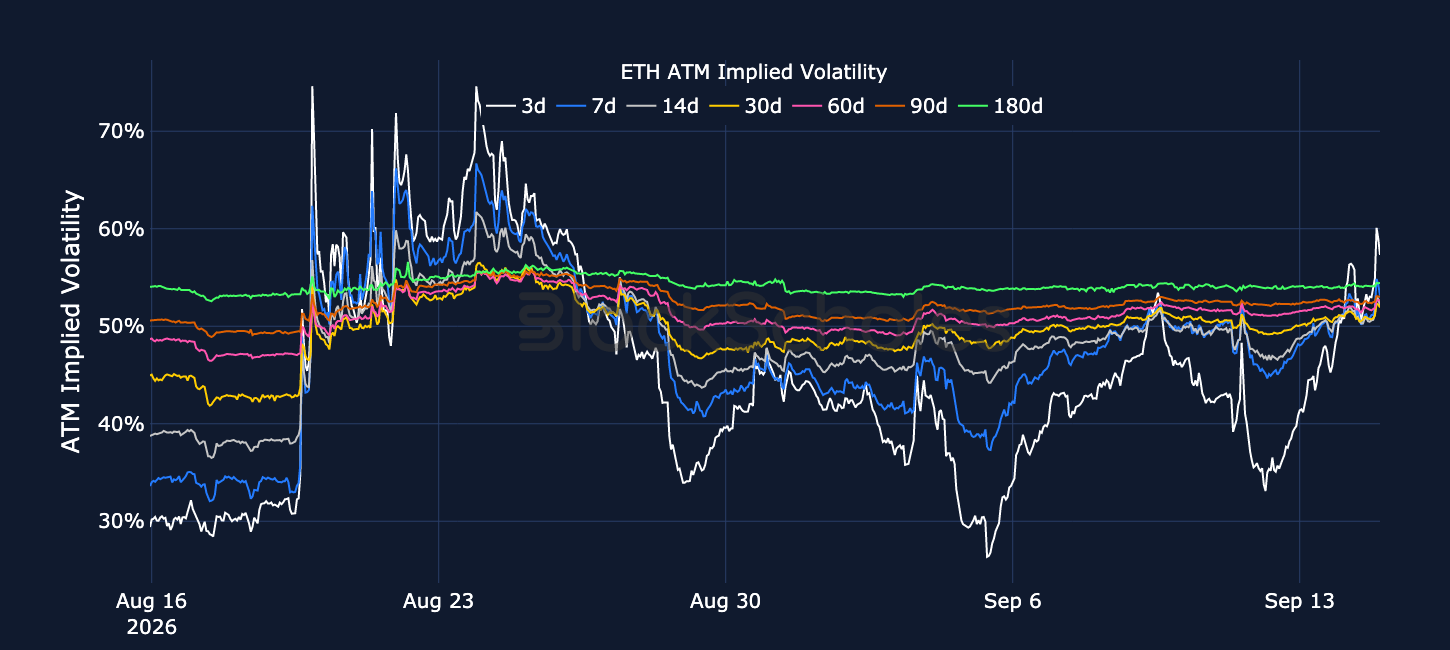
Figure 4. ETH at-the-money implied volatility across selected tenors. Source: Deribit, Block Scholes.
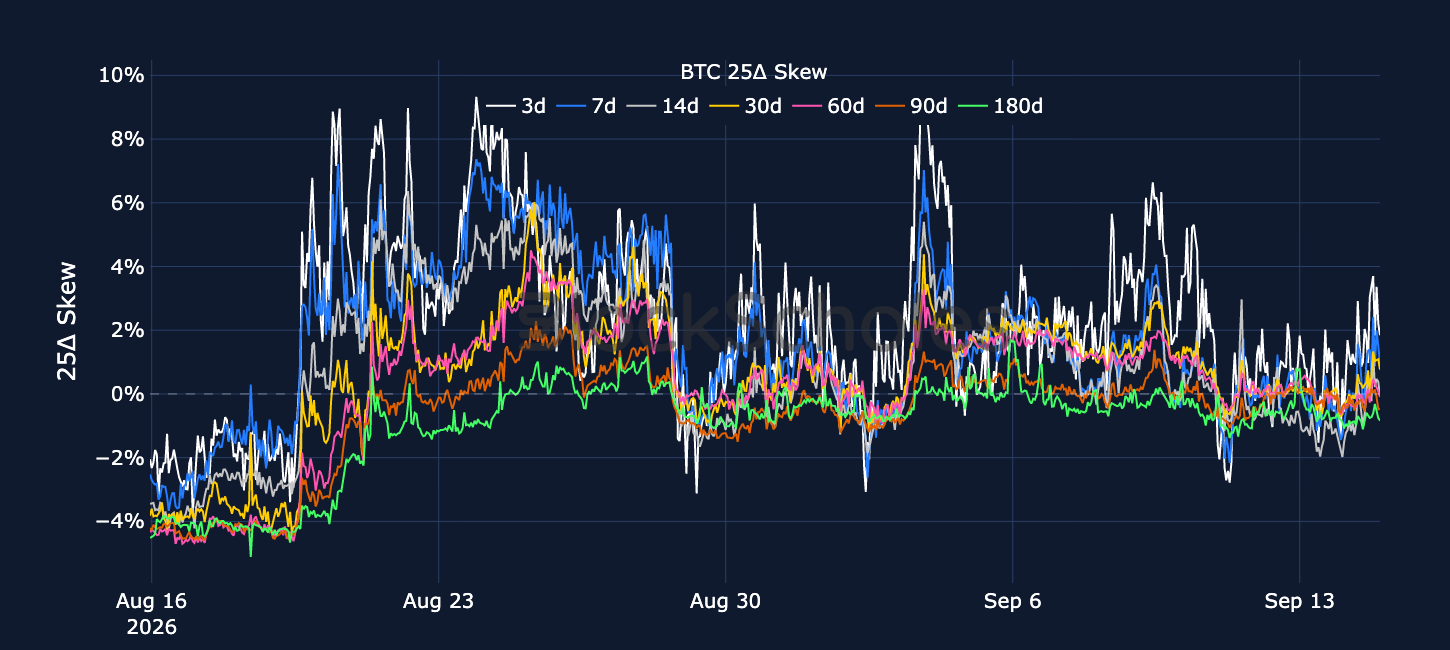
Figure 5. BTC 25-delta put-call skew ratio across selected tenors. Source: Deribit, Block Scholes.
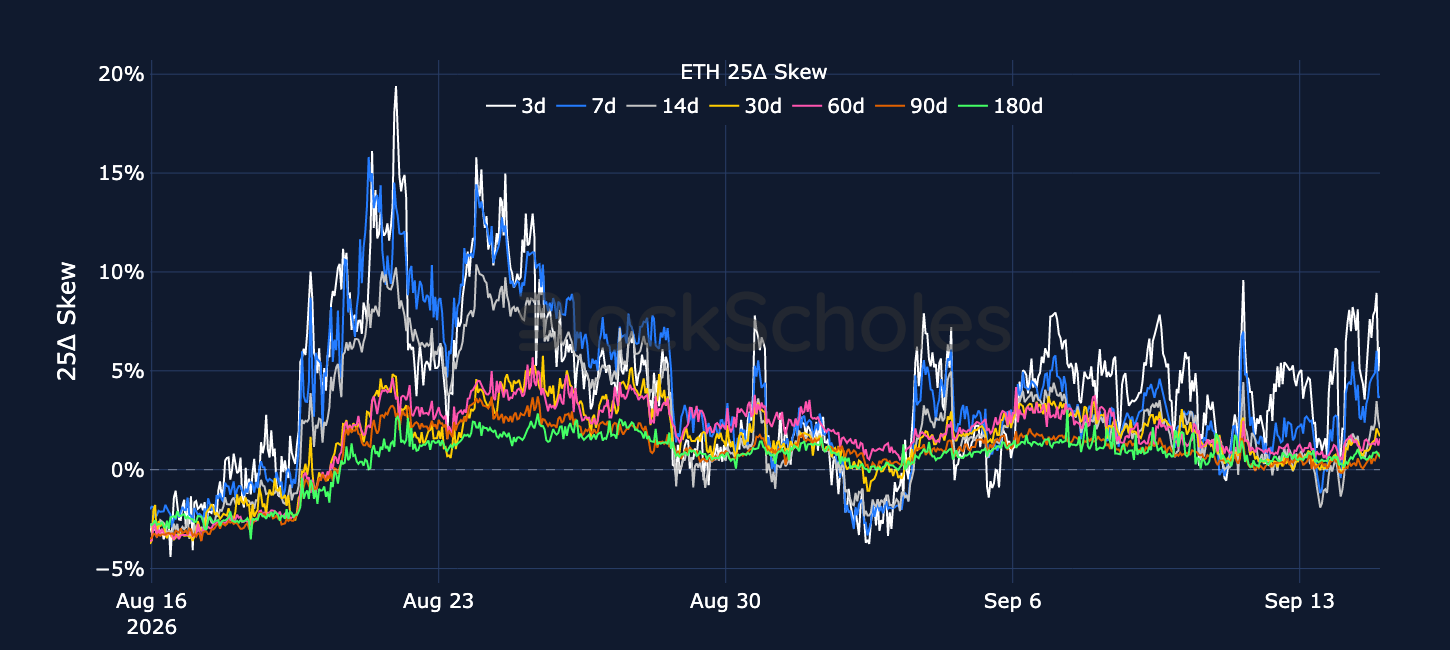
Figure 6. ETH 25-delta put-call skew ratio across selected tenors. Source: Deribit, Block Scholes.
Block Scholes is an FCA-regulated institutional crypto derivatives analytics platform. Live data, IV surfaces, and backtesting available via blockscholes.com.
A 3,800-word note from Anthropic CEO Dario Amodei, endorsed by OpenAI's Sam Altman and Elon Musk, urged AI labs to slow the pace of capability gains. The Philadelphia Semiconductor index fell 5.86% on the day, while President Trump dismissed the warnings.
Ethereum and Base developers have stopped trying to merge their competing account-abstraction proposals, EIP-8141 and EIP-8130, concluding that a single design would force trade-offs between Ethereum's censorship resistance and Base's focus on scale and compliance.
Market Snapshot: Overnight Moves
Macro & Markets
Comments from leaders of AI frontier labs arguing for a slowdown in the technology’s development weighed on risk-sentiment, dragging down chipmakers and US equities alongside a continued move higher in oil prices.
A 3,800-word note by Anthropic PBC Chief Executive Officer Dario Amodei, which was endorsed by both OpenAI CEO Sam Altman and SpaceX CEO Elon Musk, said the development of the most-advanced systems must be slowed in order to prevent AI slipping beyond human control and inflicting catastrophic harm.
Amodei wrote that AI companies “must slow the pace at which we improve the capabilities of AI models” as “AI brings risks, and because it is such a powerful technology, these risks are serious. Some risks include “losing control of AI systems, misuse of AI for cyberattacks and bioterrorism, and serious economic disruption.”
Don't miss what's next
Upgrade your Block Scholes account to unlock this article and other exclusive insights
A 3,800-word note from Anthropic CEO Dario Amodei, endorsed by OpenAI's Sam Altman and Elon Musk, urged AI labs to slow the pace of capability gains. The Philadelphia Semiconductor index fell 5.86% on the day, while President Trump dismissed the warnings.
Ethereum and Base developers have stopped trying to merge their competing account-abstraction proposals, EIP-8141 and EIP-8130, concluding that a single design would force trade-offs between Ethereum's censorship resistance and Base's focus on scale and compliance.
Market Snapshot: Overnight Moves
Macro & Markets
Comments from leaders of AI frontier labs arguing for a slowdown in the technology’s development weighed on risk-sentiment, dragging down chipmakers and US equities alongside a continued move higher in oil prices.
A 3,800-word note by Anthropic PBC Chief Executive Officer Dario Amodei, which was endorsed by both OpenAI CEO Sam Altman and SpaceX CEO Elon Musk, said the development of the most-advanced systems must be slowed in order to prevent AI slipping beyond human control and inflicting catastrophic harm.
Amodei wrote that AI companies “must slow the pace at which we improve the capabilities of AI models” as “AI brings risks, and because it is such a powerful technology, these risks are serious. Some risks include “losing control of AI systems, misuse of AI for cyberattacks and bioterrorism, and serious economic disruption.”
Don't miss what's next
Upgrade your Block Scholes account to unlock this article and other exclusive insights
Premium
$30/mo
Access previous and future reports, market insights & deep dives.
A note from Anthropic CEO Dario Amodei, endorsed by Sam Altman and Elon Musk, urging AI labs to slow capability gains sent the Philadelphia Semiconductor index down 5.86%, while President Trump dismissed the warnings. The 10-year Treasury yield rose to 5.02%, its highest since 2007, and BTC slipped back to $77K as the odds of the CLARITY Act passing this year fell to 18% ahead of today's Senate procedural vote. In crypto, Ethereum and Base developers ended efforts to merge their account-abstraction proposals, and Bitmine lifted its treasury to 5.96M ETH.
The US Treasury will at least double its buyback operations for longer-dated debt from 9 September, taking the 30-year yield down more than 10bps to 5.18% and the dollar to a three-month low. BTC gained 11% to trade through $70K for the first time since June and ETH rose 19% to just under $2,300, ending the August volatility lull as 7-day BTC implied volatility jumped from 24% to over 40%.