BTC Holds Firm as 30-Year Treasury Yield Hits Highest Level Since 2004
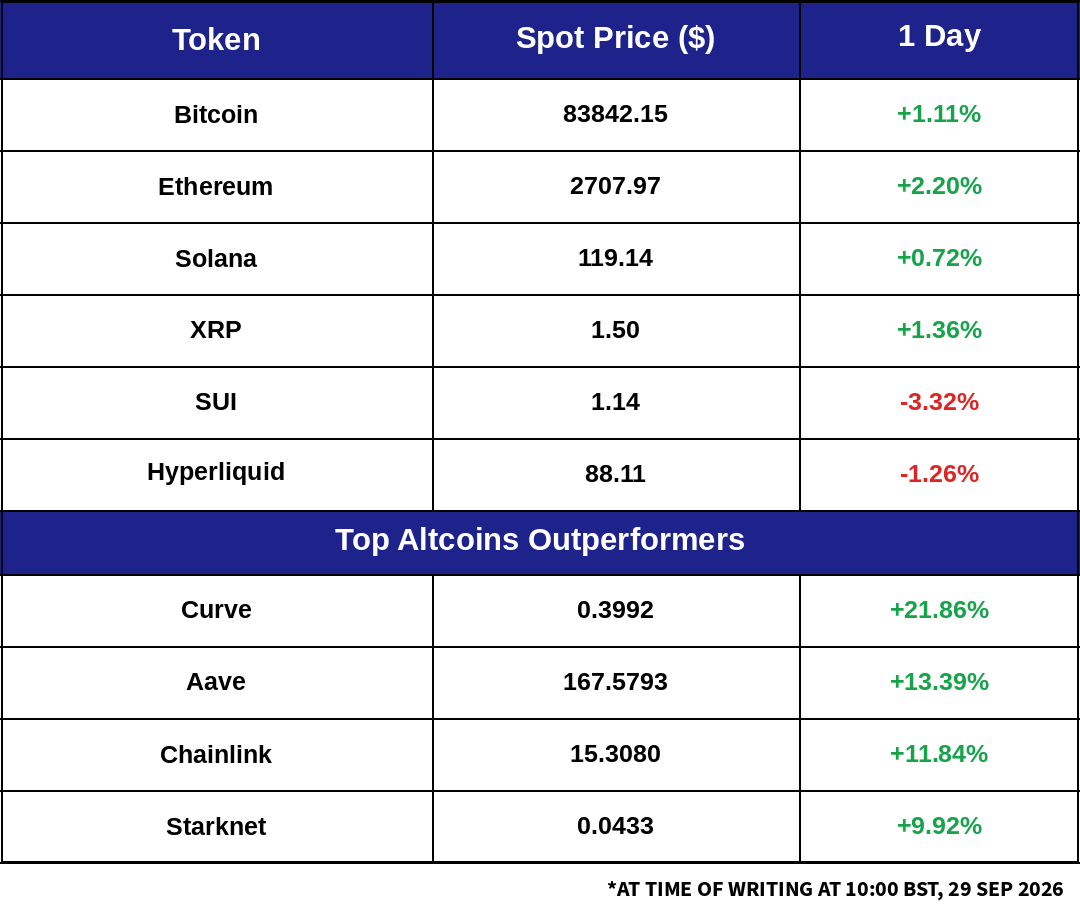
US stocks fell as the Treasury selloff deepened, S&P 500 -0.77%, Nasdaq-100 -1.08%, with the 10Y yield briefly hitting 5.27% and the 30Y reaching 5.55%, its highest since 2004, as BTC held steady at $83.8K (+1.1%) and ETH rose 2.2% to $2,708. Strategy added 1,665 BTC to lift its holdings to 847,666 BTC and Bitmine bought 17,362 ETH to hold over 6M ETH.
Block Scholes is an FCA-regulated institutional crypto derivatives analytics platform. Live data, IV surfaces, and backtesting available via blockscholes.com.
US stocks fell as the Treasury selloff deepened, S&P 500 -0.77%, Nasdaq-100 -1.08%, with the 10Y yield briefly hitting 5.27% and the 30Y reaching 5.55%, its highest since 2004, while gold slid 4% to a seven-week low, as BTC held steady at $83.8K (+1.1%) and ETH rose 2.2% to $2,708.
Strategy added 1,665 BTC to lift its holdings to 847,666 BTC and Bitmine bought 17,362 ETH to hold over 6M ETH, while Bitget detailed the zero-day exploit behind its $388M theft and Vitalik Buterin outlined an Ethereum roadmap through 2030.
Market Snapshot: Overnight Moves
Macro & Markets
US stocks started this week in the red as the selloff in US Treasuries continued to deepen and optimism faded around a diplomatic resolution to the US-Iran war.
The S&P 500 wiped out its gains for the month and fell by 0.77% yesterday, while the Nasdaq-100 declined by a larger 1.08% and a gauge of semiconductors fell 1.61%.
Despite the macro backdrop, BTC has continued to trade with resilience, holding up between $82,500 and $84K, a region within which it has consolidated over the past week and a half.
Spot exchange-traded funds have also continued to see inflows. Yesterday marked the eighth straight inflow session in a row, which saw the products purchase a modest $31M of the asset. Over those eight sessions, however, inflows have amounted to a much larger $3B.
Precious metals were among the worst hit assets amidst Monday’s Treasury selloff. Gold reached a seven-week low after falling 4%, but has since stabilised above $4,100 per ounce.
The yields on US Treasuries continued to surge higher, with the 10Y yield briefly reaching 5.27% intraday, from its 5.2% open, while the 2Y yield currently trades above 4.9%.
The 30-year Treasury yield rose to 5.55% up from 5.49% and is trading at its highest level since 2004.
Iran has insisted that it will stick to the 7-day ceasefire proposal it sent to the US which has already been rejected by President Trump, and that proposal included terms such as Iran reopening the Strait of Hormuz, the US lifting its naval blockade in the region, and a resumption of discussions around Tehran’s nuclear weapons program.
Meanwhile, CNN reported that the US president is willing to give Iran sanctions relief and release frozen funds in return for “concrete progress” on a nuclear deal.
In yesterday’s market update, we covered comments from Treasury Secretary Scott Bessent who argued that productivity gains from artificial intelligence and the US government’s deregulation policies should be a reason for Fed policymakers to keep an “open mind” on interest rate decisions.
In a speech yesterday, Federal Reserve Governor Lisa Cook argued that she expects to “see continued pressure on inflation from the AI build-out … and from the pass-through of higher oil prices and supply chain disruptions associated with the conflict in the Middle East" in the coming months.
According to Cook, some of the steep price increases in goods such as chips, computers and software reflect a shift in demand toward AI-related sectors, rather than an increase in economy-wide demand.
However, as supply chains adjust to this and efficiency gains accrue, those price pressures should resolve on their own “without policy intervention” as “Addressing relative price shifts is not our role”.
The Governor added that for now she expects that productivity growth from AI may only “modestly ease those inflationary pressures”.
Defi/ Crypto
This week has seen continued corporate crypto treasury activity, with several major publicly traded holders adding to their digital asset positions and raising capital to support further accumulation.
Strategy, the world’s largest corporate bitcoin holder, bought 1,665 BTC for about $142.7M at an average price of $85,681, increasing its total holdings to 847,666 BTC worth roughly $70.6B.
To fund the purchase, Strategy used proceeds from sales of its Class A common stock, MSTR, with the company selling 1.47M shares for about $246.2M during the week; overall, Strategy’s total bitcoin position was acquired for around $64B at an average price of $75,437 per BTC.
Elsewhere, Bitmine Immersion Technologies, the world’s largest corporate ether holder, bought another 17,362 ETH since its Sept. 21 update, taking total holdings to 6,001,302 ETH worth about $16.1B, or more than 4.9% of Ethereum’s 122.1M circulating supply and roughly 98% of its stated 5% ownership target.
Of those holdings, Bitmine has 5,067,309 ETH staked, equal to about 84% of its holdings, with current annualized staking revenue projected at $358M and a potential $424M annually once its ether is fully staked through MAVAN and partner validators.
Meanwhile, Strive, a publicly traded bitcoin treasury company, bought 1,107 BTC for about $94.5M at an average price of $85,396, increasing its total holdings to 27,462 BTC.
In terms of funding, about 85% of the capital raised during the week came from sales of SATA, Strive’s perpetual preferred stock, while warrant exercises added another $12.4M; Strive remains the fifth-largest public bitcoin holder.
Bybit, a global cryptocurrency exchange, and Franklin Templeton, a global asset manager overseeing about $1.7T, launched an institutional collateral program that lets eligible clients pledge tokenized money-market fund shares issued through Franklin Templeton’s Benji Technology Platform and receive USDT or USDC trading credit on Bybit.
The tokenized fund shares remain off the exchange in ByCustody while their value is reflected in the client’s Bybit trading account, allowing institutions to continue earning fund yield while using the assets as collateral for crypto trading, with the structure designed to reduce the need to move assets onto the exchange.
Bitget, a global cryptocurrency exchange, said the attacker behind its $388M theft first sent two small unauthorized transfers, 0.184 ETH and 193 TRX, about 30 minutes before the main attack, allowing the activity to remain below the exchange’s risk-control thresholds.
Bitget Chief Executive Officer Gracy Chen said the attacker exploited a zero-day vulnerability in a third-party security product to obtain legitimate administrator access, insert fraudulent withdrawal instructions into wallet backend systems and then erase traces of those commands; the exchange says its private keys and cold wallets were not compromised.
Bitget’s $465M user protection fund will cover the loss, with the company planning to restore the fund to at least $300M within one week using corporate reserves that exceeded $1.4B as of Aug. 31, while Mandiant and SlowMist continue investigating the incident.
Ethereum co-founder Vitalik Buterin outlined a roadmap for Ethereum through 2030, saying the planned Hegota upgrade in 2027 could be its last conventional network fork before development shifts toward recursive STARK proofs, automated mathematical verification of protocol code and cryptography designed to withstand future quantum computers.
Under the proposed architecture, Ethereum nodes would increasingly verify compact cryptographic proofs and sample network data rather than independently downloading and re-executing everything, while features such as FOCIL would distribute transaction inclusion across multiple validators to reduce dependence on individual block builders.
Buterin projected that by 2030, Ethereum could reduce block slots to 4-8 seconds and achieve finality within 8-32 seconds, while using cryptographic proofs, aggregated signatures and decentralized processing to increase scalability without abandoning the network’s decentralized security model.
California Governor Gavin Newsom signed Assembly Bill 2409, which prohibits California public officials from issuing memecoins and restricts companies from listing memecoins that use a public official’s image or likeness.
In a statement announcing the legislation that day, Newsom explicitly contrasted the new rules with President Donald Trump’s crypto activities, arguing that public officials should not financially benefit from their government positions; the California governor’s office also cited reported investor losses associated with Trump’s memecoin.
Newsom also signed Senate Bill 1208 on Sept. 27, establishing clearer procedures for returning funds to victims of crypto fraud and addressing digital-asset money laundering, alongside legislation creating a legal process for authorities to seize crypto connected to transnational criminal networks.
Kakao Pay Securities, a South Korean brokerage, has signed separate agreements with Ondo Finance, a tokenized-assets platform, and Dinari, a tokenized-equities infrastructure company, to explore making South Korean stocks available to overseas investors as blockchain-based tokens, extending Kakao Pay Securities’ broader effort to improve international access to Korean equities. Kakao Pay Securities had already disclosed plans to explore 24-hour tokenized Korean-stock trading for overseas investors through its partnership with Siebert Financial.
The partnerships remain exploratory rather than a confirmed product launch, with the companies expected to examine how Korean shares could be represented and distributed onchain while meeting regulatory and investor-protection requirements.
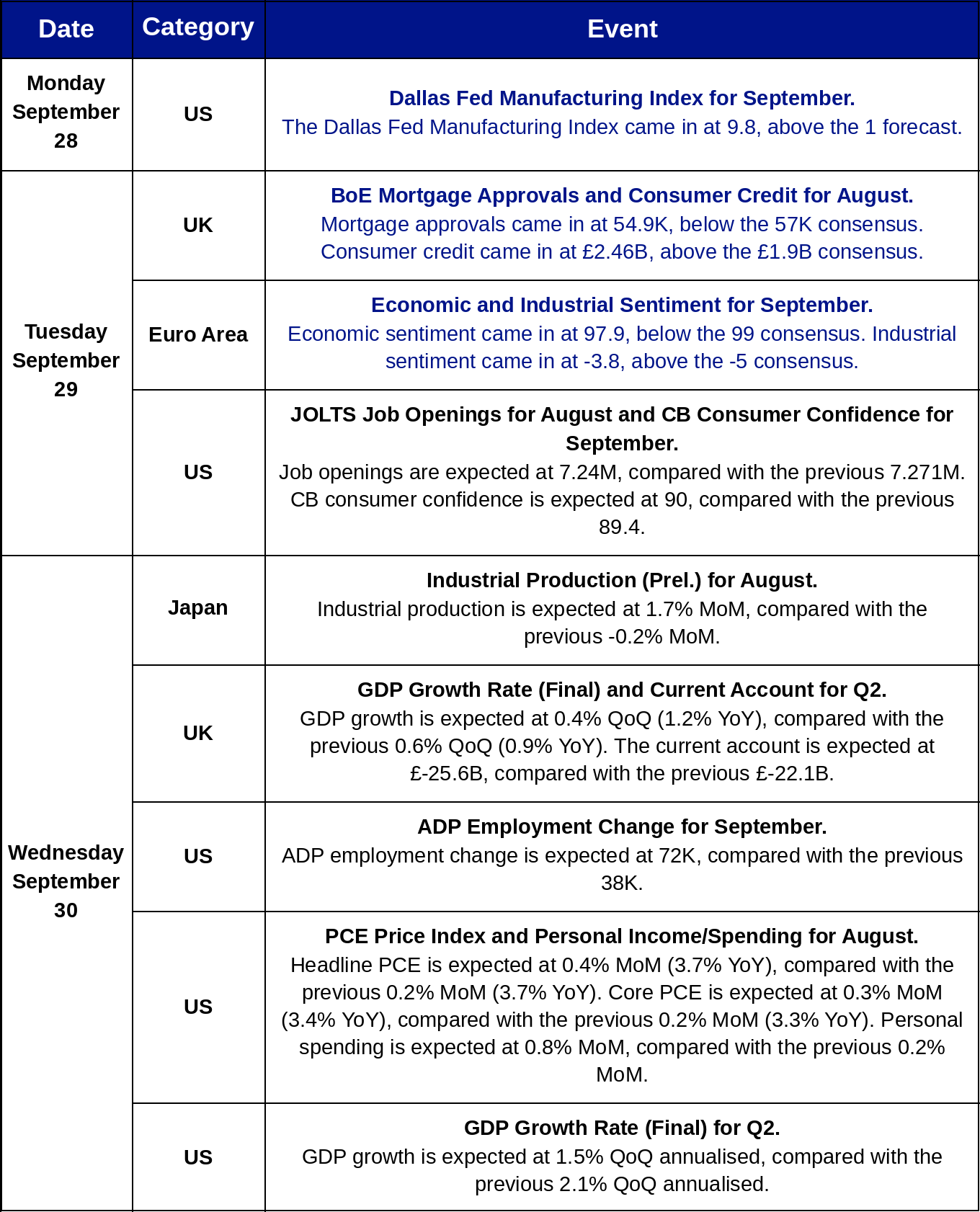
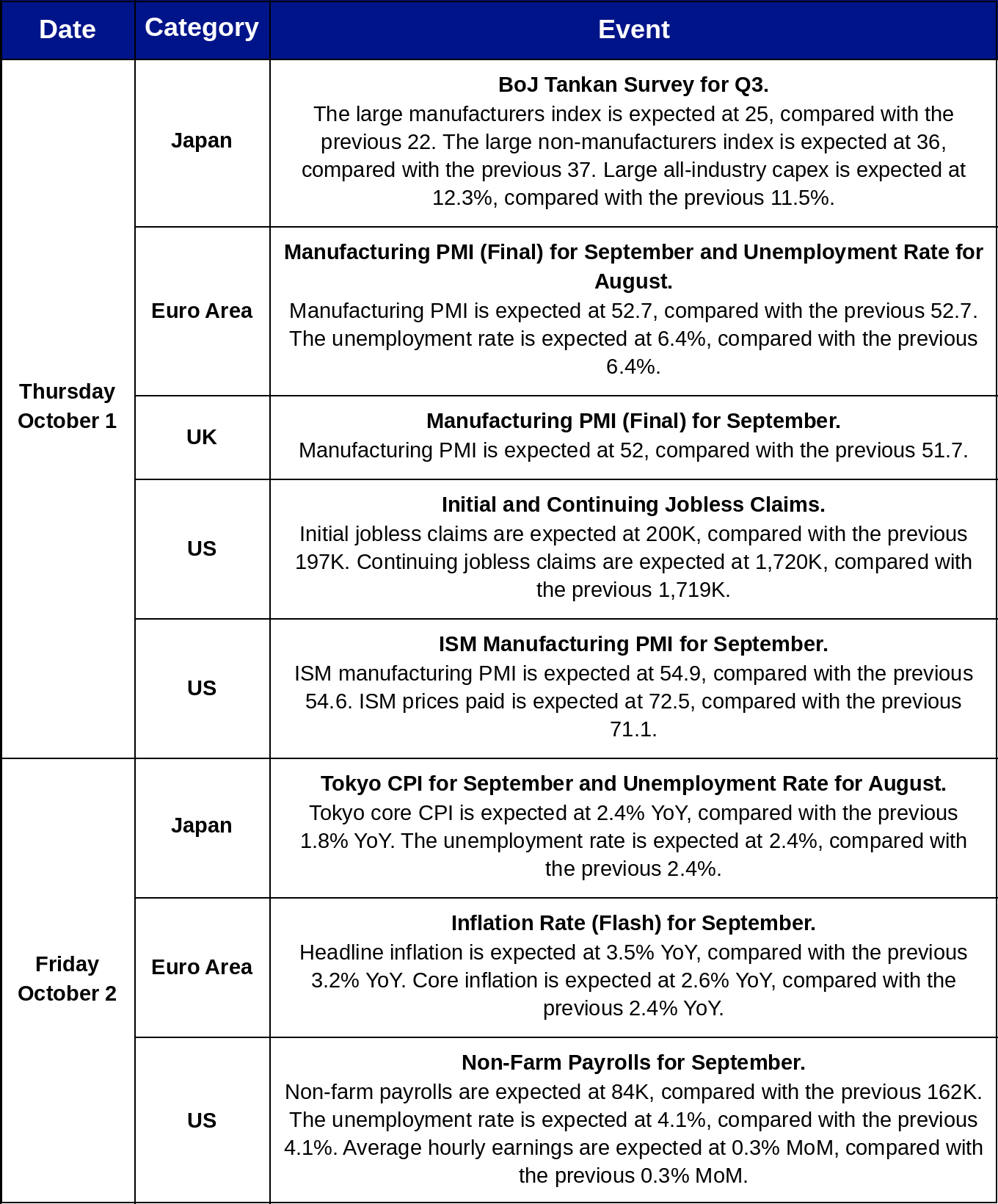
This Week's Calendar
Charts of the Day
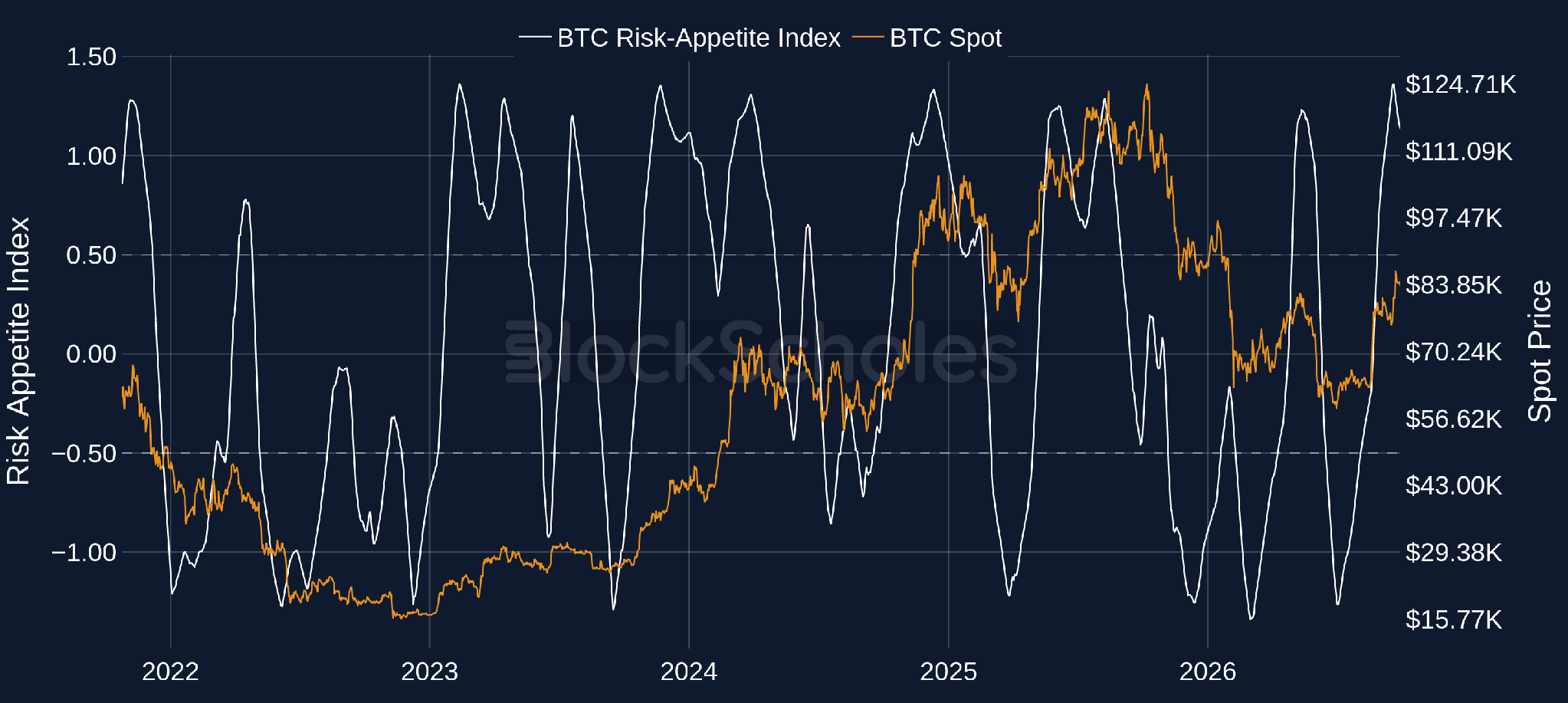
Figure 1. Block Scholes BTC Risk-Appetite Index (white, left-hand axis) and BTC spot price (orange, right-hand axis).
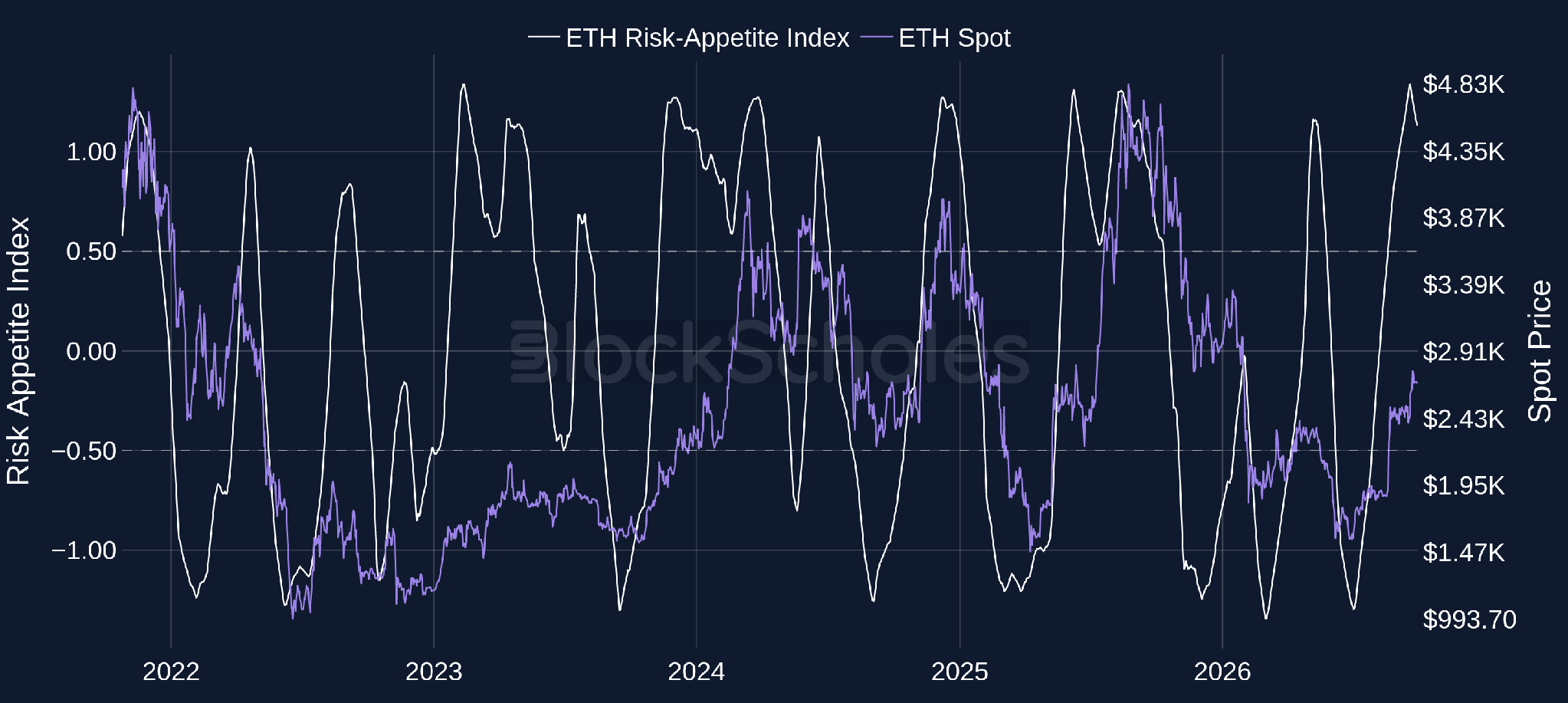
Figure 2. Block Scholes ETH Risk-Appetite Index (white, left-hand axis) and ETH spot price (purple, right-hand axis).
US stocks fell as the Treasury selloff deepened, S&P 500 -0.77%, Nasdaq-100 -1.08%, with the 10Y yield briefly hitting 5.27% and the 30Y reaching 5.55%, its highest since 2004, while gold slid 4% to a seven-week low, as BTC held steady at $83.8K (+1.1%) and ETH rose 2.2% to $2,708.
Strategy added 1,665 BTC to lift its holdings to 847,666 BTC and Bitmine bought 17,362 ETH to hold over 6M ETH, while Bitget detailed the zero-day exploit behind its $388M theft and Vitalik Buterin outlined an Ethereum roadmap through 2030.
Market Snapshot: Overnight Moves
Macro & Markets
US stocks started this week in the red as the selloff in US Treasuries continued to deepen and optimism faded around a diplomatic resolution to the US-Iran war.
The S&P 500 wiped out its gains for the month and fell by 0.77% yesterday, while the Nasdaq-100 declined by a larger 1.08% and a gauge of semiconductors fell 1.61%.
Despite the macro backdrop, BTC has continued to trade with resilience, holding up between $82,500 and $84K, a region within which it has consolidated over the past week and a half.
Spot exchange-traded funds have also continued to see inflows. Yesterday marked the eighth straight inflow session in a row, which saw the products purchase a modest $31M of the asset. Over those eight sessions, however, inflows have amounted to a much larger $3B.
Don't miss what's next
Upgrade your Block Scholes account to unlock this article and other exclusive insights
US stocks fell as the Treasury selloff deepened, S&P 500 -0.77%, Nasdaq-100 -1.08%, with the 10Y yield briefly hitting 5.27% and the 30Y reaching 5.55%, its highest since 2004, while gold slid 4% to a seven-week low, as BTC held steady at $83.8K (+1.1%) and ETH rose 2.2% to $2,708.
Strategy added 1,665 BTC to lift its holdings to 847,666 BTC and Bitmine bought 17,362 ETH to hold over 6M ETH, while Bitget detailed the zero-day exploit behind its $388M theft and Vitalik Buterin outlined an Ethereum roadmap through 2030.
Market Snapshot: Overnight Moves
Macro & Markets
US stocks started this week in the red as the selloff in US Treasuries continued to deepen and optimism faded around a diplomatic resolution to the US-Iran war.
The S&P 500 wiped out its gains for the month and fell by 0.77% yesterday, while the Nasdaq-100 declined by a larger 1.08% and a gauge of semiconductors fell 1.61%.
Despite the macro backdrop, BTC has continued to trade with resilience, holding up between $82,500 and $84K, a region within which it has consolidated over the past week and a half.
Spot exchange-traded funds have also continued to see inflows. Yesterday marked the eighth straight inflow session in a row, which saw the products purchase a modest $31M of the asset. Over those eight sessions, however, inflows have amounted to a much larger $3B.
Don't miss what's next
Upgrade your Block Scholes account to unlock this article and other exclusive insights
Premium
$30/mo
Access previous and future reports, market insights & deep dives.
US stocks fell as the Treasury selloff deepened, S&P 500 -0.77%, Nasdaq-100 -1.08%, with the 10Y yield briefly hitting 5.27% and the 30Y reaching 5.55%, its highest since 2004, as BTC held steady at $83.8K (+1.1%) and ETH rose 2.2% to $2,708. Strategy added 1,665 BTC to lift its holdings to 847,666 BTC and Bitmine bought 17,362 ETH to hold over 6M ETH.
DeepBook Predict, an onchain options product on Sui powered by Block Scholes’ volatility oracle, launched on mainnet. US stock futures slipped after President Trump rejected Iran’s latest peace proposal over the weekend, reversing Friday’s relief rally that lifted the S&P 500 +0.51%, while Brent crude rose around 2% to just under $107, the 2-year Treasury yield climbed 5 bps to 4.9% and the 10-year topped 5.20%, as BTC fell 2.2% to $82.9K and ETH dropped 2.4% to $2,650.