US Authorities Are Preparing Insider-Trading Charges Over Polymarket Bets on Military Operations
Federal prosecutors in Manhattan and Washington and the CFTC are preparing potential insider-trading charges against an unnamed servicemember suspected of earning more than $1M on Polymarket from bets tied to US military operations in Iran and Venezuela. Attention turns to Fed Chair Kevin Warsh's first Jackson Hole speech, with officials split ahead of it, while Nvidia rose almost 9% after guiding for 70% revenue growth and BTC was again rejected near $81K.
Federal prosecutors in Manhattan and Washington and the CFTC are preparing potential insider-trading charges against an unnamed servicemember suspected of earning more than $1M on Polymarket from bets tied to US military operations in Iran and Venezuela, with charges potentially coming this fall.
Attention turns to Fed Chair Kevin Warsh's first Jackson Hole speech today, with officials split ahead of it: Schmid called policy 'accommodative on the short end' while Collins sees it as 'mildly restrictive'. Nvidia rose almost 9% after guiding for 70% revenue growth, and BTC was again rejected near $81K.
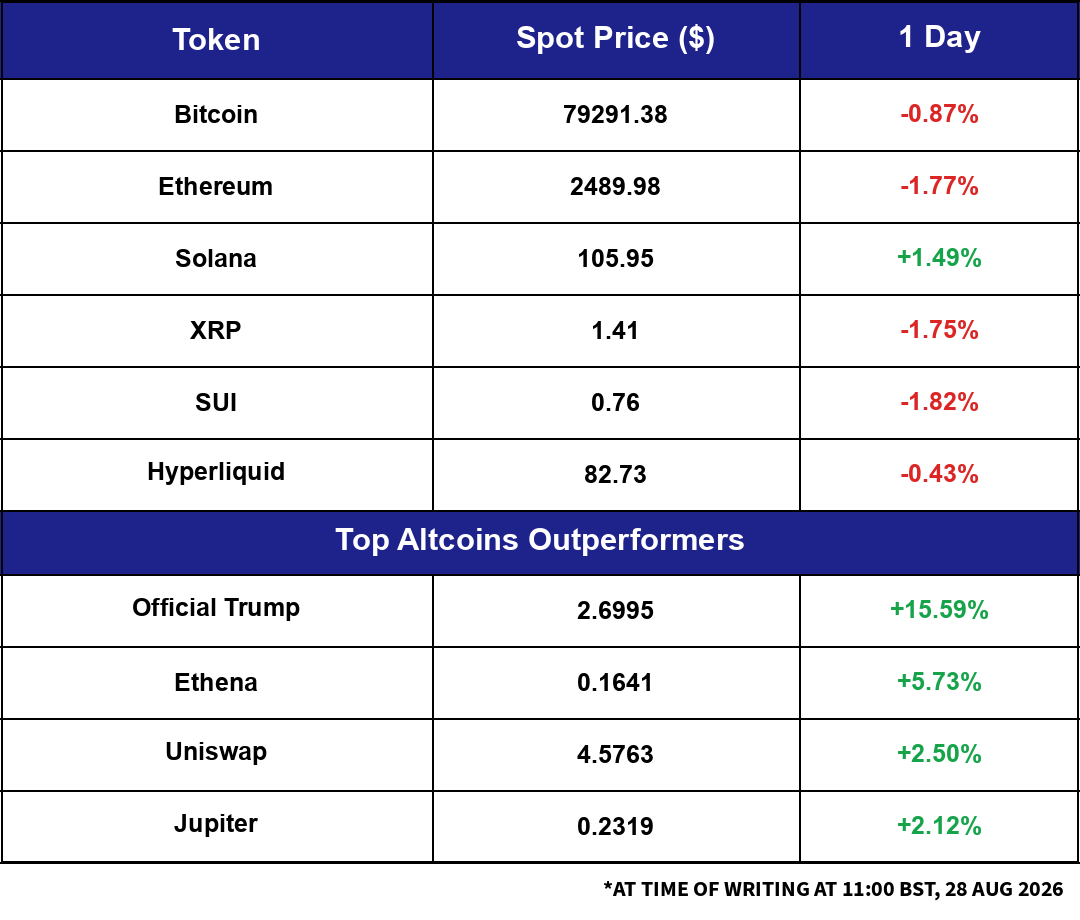
Market Snapshot: Overnight Moves
Macro & Markets
Nvidia Corp’s blockbuster earnings report in after-market hours on Wednesday, in which the chip giant estimated that revenues will increase 70% in the next fiscal year, helped to lift sentiment in US tech stocks as they closed higher in yesterday’s trading session.
The S&P 500 rose 0.72%, dragged higher by tech stocks despite most shares in the index falling, while the Nasdaq-100 finished the day up 1.43%.
Shares of Nvidia rallied almost 9%, for its strongest day since April 2025 and that helped a gauge of chipmakers finish the day 2.33% higher.
BTC traded higher through most of Thursday, jumping up past $81K in early Asian equity hours. The $81K region once again proved to act as resistance as spot price struggled to hold and fell back to $79K.
The main event that markets will be looking ahead to today will be Fed Chair Kevin Warsh’s speech at the Economic Policy Symposium in Jackson Hole, Wyoming.
US Treasury yields edged higher slightly in trading yesterday, with the 30-year yield rising from 5.17% to 5.20%.
The 30-year tenor reached its highest level since 2007 earlier in August, a move that preceded an announcement from the US Treasury Department to increase the size of its buybacks of long-dated government debt.
Ahead of the Chair’s speech, a number of Fed officials weighed in their views on the current state of monetary policy.
Kansas City Fed President Jeff Schmid said that the central bank’s current interest rate level is not restraining the US economy sufficiently.
Speaking on Bloomberg TV in an interview in Wyoming, Schmid said, “For me I think it might be accommodative on the short end, so we’ve got work to do.”
He added “There were some of my colleagues who dissented at the last meeting, so I would probably put myself in that camp”.
When asked whether the Fed’s credibility had taken a hit following Warsh’s July FOMC press conference, Schmid responded, “Well for me I just don’t see it”.
His colleague, Cleveland Fed President Beth Hammack, also reiterated her hawkish views on monetary policy during an interview with CNBC in Wyoming.
“I think it’s appropriate for us to put some restraint there to help bring inflation back down to target. The longer inflation stays above our objective, the harder it will be for us to bring it back down.”
Hammack was amongst three officials to dissent in the July meeting.
Finally, taking a slightly different view to her other two colleagues, Boston President Susan Collins said there is evidence that the current policy setting is restraining the US economy and helping to slow inflation.
“I continue to see rates as mildly restrictive”, Collins told Bloomberg.
Regarding the most recent PCE inflation print she said, “The overall headline number was maybe a bit higher than I expected. At the same time, when you unpack it, it seemed more consistent with what I might have expected.”
DeFi / Web3 / Altcoins / Crypto
Ethena Foundation, the organization supporting the USDe synthetic-dollar protocol, announced changes including buying locked ENA from certain seed investors and ending monthly investor unlocks, with remaining investor tokens set to be released from Oct. 5.
A proposed framework would assign substantially all material protocol intellectual property and economic benefits to the foundation and Ethena ecosystem rather than Ethena Labs equity holders.
The foundation also proposed a fee switch that would allocate 95% of net revenue from its three core businesses to ENA buybacks once USDe supply reaches a specified milestone, with the remaining 5% funding growth.
Sheikh Tahnoon bin Zayed al Nahyan, the UAE’s national security adviser and co-investors reportedly hold a 49% stake in WLTC Holdings, the holding company established by Trump-backed World Liberty Financial for its banking venture.
World Liberty Trust Company recently received preliminary OCC approval to become a national trust bank, enabling planned stablecoin issuance and redemption, custody and conversion services around products including its $4B USD1 stablecoin.
The Wall Street Journal previously reported that a Tahnoon-backed investment vehicle separately acquired a 49% stake in World Liberty Financial for $500M, prompting congressional scrutiny over the Trump family’s financial ties to UAE investors.
DeFi Development Corp., a Nasdaq-listed Solana treasury company, acquired roughly 19,000 SOL at an average price of $98.14, increasing its holdings to about 2.33M SOL and SOL equivalents (such as locked SOL and dfdvSOL).
The purchase was partially funded by proceeds from its ZeroStack divestment, with the newly acquired SOL expected to be held long term and deployed through the company’s staking infrastructure.
DFDV shares were up 12% to $5.04 at publication, while the company said its August return had been more than twice that of SOL and its quarter-to-date performance had outpaced SOL by 1.8x.
Hyperliquid Strategies, a Nasdaq-listed HYPE treasury company trading as PURR, reported raising $647M in equity capital and more than doubling its treasury to 29.3M HYPE, valued at roughly $1.9B as of June 30.
The company has since spent $773.4M to acquire another 16.5M HYPE at an average price of $46.77, while spending $27.8M on share buybacks and maintaining $132.6M in cash with no debt as of Aug. 19.
PURR shares rose nearly 18% to $13.59 at publication, while Hyperliquid Strategies reported $709.9M in unrealized gains on its HYPE holdings.
U.S. federal authorities are preparing potential insider-trading charges against an unnamed servicemember suspected of earning more than $1M on Polymarket from bets tied to U.S. military operations in Iran and Venezuela.
The servicemember has reportedly been under investigation since the spring, as authorities examine whether confidential military information was used to trade contracts linked to the timing and outcomes of military actions.
Federal prosecutors in Manhattan and Washington and the CFTC are involved, with charges potentially coming this fall, although the WSJ reports that no final charging decision has been made
Moonwell, a decentralized lending protocol, is investigating an issue affecting its MAMO Core Market on Base after security firms estimated an exploit drained roughly $8.7M by manipulating the price of the illiquid MAMO token and borrowing cbBTC.
Moonwell responded by effectively disabling new borrowing across its Base Core Markets and restricting MAMO and WELL deposits while the investigation continues.
Charles Schwab, a U.S. brokerage managing more than $12T in client assets, plans to add Solana (SOL), Avalanche (AVAX) and Chainlink (LINK) to its Schwab Crypto platform in the coming months.
The expansion follows Schwab’s rollout of direct Bitcoin and Ethereum trading in May, with crypto transactions charged a 0.75% fee.
The additions will give Schwab’s 39M active brokerage accounts access to five cryptocurrencies through its existing investment platform.
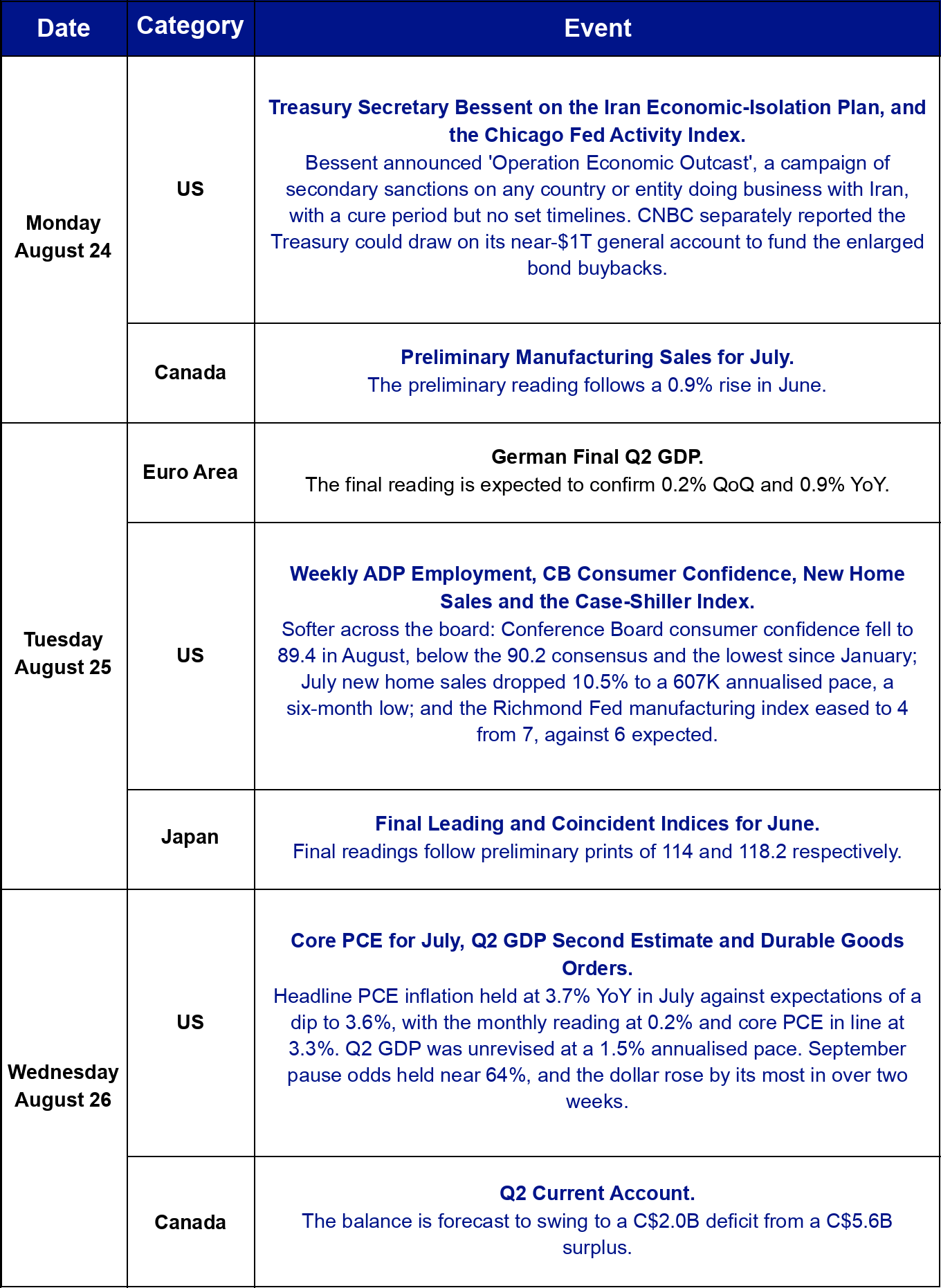
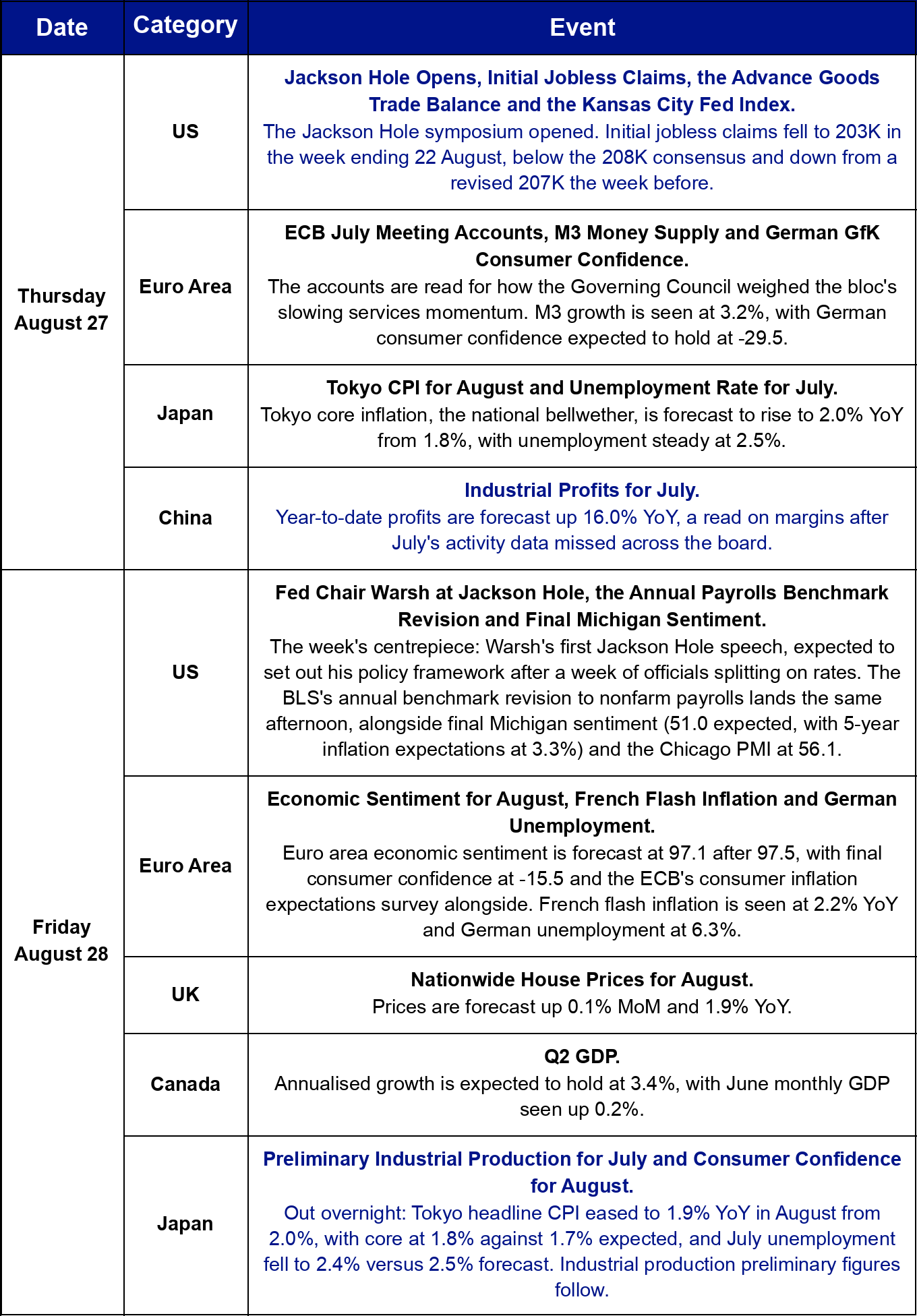
This Week's Calendar
Charts of the Day
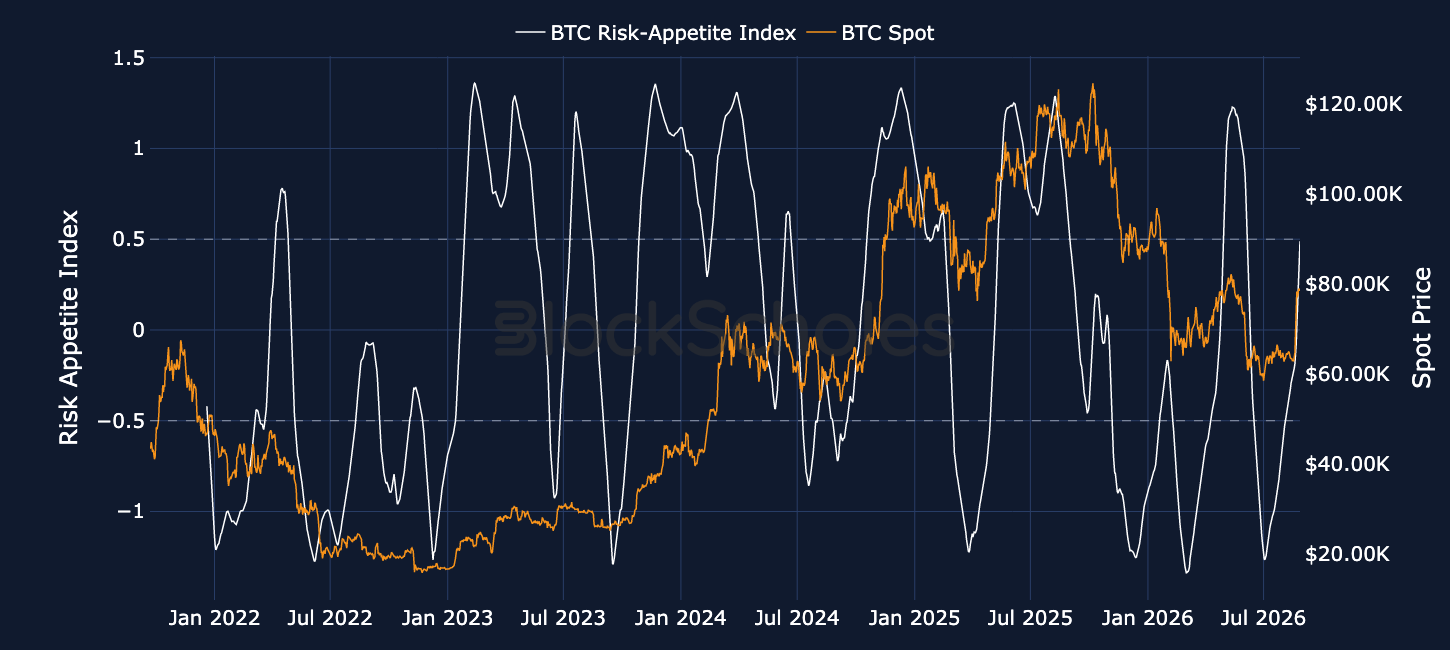
Figure 1. Block Scholes BTC Risk-Appetite Index (white, left-hand axis) and BTC spot price (orange, right-hand axis).
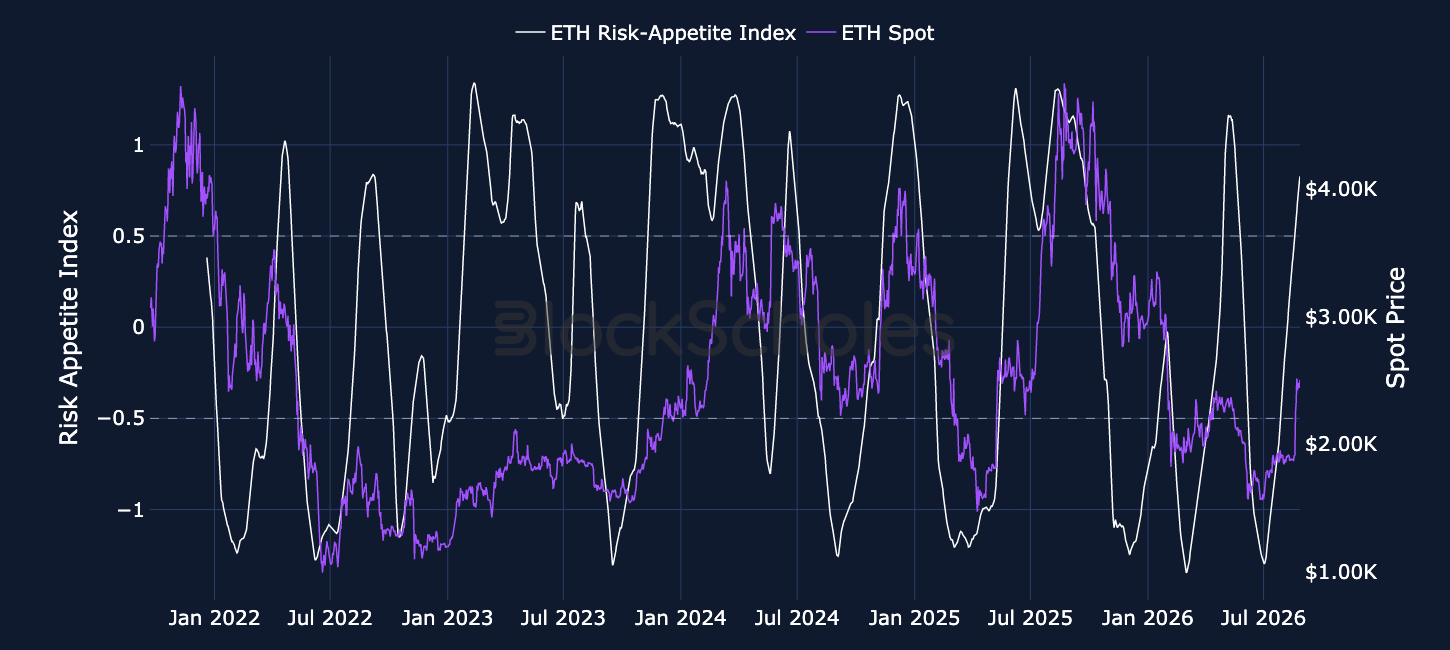
Figure 2. Block Scholes ETH Risk-Appetite Index (white, left-hand axis) and ETH spot price (purple, right-hand axis).
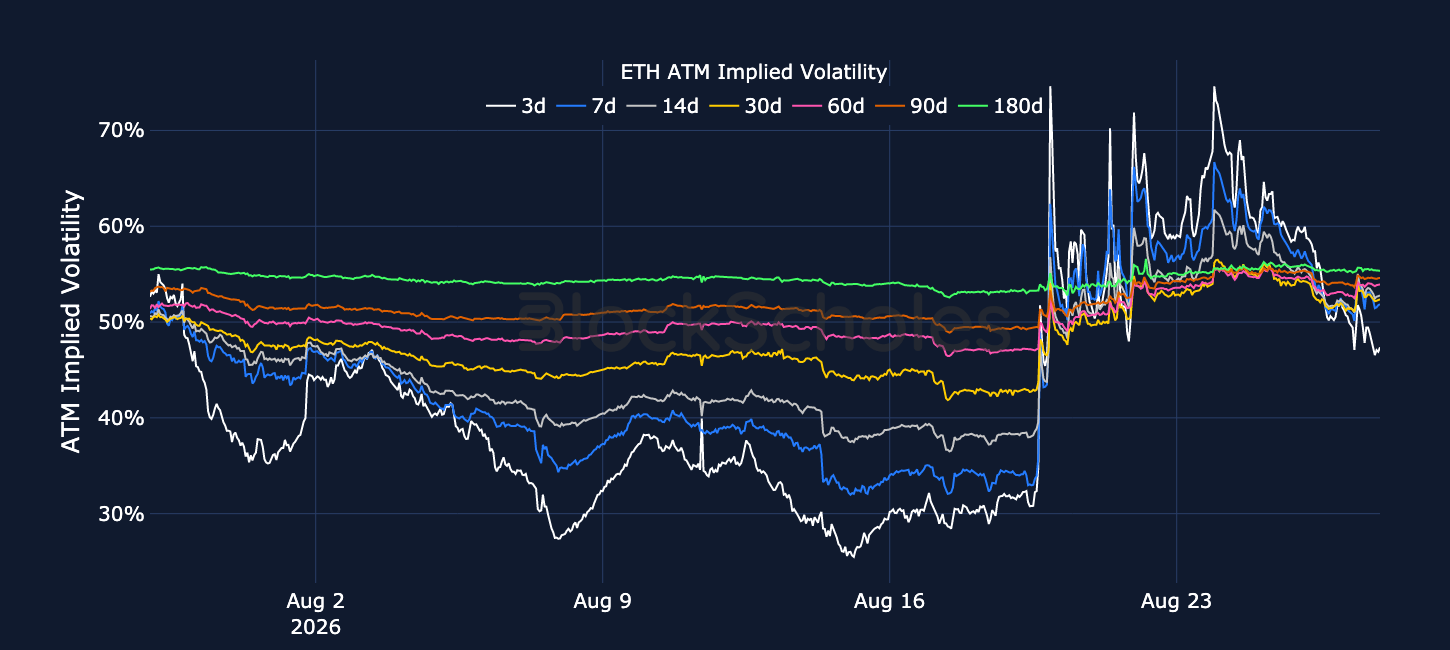
Figure 4. ETH at-the-money implied volatility across selected tenors. Source: Deribit, Block Scholes.
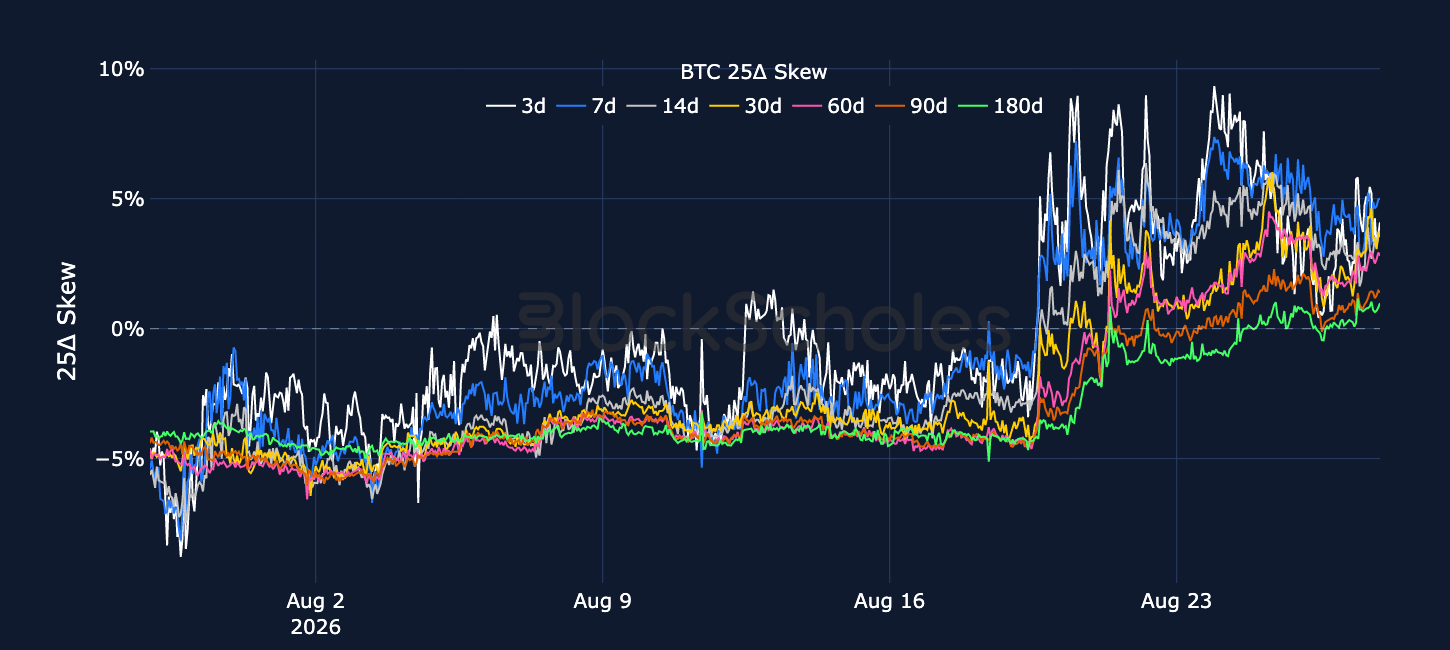
Figure 5. BTC 25-delta put-call skew ratio across selected tenors. Source: Deribit, Block Scholes.
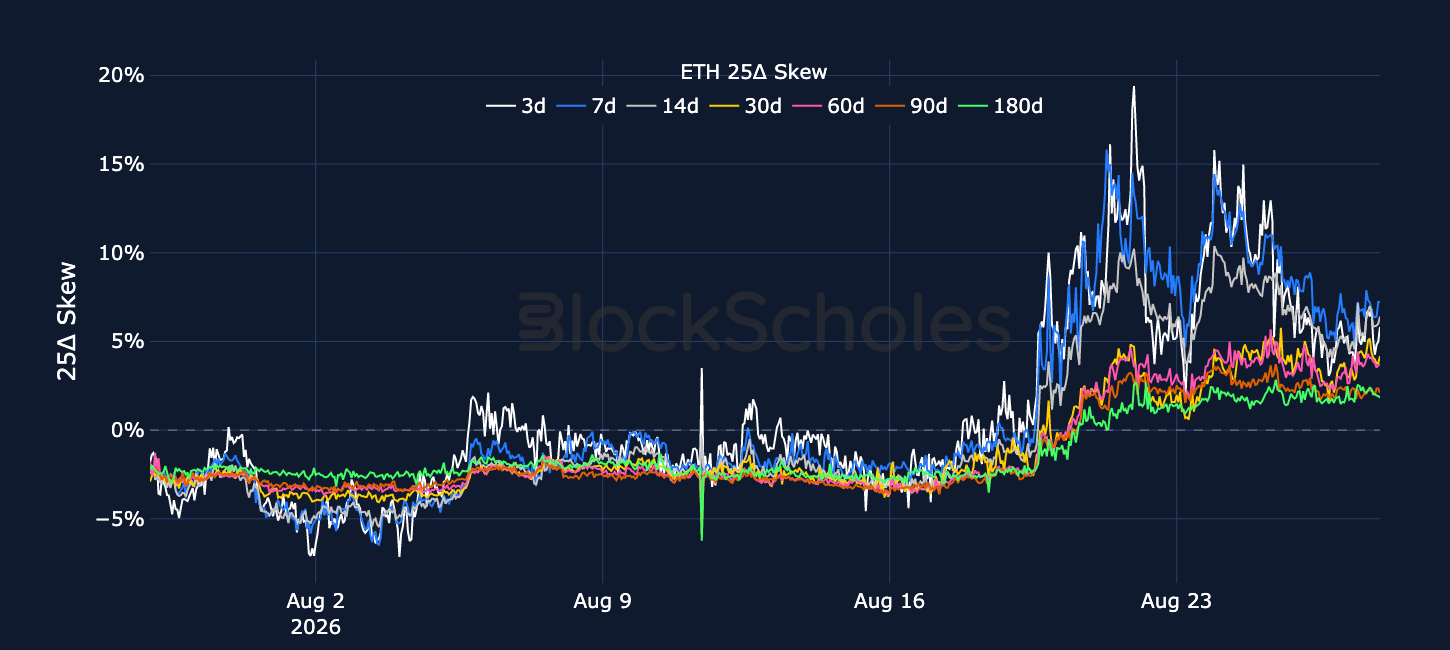
Figure 6. ETH 25-delta put-call skew ratio across selected tenors. Source: Deribit, Block Scholes.
Block Scholes is an FCA-regulated institutional crypto derivatives analytics platform. Live data, IV surfaces, and backtesting available via blockscholes.com.
Federal prosecutors in Manhattan and Washington and the CFTC are preparing potential insider-trading charges against an unnamed servicemember suspected of earning more than $1M on Polymarket from bets tied to US military operations in Iran and Venezuela, with charges potentially coming this fall.
Attention turns to Fed Chair Kevin Warsh's first Jackson Hole speech today, with officials split ahead of it: Schmid called policy 'accommodative on the short end' while Collins sees it as 'mildly restrictive'. Nvidia rose almost 9% after guiding for 70% revenue growth, and BTC was again rejected near $81K.
Market Snapshot: Overnight Moves
Macro & Markets
Nvidia Corp’s blockbuster earnings report in after-market hours on Wednesday, in which the chip giant estimated that revenues will increase 70% in the next fiscal year, helped to lift sentiment in US tech stocks as they closed higher in yesterday’s trading session.
The S&P 500 rose 0.72%, dragged higher by tech stocks despite most shares in the index falling, while the Nasdaq-100 finished the day up 1.43%.
Shares of Nvidia rallied almost 9%, for its strongest day since April 2025 and that helped a gauge of chipmakers finish the day 2.33% higher.
BTC traded higher through most of Thursday, jumping up past $81K in early Asian equity hours. The $81K region once again proved to act as resistance as spot price struggled to hold and fell back to $79K.
Don't miss what's next
Upgrade your Block Scholes account to unlock this article and other exclusive insights
Federal prosecutors in Manhattan and Washington and the CFTC are preparing potential insider-trading charges against an unnamed servicemember suspected of earning more than $1M on Polymarket from bets tied to US military operations in Iran and Venezuela, with charges potentially coming this fall.
Attention turns to Fed Chair Kevin Warsh's first Jackson Hole speech today, with officials split ahead of it: Schmid called policy 'accommodative on the short end' while Collins sees it as 'mildly restrictive'. Nvidia rose almost 9% after guiding for 70% revenue growth, and BTC was again rejected near $81K.
Market Snapshot: Overnight Moves
Macro & Markets
Nvidia Corp’s blockbuster earnings report in after-market hours on Wednesday, in which the chip giant estimated that revenues will increase 70% in the next fiscal year, helped to lift sentiment in US tech stocks as they closed higher in yesterday’s trading session.
The S&P 500 rose 0.72%, dragged higher by tech stocks despite most shares in the index falling, while the Nasdaq-100 finished the day up 1.43%.
Shares of Nvidia rallied almost 9%, for its strongest day since April 2025 and that helped a gauge of chipmakers finish the day 2.33% higher.
BTC traded higher through most of Thursday, jumping up past $81K in early Asian equity hours. The $81K region once again proved to act as resistance as spot price struggled to hold and fell back to $79K.
Don't miss what's next
Upgrade your Block Scholes account to unlock this article and other exclusive insights
Premium
$30/mo
Access previous and future reports, market insights & deep dives.
The chip selloff spread to Asia and the S&P 500 closed marginally lower, while BTC was flat at $83.5K after a V-shaped rebound ahead of bank earnings. Bitmine and Strategy added to their holdings.
US equities closed near record highs on Friday as Houthi strikes on Saudi Arabia lifted Brent toward $105, while BTC rose 0.6% to $83.4K and ETH gained 2.0% to $2,550 overnight ahead of this week's CPI. XRP Ledger patched a critical supply-cap bug and Blockchain.com applied for CFTC licences.