Markets Price an 85% Chance the Fed Holds Rates in October After Warsh's Remarks
Dip buying helped US equities recover from a week-long selloff in risk assets, with the S&P 500 ending a three-day decline 0.33% higher, while credit stress at AI cloud provider CoreWeave kept concerns about the AI trade in focus. Fed Chair Kevin Warsh told the IMF and World Bank meetings in Bangkok that an AI-led investment surge is putting upward pressure on inflation, and market-implied odds of an October pause rose to 85% from 72% after his comments. BTC briefly fell below $80K before recovering to $82.1K, while ETH rose 3.4% overnight to $2,450.
The S&P 500 ended a three-day decline with a 0.33% gain as dip buyers returned, while Fed Chair Warsh said an AI-led investment surge is pushing up prices and market-implied odds of an October pause rose to 85% from 72% after his comments.
BTC is back at $82.1K (+1.1%) and ETH has gained 3.4% to $2,450 overnight, while TIA (+27.4%), ARB (+14.6%) and NEAR (+13.4%) led the altcoin outperformers.
Market Snapshot: Overnight Moves
Macro & Markets
Dip buying on Wall Street helped US equities stage a comeback after risk assets from BTC to small-caps sold off over the past week, amidst concerns about the sustainability of the artificial-intelligence trade which has been bolstering markets.
The S&P 500 broke a three-day decline to end the day 0.33% higher.
BTC briefly fell below $80K for the first time since mid-September shortly after US equity markets opened yesterday, but prices quickly rebounded and it is now trading back above $82K.
The selloff across major chipmakers eased on Thursday relative to earlier in the week, however the Philadelphia Semiconductor sector index still ended the day in the red, down 0.88%.
Most recently fears in the AI-trade have picked up due to credit stress surrounding CoreWeave, a neocloud company, which has taken on more than $51B of debt and obligations to finance its AI infrastructure build-out.
Yields on CoreWeave debt have climbed over the past few weeks, with the yield to maturity on its 9.75% bond due in 2031 reaching 15.78%, while the spread on its five-year credit default swaps, insurance against its default, soared above 1,140 basis points (up 164% from a year ago).
After Wednesday’s sharp drop in US Treasury yields, yesterday yields mostly traded sideways across the curve. The ten-year yield ranged below 5.1% while the yield on the two-year note mostly traded between 4.70% and 4.74%.
During a fireside chat at the IMF and World Bank annual meeting in Bangkok, Fed Chair Kevin Warsh voiced his optimism about the strength of the US economy amid recent geopolitical shocks and tighter monetary policy, though said very little regarding his view for the path of monetary policy.
According to Warsh, the US and many other economies are benefiting from an “investment surge” driven by artificial intelligence but broadening out to other sectors. That in turn has created a near-term demand shock, putting upward pressure on inflation.
“I came out of meetings here yesterday and today, and it’s hard to be in a discussion with central bankers and not compare notes and hear the same thing about the surge in prices”, he said.
As such, "We made very clear that we would deliver price stability, and we removed a dose of accommodation about a month ago”, he told the audience, referring to the Fed’s September rate hike.
Keeping with his no forward guidance mantra, he later said "I don't prejudge meetings. I don't believe in saying now what I might do at the meetings that we have in the balance of this year."
Market implied probabilities for a pause in the October meeting increased to 85% following Warsh’s comments, from 72% a day ago.
Figure 4. ETH at-the-money implied volatility across selected tenors. Source: Deribit, Block Scholes.
Figure 5. BTC 25-delta put-call skew ratio across selected tenors. Source: Deribit, Block Scholes.
Figure 6. ETH 25-delta put-call skew ratio across selected tenors. Source: Deribit, Block Scholes.
Block Scholes is an FCA-regulated institutional crypto derivatives analytics platform. Live data, IV surfaces, and backtesting available via blockscholes.com.
The S&P 500 ended a three-day decline with a 0.33% gain as dip buyers returned, while Fed Chair Warsh said an AI-led investment surge is pushing up prices and market-implied odds of an October pause rose to 85% from 72% after his comments.
BTC is back at $82.1K (+1.1%) and ETH has gained 3.4% to $2,450 overnight, while TIA (+27.4%), ARB (+14.6%) and NEAR (+13.4%) led the altcoin outperformers.
Market Snapshot: Overnight Moves
Macro & Markets
Dip buying on Wall Street helped US equities stage a comeback after risk assets from BTC to small-caps sold off over the past week, amidst concerns about the sustainability of the artificial-intelligence trade which has been bolstering markets.
The S&P 500 broke a three-day decline to end the day 0.33% higher.
BTC briefly fell below $80K for the first time since mid-September shortly after US equity markets opened yesterday, but prices quickly rebounded and it is now trading back above $82K.
Don't miss what's next
Upgrade your Block Scholes account to unlock this article and other exclusive insights
The S&P 500 ended a three-day decline with a 0.33% gain as dip buyers returned, while Fed Chair Warsh said an AI-led investment surge is pushing up prices and market-implied odds of an October pause rose to 85% from 72% after his comments.
BTC is back at $82.1K (+1.1%) and ETH has gained 3.4% to $2,450 overnight, while TIA (+27.4%), ARB (+14.6%) and NEAR (+13.4%) led the altcoin outperformers.
Market Snapshot: Overnight Moves
Macro & Markets
Dip buying on Wall Street helped US equities stage a comeback after risk assets from BTC to small-caps sold off over the past week, amidst concerns about the sustainability of the artificial-intelligence trade which has been bolstering markets.
The S&P 500 broke a three-day decline to end the day 0.33% higher.
BTC briefly fell below $80K for the first time since mid-September shortly after US equity markets opened yesterday, but prices quickly rebounded and it is now trading back above $82K.
Don't miss what's next
Upgrade your Block Scholes account to unlock this article and other exclusive insights
Premium
$30/mo
Access previous and future reports, market insights & deep dives.
Dip buying helped US equities recover from a week-long selloff in risk assets, with the S&P 500 ending a three-day decline 0.33% higher, while credit stress at AI cloud provider CoreWeave kept concerns about the AI trade in focus. Fed Chair Kevin Warsh told the IMF and World Bank meetings in Bangkok that an AI-led investment surge is putting upward pressure on inflation, and market-implied odds of an October pause rose to 85% from 72% after his comments. BTC briefly fell below $80K before recovering to $82.1K, while ETH rose 3.4% overnight to $2,450.
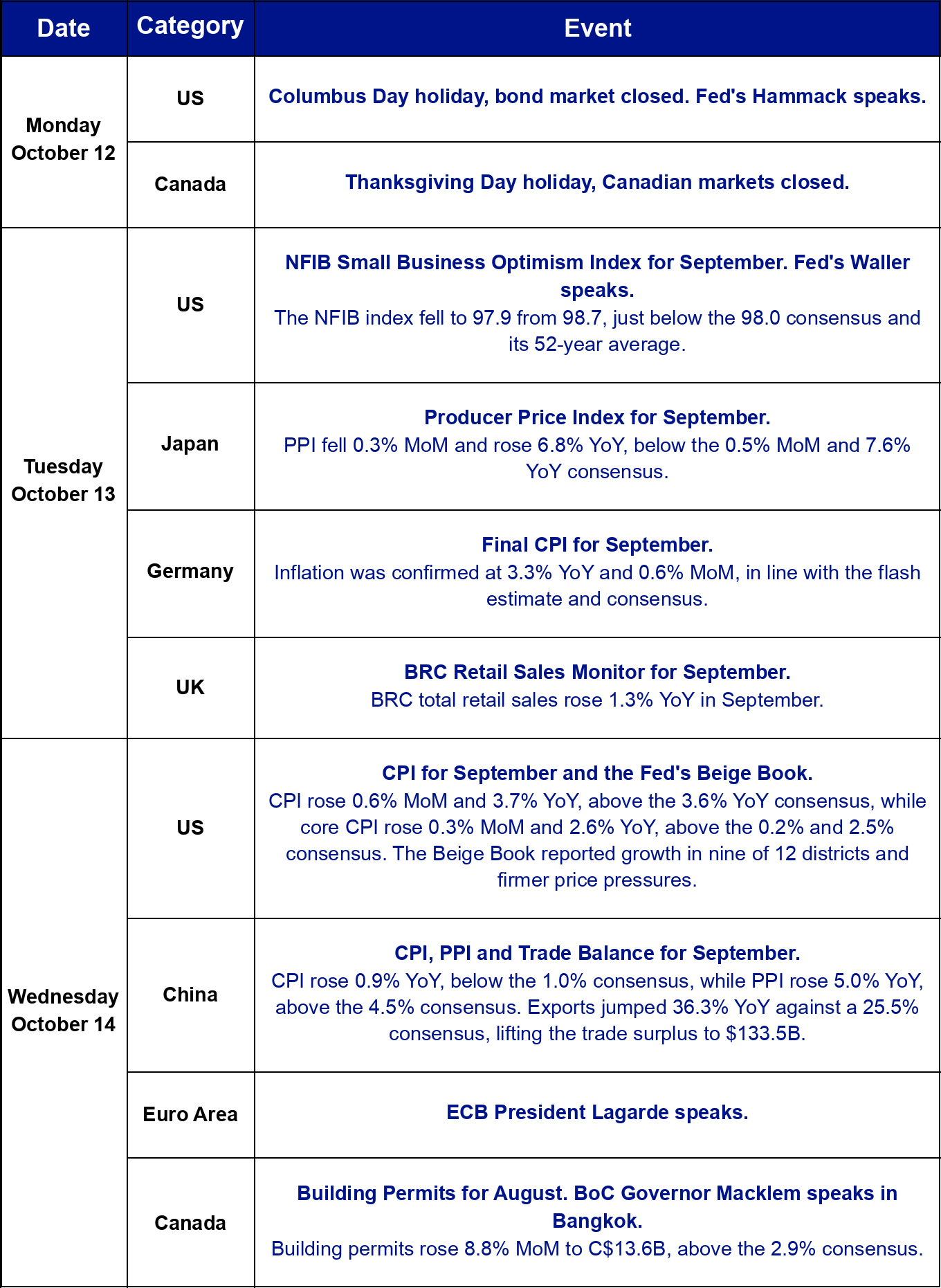
A hotter-than-expected CPI report that showed a broad-based increase in US consumer prices dragged risk sentiment lower as BTC and US equities sold off concurrently. The Russell-2000 entered a technical correction, BTC fell to $80K and a closely-followed gauge of chipmakers is now down 12% over the past six days. US Treasuries caught a bid as investors rushed to a safe haven and Chicago Fed President called the recent data “discouraging” for progress on the 2% inflation target.