The U.S. Senate passed the 21st Century ROAD to Housing Act
Risk assets traded softer over the past 24 hours, with BTC falling from $65.5K to just below $62K as US equities also drifted lower despite easing oil prices and reported progress in US-Iran negotiations. Treasury yields rose across the curve, with the 2-year yield moving above 4.2%, as markets priced renewed inflation risks ahead of Thursday’s PCE report, expected to show US headline inflation rising to 4.1% from 3.8%. In crypto, institutional activity remained active across tokenisation, ETH treasury accumulation and regulatory developments, while governance scrutiny intensified around digital asset treasury vehicles.
Block Scholes is an FCA-regulated institutional crypto derivatives analytics platform. Live data, IV surfaces, and backtesting available via blockscholes.com.
BTC traded sideways over the weekend between $62K and $64K, while Bitcoin and Ethereum ETFs continued to see outflows and perp funding stayed around neutral.
US-Iran talks remained fragile, with conflicting reports over whether negotiations had stalled, while Brent traded around $79 and the renewed Lebanon-Israel ceasefire continued to hold.
Schwab is reportedly working on S&P 500-linked binary options, while Japan’s National Business Pension Fund prepared a crypto allocation, Toss Bank partnered with Solana on stablecoin remittances, Bitget launched Stock+, Taiko halted block production after an exploit, and the Bank of England published draft rules for systemic stablecoins.
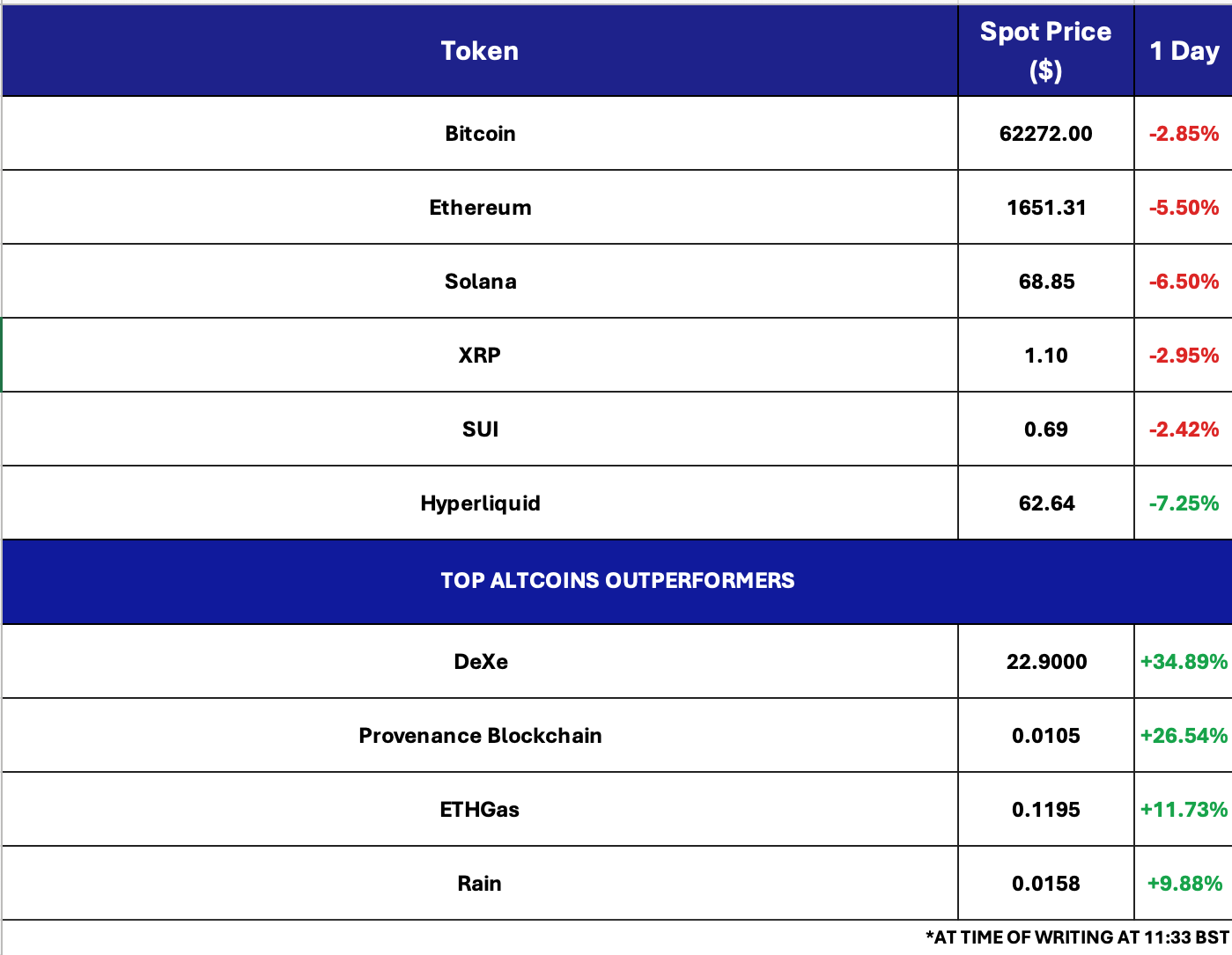
Market Snapshot: Overnight Moves
Macro & Markets
Crypto and US equities drifted lower over the past 24 hours, despite progress in peace talks between the US and Iran, as well as a slide in oil prices back below $80 a barrel.
BTC fell from $65.5K and currently trades just below $62K, while major benchmark stock indexes on Wall Street were driven lower by a selloff in large cap tech companies.
The Nasdaq-100 fell 0.19%, the S&P 500 declined 0.37% and shares of SpaceX plunged more than 16% — falling for a third consecutive day.
After years of sanctions, Washington issued a 60-day license yesterday that will allow Iran to sell its oil to the international market.
The general license was announced by the US Treasury Department and will allow the sale of crude oil and petrochemical/ petroleum products from Iran until August 21, 2026.
Meanwhile, Vice President JD Vance claimed the first round of negotiations with his Iranian counterparts was “very, very good” and had set up a "good foundation for a successful final deal", including the establishment of "mechanisms" to ensure the Strait of Hormuz remains open.
According to Vance, Iran has agreed to allow nuclear inspectors back into the country, a claim President Trump confirmed later.
Iranian officials however disputed this, stating it was “false and does not reflect reality”. Negotiators from Iran did however also cite progress in the negotiations.
The Vice President also said that Iran will also buy American soy, wheat and corn with unfrozen funds as part of a peace deal, though there was no indication from Iranian negotiators that they were ready to make those purchases.
The memorandum of understanding signed by both parties last week stated the Iranian central bank has the right to designate the beneficiaries of unfrozen funds.
Despite the drop in oil prices, US Treasury yields moved higher across the curve in trading yesterday, with the 2-year yield jumping above 4.2% to its highest level since February 2025.
Part of the recent move higher in yields has been driven by speculation the Federal Reserve may hike interest rates this year in order to bring inflation towards its 2% target.
On Thursday, the BEA’s PCE report is expected to show headline inflation in the US increasing to 4.1% in May from 3.8% in April.
DeFi / Web3 / Altcoins / Crypto3
Intercontinental Exchange (ICE), the parent company of the NYSE, and crypto exchange OKX formed a 50-50 joint venture called OKXICE to build infrastructure for tokenized financial products tied to NYSE-listed equities and ICE futures markets.
Subject to regulatory approvals, OKXICE is expected to operate as a U.S.-registered broker-dealer and futures commission merchant, with former New York Governor Andrew Cuomo and ICE futures executive Trabue Bland serving as co-chairs.
The venture plans to wrap NYSE-listed assets in blockchain infrastructure and is already developing oil futures products, following ICE’s earlier investment in OKX, which was reportedly around $200M at a $25B valuation.
Bitmine Immersion Technologies, the largest public Ethereum treasury company, said its holdings reached 5.67M ETH, equal to 4.7% of the total ETH supply, bringing it 94% of the way toward its “Alchemy of 5%” target.
The company reported $10.7B in crypto, cash, marketable securities and “moonshot” holdings, including $601M in cash and marketable securities, and a $104M stake in Eightco Holdings.
Bitmine said 4.72M ETH is staked through its Ethereum staking strategy, representing about $8.2B at $1,733 per ETH, while its Series A Preferred Stock is now trading on the NYSE under BMNP.
The U.S. Senate passed the 21st Century ROAD to Housing Act in an 85-5 vote, advancing a housing supply bill that also includes a temporary ban on central bank digital currencies.
The bill would prohibit the Federal Reserve from issuing or creating a CBDC or any digital asset “substantially similar” to one until Dec. 31, 2030.
The legislation now heads to the House for a floor vote before going to the president’s desk, with House GOP leaders reportedly planning an expedited vote after lawmakers return from recess.
President Donald Trump has also signed two executive orders aimed at strengthening U.S. preparedness for the quantum computing era.
The first order sets a clear federal migration timeline for post-quantum cryptography, requiring high-value government assets to transition by the end of 2030 and high-impact systems by the end of 2031.
The move is designed to protect sensitive data from future quantum-enabled attacks, including the risk that adversaries collect encrypted information today and decrypt it once more powerful quantum computers become available.
The order is particularly relevant for digital assets, as blockchains rely heavily on existing cryptographic standards. Industry concerns around a potential “Q-Day” have intensified, with some researchers warning that vulnerable Bitcoin addresses and other crypto infrastructure may eventually require post-quantum upgrades.
A second order focuses on expanding U.S. leadership in quantum innovation, including support for research, commercial applications, supply chains and workforce development.
Solmate Infrastructure is facing a shareholder lawsuit from RBCH, its largest external investor, over allegations of self-dealing, fiduciary breaches and weak corporate governance.
RBCH, affiliated with RockawayX founder Viktor Fischer, claims Solmate’s board used investor capital to benefit insiders through preferential advisory agreements, excessive compensation and discounted share issuances.
The lawsuit focuses in part on board members Ron Sade and Keren Maimon, who allegedly acquired 2.298M Class B shares at $4.97 each, diluting existing shareholders by around 20%.
The dispute comes as Solmate trades at a steep discount to net asset value despite holding roughly 2M SOL.
RBCH argues the underperformance reflects mismanagement and governance failures, not only Solana’s market weakness.
The lawsuit seeks emergency relief, including the reversal of the disputed share issuance and changes to Solmate’s board.
More broadly, the case highlights rising scrutiny of digital asset treasury companies, where investors are increasingly focused on governance, insider incentives and capital allocation.
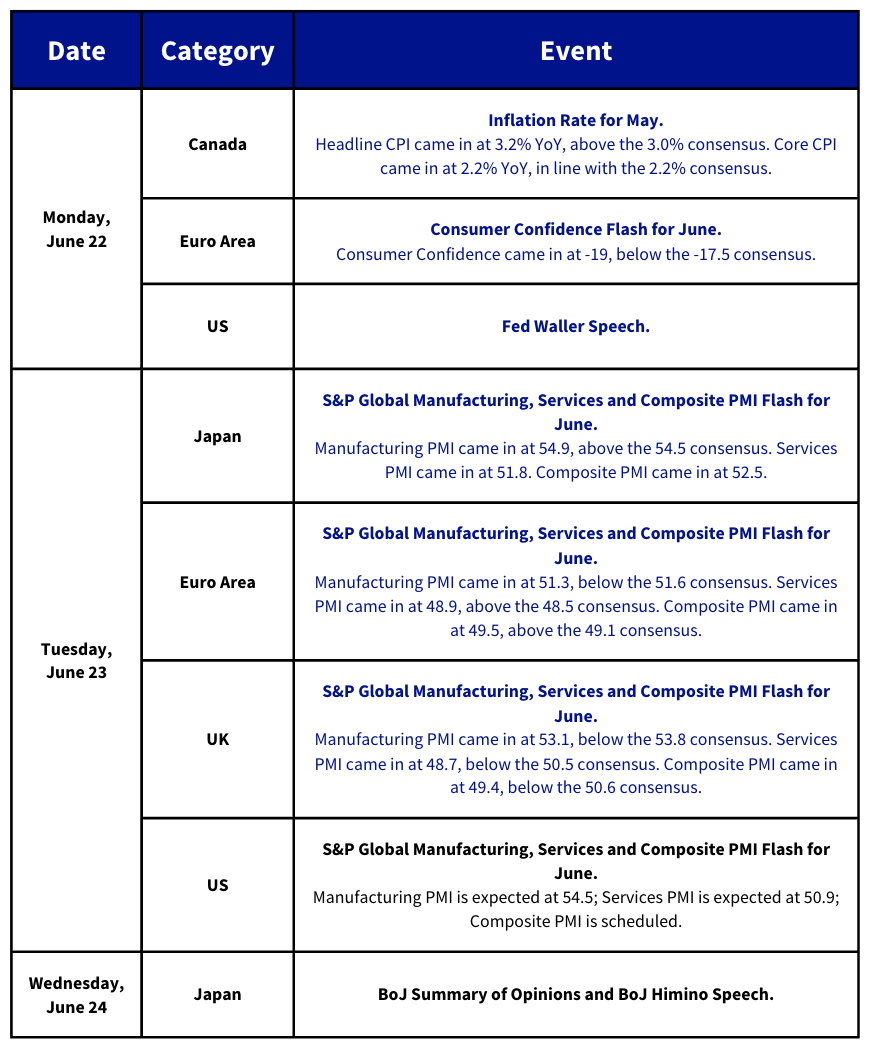
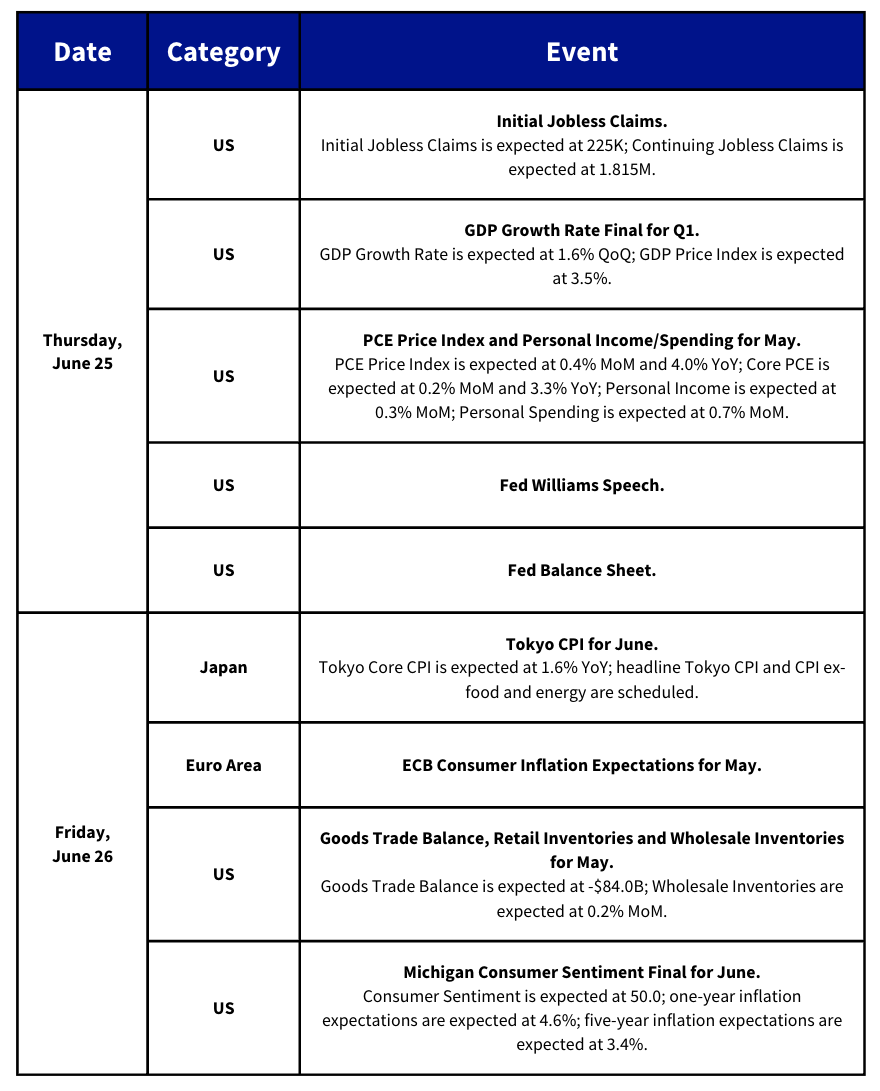
This Week's Calendar
Charts of the Day
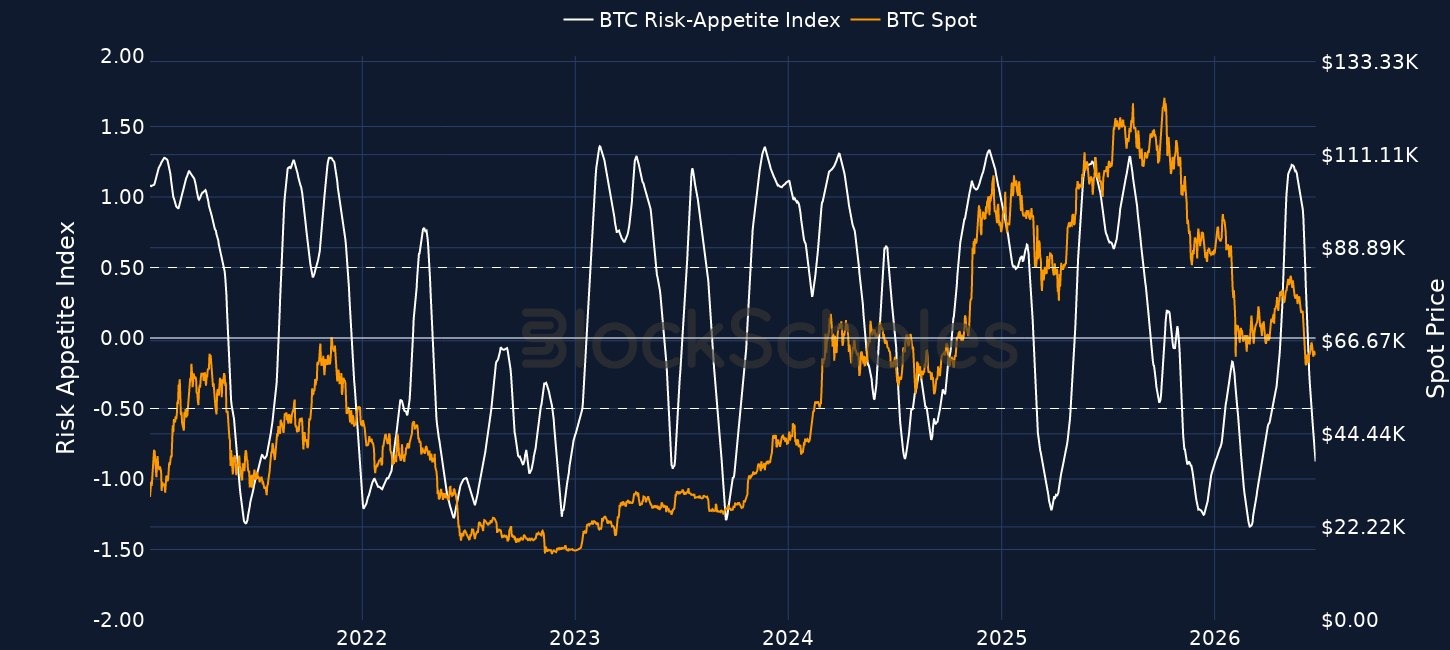
Figure 1. Block Scholes BTC Risk-Appetite Index (white, left-hand axis) and BTC spot price (orange, right-hand axis).
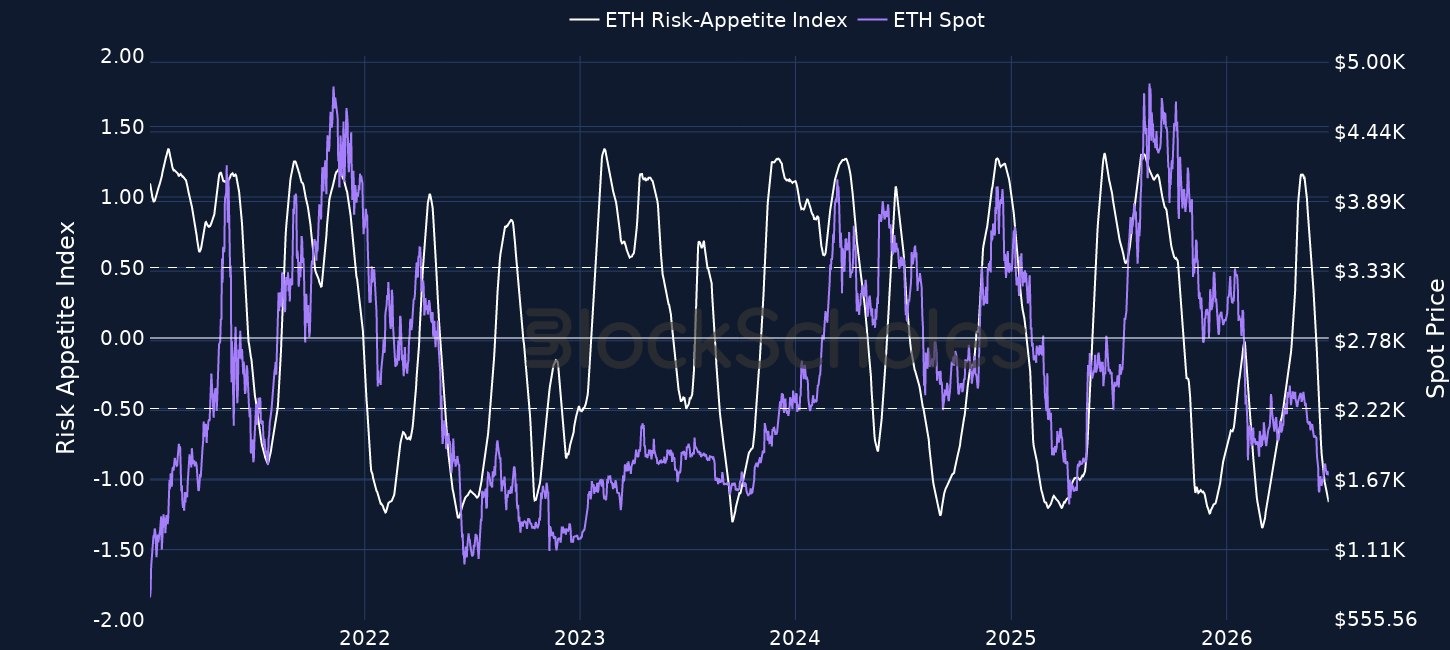
Figure 2. Block Scholes ETH Risk-Appetite Index (white, left-hand axis) and ETH spot price (purple, right-hand axis).
Block Scholes is an FCA-regulated institutional crypto derivatives analytics platform. Live data, IV surfaces, and backtesting available via blockscholes.com.
BTC traded sideways over the weekend between $62K and $64K, while Bitcoin and Ethereum ETFs continued to see outflows and perp funding stayed around neutral.
US-Iran talks remained fragile, with conflicting reports over whether negotiations had stalled, while Brent traded around $79 and the renewed Lebanon-Israel ceasefire continued to hold.
Schwab is reportedly working on S&P 500-linked binary options, while Japan’s National Business Pension Fund prepared a crypto allocation, Toss Bank partnered with Solana on stablecoin remittances, Bitget launched Stock+, Taiko halted block production after an exploit, and the Bank of England published draft rules for systemic stablecoins.
Market Snapshot: Overnight Moves
Macro & Markets
Crypto and US equities drifted lower over the past 24 hours, despite progress in peace talks between the US and Iran, as well as a slide in oil prices back below $80 a barrel.
BTC fell from $65.5K and currently trades just below $62K, while major benchmark stock indexes on Wall Street were driven lower by a selloff in large cap tech companies.
The Nasdaq-100 fell 0.19%, the S&P 500 declined 0.37% and shares of SpaceX plunged more than 16% — falling for a third consecutive day.
After years of sanctions, Washington issued a 60-day license yesterday that will allow Iran to sell its oil to the international market.
The general license was announced by the US Treasury Department and will allow the sale of crude oil and petrochemical/ petroleum products from Iran until August 21, 2026.
Meanwhile, Vice President JD Vance claimed the first round of negotiations with his Iranian counterparts was “very, very good” and had set up a "good foundation for a successful final deal", including the establishment of "mechanisms" to ensure the Strait of Hormuz remains open.
Don't miss what's next
Upgrade your Block Scholes account to unlock this article and other exclusive insights
Block Scholes is an FCA-regulated institutional crypto derivatives analytics platform. Live data, IV surfaces, and backtesting available via blockscholes.com.
BTC traded sideways over the weekend between $62K and $64K, while Bitcoin and Ethereum ETFs continued to see outflows and perp funding stayed around neutral.
US-Iran talks remained fragile, with conflicting reports over whether negotiations had stalled, while Brent traded around $79 and the renewed Lebanon-Israel ceasefire continued to hold.
Schwab is reportedly working on S&P 500-linked binary options, while Japan’s National Business Pension Fund prepared a crypto allocation, Toss Bank partnered with Solana on stablecoin remittances, Bitget launched Stock+, Taiko halted block production after an exploit, and the Bank of England published draft rules for systemic stablecoins.
Market Snapshot: Overnight Moves
Macro & Markets
Crypto and US equities drifted lower over the past 24 hours, despite progress in peace talks between the US and Iran, as well as a slide in oil prices back below $80 a barrel.
BTC fell from $65.5K and currently trades just below $62K, while major benchmark stock indexes on Wall Street were driven lower by a selloff in large cap tech companies.
The Nasdaq-100 fell 0.19%, the S&P 500 declined 0.37% and shares of SpaceX plunged more than 16% — falling for a third consecutive day.
After years of sanctions, Washington issued a 60-day license yesterday that will allow Iran to sell its oil to the international market.
The general license was announced by the US Treasury Department and will allow the sale of crude oil and petrochemical/ petroleum products from Iran until August 21, 2026.
Meanwhile, Vice President JD Vance claimed the first round of negotiations with his Iranian counterparts was “very, very good” and had set up a "good foundation for a successful final deal", including the establishment of "mechanisms" to ensure the Strait of Hormuz remains open.
Don't miss what's next
Upgrade your Block Scholes account to unlock this article and other exclusive insights
Premium
$30/mo
Access previous and future reports, market insights & deep dives.
BTC rallied more than 6% on Friday and now trades near $85K, its highest level since January, even as 10-year Treasury yields hit 5% and markets price a 53% chance of another Fed hike. Fed's Kashkari and Schmid backed last week's hike, warning inflation has spread well beyond the oil shock, while the Bank of Japan lifted rates to 1.25% and a reported 'rate check' helped the yen pare its losses. In crypto, ZetaChain holders voted to shut down its Layer 1 and move ZETA to Solana, and Visa is closing a loophole that let memecoin card purchases be coded as digital media.
The Bank of Japan raised its policy rate by 25bp to around 1.25%, its highest level since 1995, in a split 7-2 vote, though the yen still fell 1.3% to 157.95 against the dollar. Sixteen of eighteen FOMC dots now sit at 4.1% or higher for end-2026, and markets price an 87% chance of another hike this year, while BTC climbed to $78.2K, its highest since 9 September. In crypto, S&P Global agreed to acquire smart-contract security firm OpenZeppelin, and the CFTC broadened no-action relief for developers routing users to regulated derivatives markets.