Zcash Drops Over 40%
BTC traded back near the low $60K region after renewed selling pressure, with ETH underperforming sharply as inverted options vol term structures and extreme short-dated put demand signalled continued hedging against further downside. Spot ETF flows showed early signs of stabilisation after prolonged outflow streaks, while US equities were mixed, ZEC plunged on Orchard vulnerability concerns, and regulators and institutions advanced tokenisation, stablecoin settlement and crypto market-structure initiatives.

Block Scholes is an FCA-regulated institutional crypto derivatives analytics platform. Live data, IV surfaces, and backtesting available via blockscholes.com.
Recent Research from Block Scholes
- Tokenised Markets on Bitget UEX: How Traders Are Utilising 24/7 Real-World Assets For Real Time Macro Hedging
- Block Scholes x Panoptic: Bridging The Onchain Convexity Gap
- Volatility Report: February 2026
- 2026 – the year of RWA perps
In Today's Note
- BTC traded back near the low $60K region after renewed selling pressure, with ETH underperforming sharply as inverted options vol term structures and extreme short-dated put demand signalled continued hedging against further downside.
- Spot ETF flows showed early signs of stabilisation after prolonged outflow streaks, while US equities were mixed, ZEC plunged on Orchard vulnerability concerns, and regulators and institutions advanced tokenisation, stablecoin settlement and crypto market-structure initiatives
Market Snapshot: Overnight Moves
.png)
Macro & Markets
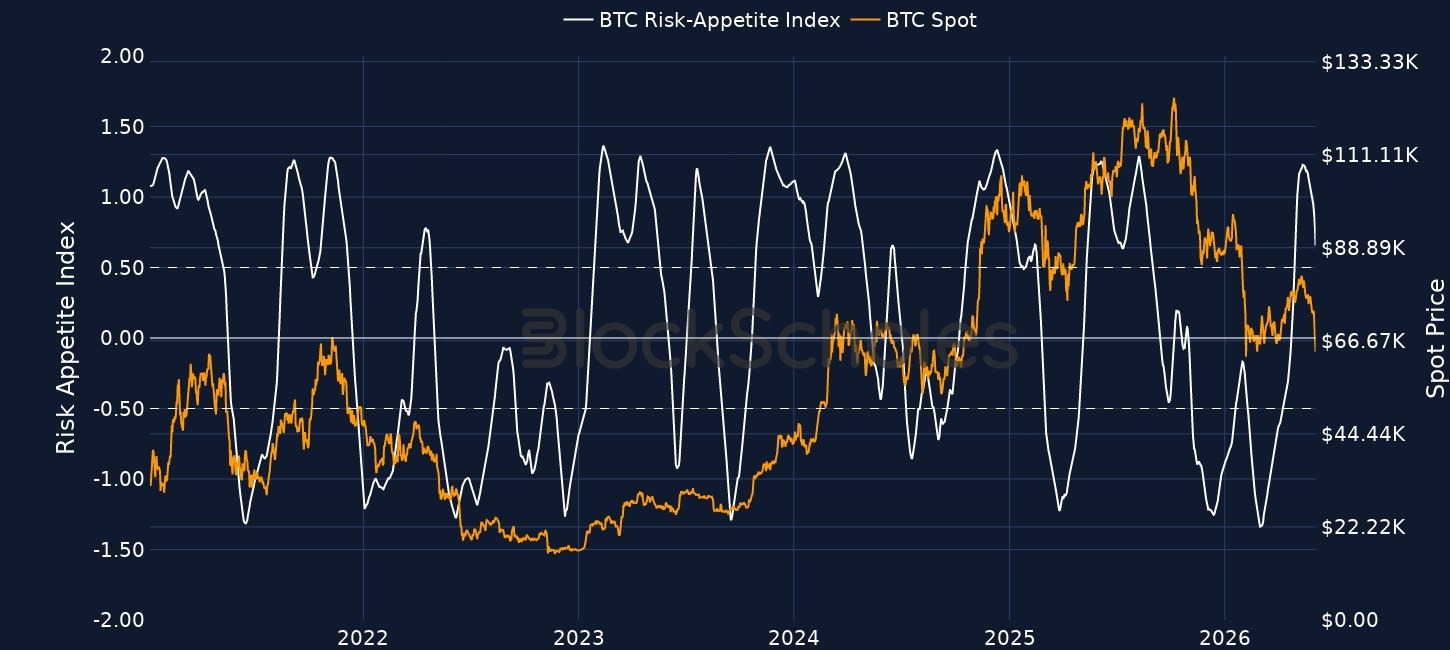
- After plunging to $61K early Thursday morning and then partly recovering to trade above $64K, a wave of fresh selling over the past 24 hours has resulted in BTC once more trading close to the low $60K region.
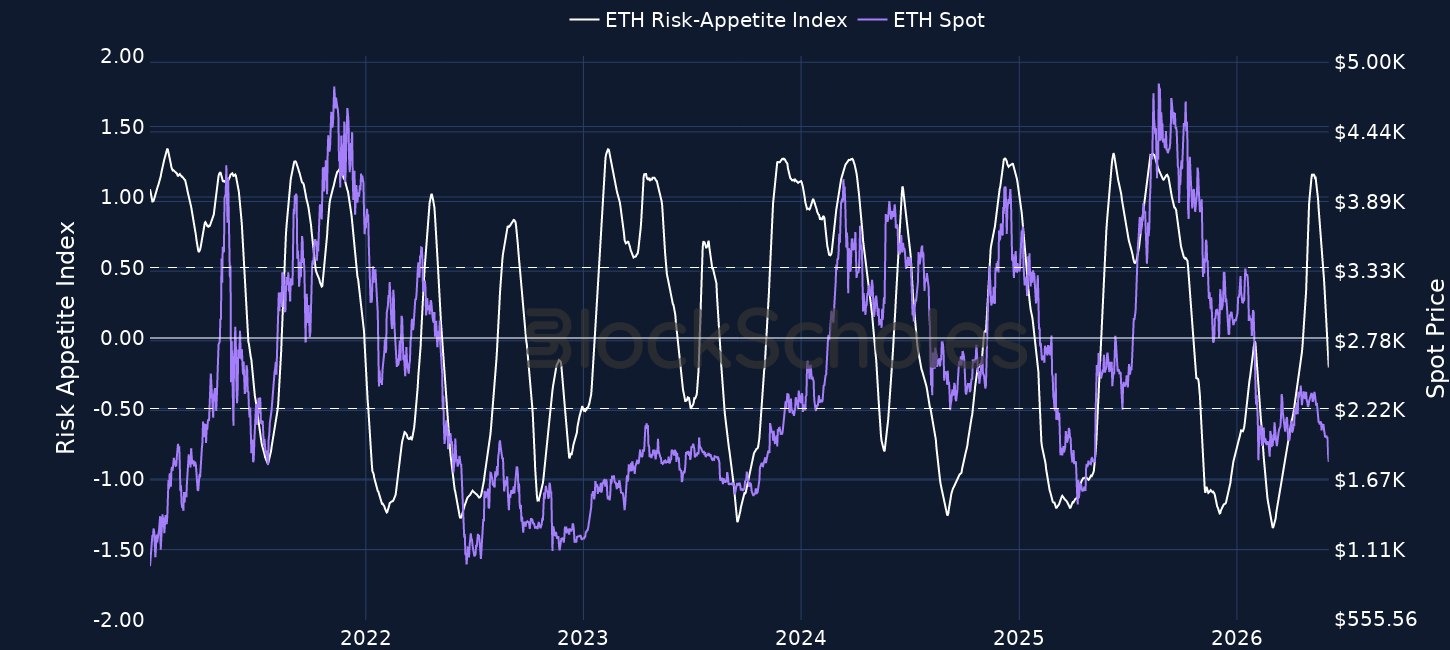
- Losses have been larger however in ETH, which is down 6.0% over the past 24 hours relative to a 1.3% decline in BTC.
- At $1,600, ETH is currently at its lowest level since April 2025.
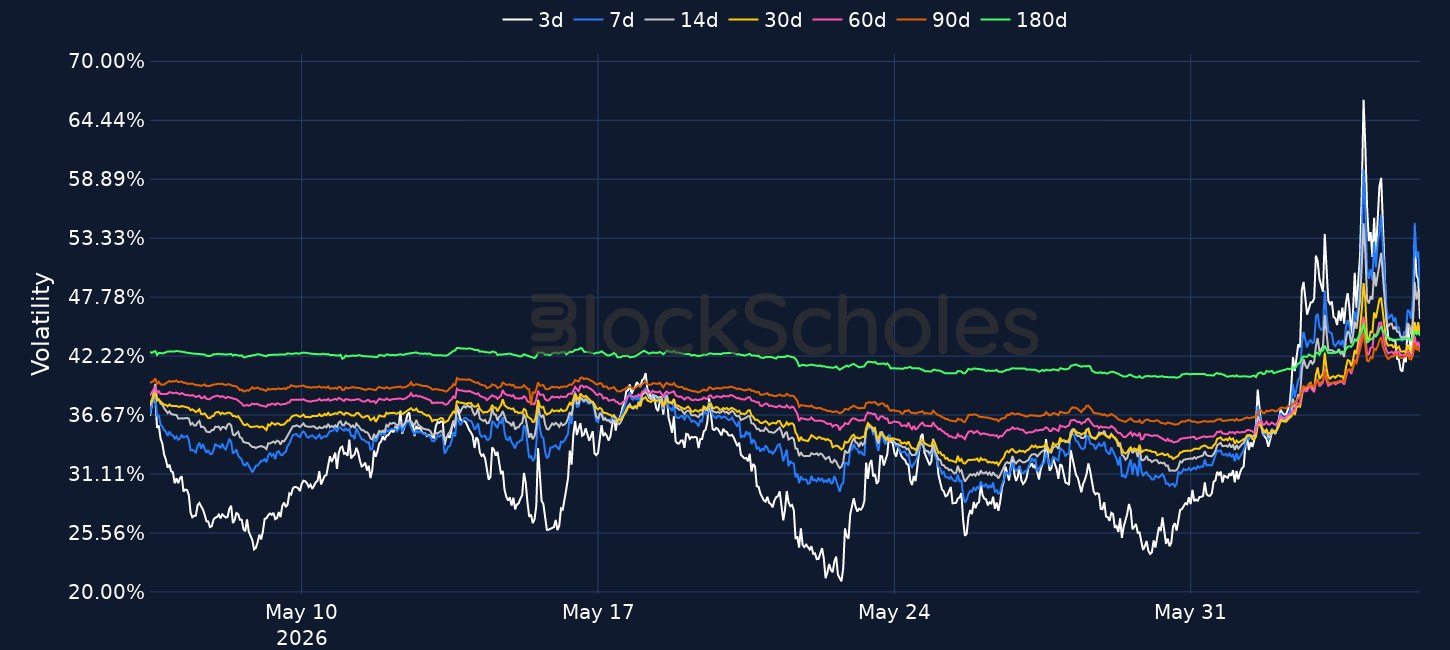
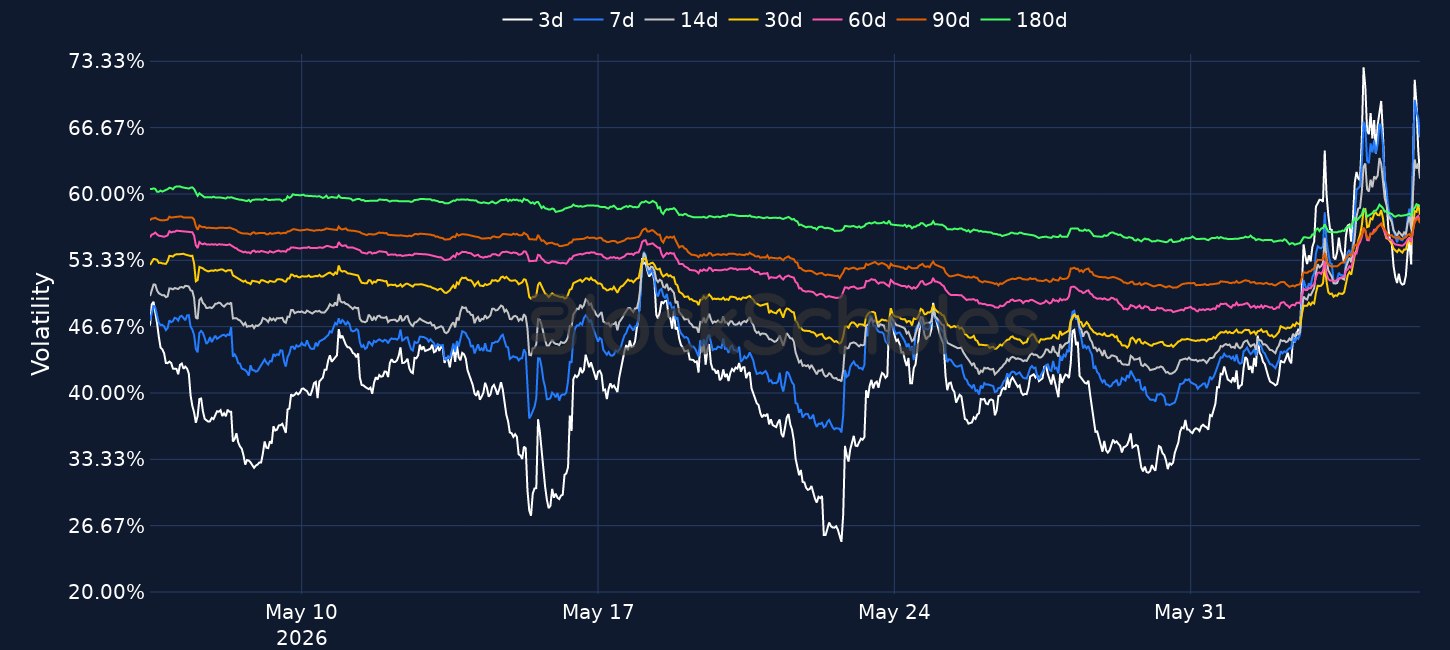
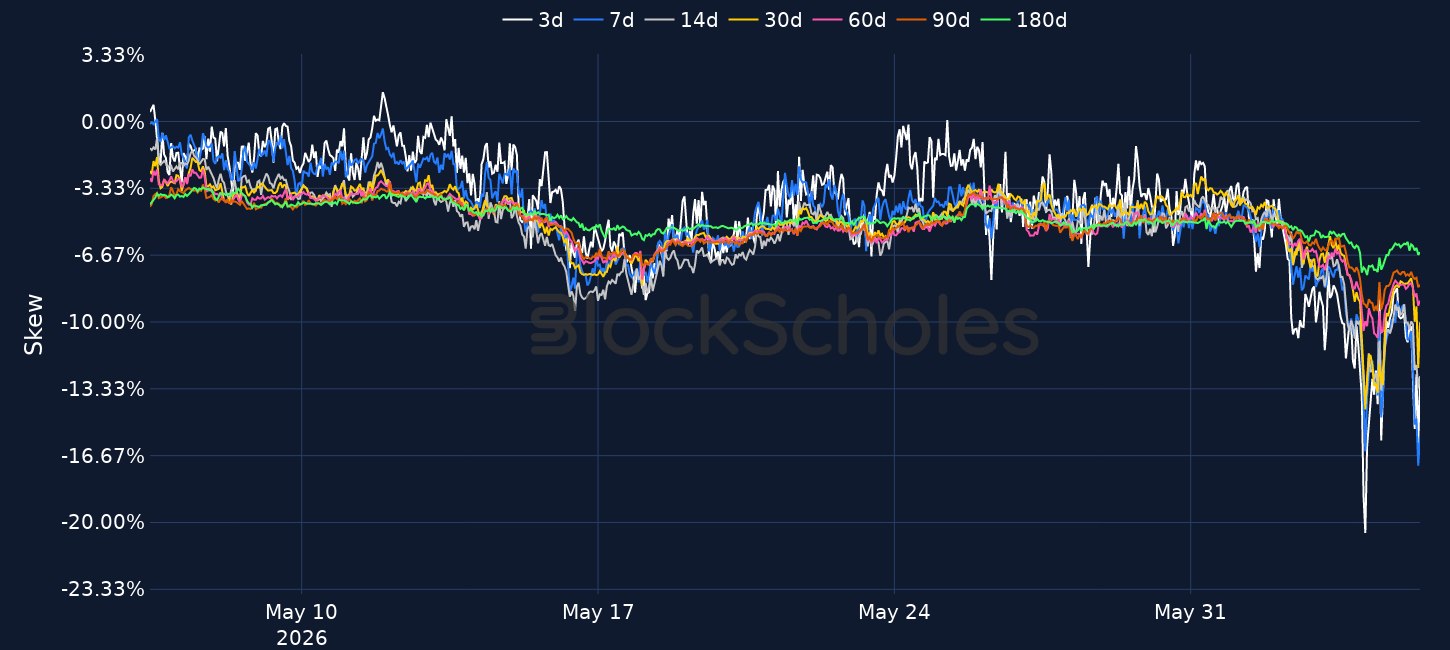
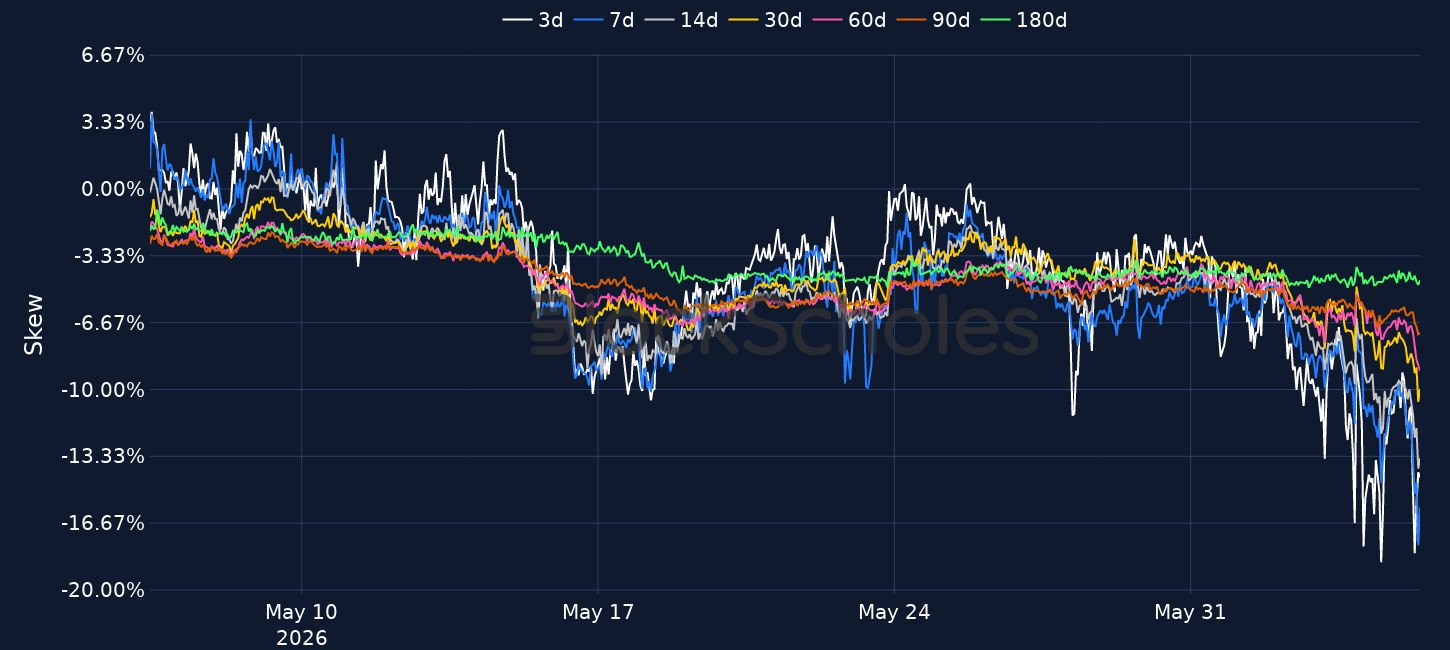
- Options markets for both assets reveal a term structure of volatility that is still inverted and a very strong demand from traders to hedge against a further selloff in spot prices.
- The 25-delta put-call skew on 7-day BTC options is currently trading at -17% — the strongest put-demand we’ve seen since late February 2026 when BTC also traded in the $60K region.
- The current rout in spot prices initially coincided with Strategy Inc's $2.5M Bitcoin sale, but there are signs that buyers are stepping in at the current multi-month low prices.
- After 13 consecutive sessions of outflows amounting to nearly $4.4B in redemptions, spot Bitcoin ETFs have now relaxed their aggressive pace of selling. Yesterday, the products pulled in a tepid, though positive, $3.2M.
- Similarly, after 17 consecutive outflow days, spot Ethereum ETF products bought $19.3M worth of Ether in yesterday’s trading session.
- Over on Wall Street, US equities recorded mixed performances as large-tech stocks and chipmakers sold off, while other areas of the market ticked higher.
- The rally in semiconductor and AI companies slowed down after Broadcom’s forecast for AI chip sales came in lower than expected. That pushed the stock down more than 12%, its largest single-day drop since January 2025.
- The S&P 500 finished 0.41% higher, while the tech-heavy Nasdaq-100 declined by 0.53%.
- Prospects for a diplomatic exit route from the Iran war continue to remain elusive. President Trump reiterated on Truth Social yesterday that he’s “right in the middle of my final negotiations to end the War with the Islamic Republic of Iran”.
- That message was in stark contrast to comments from Iran’s Foreign Minister earlier who said, “no tangible progress has been achieved in the negotiation process” with the US.
- Earlier in the week, Iran fired missiles and drones at Kuwait and Bahrain, after the US attacked an oil tanker heading towards Iran.
- Iran has repeatedly claimed that any peace deal with the US would require a ceasefire in Lebanon too; however, the Tehran-backed Hezbollah militia rejected the US-brokered ceasefire truce between Lebanon and Israel yesterday.
DeFi / Web3 / Altcoins / Crypto3
- Zcash, in particular, stands out among losing tokens. In the last 24 hours alone, the token shed 50% of its value, falling from $558 to $264 before stabilising slightly around $320.
- That selloff was driven by reports disclosed on June 3 that a critical vulnerability had been discovered in the network’s privacy pool, Orchard, on May 29. The vulnerability could have been used by attackers to create undetectable counterfeit ZEC coins that the network would have accepted as genuine.
- According to a blog post from the Zcash Foundation, “The vulnerability was caught before any known exploitation occurred.” and the flaw was fully remediated through an ecosystem-wide fix coordinated by Zcash Open Development Lab (ZODL) on June 2.
- However, Shielded Labs, an independent Zcash development organisation, said there is no cryptographic method to determine whether the vulnerability was exploited before it was patched due to Orchard’s privacy properties, and is now exploring a future network upgrade that would allow users to independently verify the integrity of the Zcash supply.
- Despite such a large one-day drop, the token is still up more than 500% from the sub-$50 levels at which it traded exactly one year ago.
- The Hong Kong Monetary Authority (HKMA) has established a Tokenised Bond Expert Group, bringing together banks, legal firms, technology providers and market infrastructure participants to support the development and scaling of Hong Kong’s tokenized bond market.
- The group has already held its first discussions, focusing on how Hong Kong’s existing legal and regulatory framework applies to tokenized bond issuance and trading, with feedback set to inform a broader review of the jurisdiction’s tokenization rules.
- The move builds on a series of HKMA-led tokenized bond initiatives, including the launch of the world’s first tokenized government green bond in 2023 and a 2025 digital bond issuance that integrated tokenized central bank money through both e-CNY and e-HKD.
- White House crypto adviser Patrick Witt defended the Clarity Act during a Blockchain Association town hall, calling it a “pro-regulatory” and “pro-law enforcement” bill as lawmakers try to pass the market structure package before the midterm election window narrows.
- The debate now centers on AML provisions and the Blockchain Regulatory Certainty Act, which would clarify that non-custodial developers are not money transmitters, after law enforcement groups and Sen. Catherine Cortez Masto warned the bill could weaken illicit-finance tracing and prosecution tools.
- Witt said lawmakers had responded to those concerns by adding new sections before the Senate Banking Committee vote, while Sen. Cynthia Lummis warned that if the bill does not pass this year, it may not return until 2030.
- Visa, the global payments network, said it is working with stablecoin infrastructure provider Brale on a proof of concept to test settlement using SBC, a US dollar-backed stablecoin, on the Canton Network.
- The initiative will evaluate whether Canton’s privacy-focused blockchain architecture can support institutional payment settlement while limiting the visibility of sensitive transaction data, as Visa explores adding SBC to its growing stablecoin settlement infrastructure.
This Week's Calendar
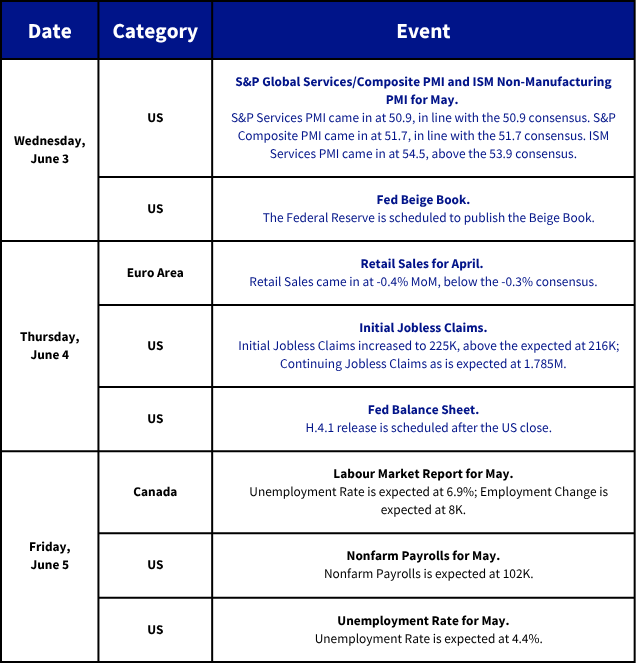
.png)

Charts of the Day