Tokenised Equities Reached a New Daily Trading Volume Record
BTC remained range-bound around $76–77K while spot Bitcoin ETFs saw a third consecutive day of outflows, keeping crypto sentiment cautious. Beyond macro, tokenised equity volumes reached a new daily record of $3.57B, while policy and market-structure developments remained active, including a White House review of fintech and digital asset banking access, Polymarket’s launch of private-company prediction markets, Yorkville’s shift toward a ’40 Act ETF structure, and South Carolina’s new crypto framework.

Block Scholes is an FCA-regulated institutional crypto derivatives analytics platform. Live data, IV surfaces, and backtesting available via blockscholes.com.
Recent Research from Block Scholes
- Tokenised Markets on Bitget UEX: How Traders Are Utilising 24/7 Real-World Assets For Real Time Macro Hedging
- Block Scholes x Panoptic: Bridging The Onchain Convexity Gap
- Volatility Report: February 2026
- 2026 – the year of RWA perps
In Today's Note
- BTC stayed range-bound around $76K–$77K, while spot Bitcoin ETFs recorded their third consecutive day of outflows.
- US equities fell and global bond yields climbed, with long-end yields in the US, Japan and UK reaching multi-year highs as US–Iran tensions remained unresolved.
- Tokenised equity volumes hit a new daily record, while the White House ordered regulators to review fintech and digital asset banking access, Polymarket launched private-company prediction markets, Yorkville shifted its ETF strategy to a ’40 Act structure, and South Carolina signed a new state-level crypto framework into law.
Market Snapshot: Overnight Moves

Macro & Markets
- BTC has continued to trade around the $76-77K region over the past 24 hours, while Spot Bitcoin ETFs marked their third consecutive day of outflows.
- The latest downturn in risk appetite across both crypto and US equity markets has occurred alongside a continued bout of weakness in global bond markets which has seen government bond yields reach multi-year highs.
- The S&P 500 posted its longest losing streak since the end of March, ending yesterday’s session down 0.67%, while the Nasdaq-100 index closed -0.61%.
- At the long end of the US treasury yield curve, 30-year yields rose to 5.18%, a high last seen back in 2007, driven by increased concerns of the inflation fallout from the Middle East conflict.
- Meanwhile, 30-year JGB yields sit above 4.0%, their highest on record, while 30-year UK gilt yields are at highs last seen in 1998 (5.7%).
- Further adding to the deteriorating macro backdrop, President Trump renewed his threats of resuming strikes against Iran yesterday.
- Speaking to reporters, the US president said “I hope we don’t have to do the war, but we may have to give them another big hit”.
- When asked how long he would wait before striking, Trump responded “Well, I mean, I’m saying two or three days, maybe Friday, Saturday, Sunday. Something maybe early next week, a limited period of time.”
- Only a day earlier on Monday Trump said at a White House event that he had called off attacks on Iran due to leaders in the Gulf region persuading him to seek further diplomatic talks and that the US had “very big discussions with Iran, and we’ll see what they amount to”.
- However, in a procedural vote yesterday, the Republican-led US Senate passed a war powers resolution that seeks to compel President Trump to end the war unless he can secure congressional authorisation to continue military operations.
- The measure was passed 50-47, marking the first time the Senate has moved the bill forward after seven previously failed attempts.
- Four Republicans joined nearly all Senate Democrats in backing the resolution. Republican Senator Bill Cassidy said “While I support the administration’s efforts to dismantle Iran’s nuclear program, the White House and Pentagon have left Congress in the dark on Operation Epic Fury … Until the administration provides clarity, no congressional authorization or extension can be justified.”
- Vice President JD Vance shared a slightly more optimistic outlook on negotiations however stating yesterday that “We think that we’ve made a lot of progress, we think the Iranians want to make a deal” and restarting military campaigns is “option B … not what the president wants”.
DeFi & TradFi
- Tokenized equities reached a new daily trading volume record of $3.57B on Monday.
- According to the data, activity across tokenized equity products has accelerated since the beginning of the year, with trading volumes rising steadily into the latest all-time high.
- A new White House executive order published on May 19, 2026, has directed the “Federal financial regulators” (which includes the SEC, CFTC, FDIC, OCC, CFPB, and NCUA) to review and remove regulatory barriers limiting fintech and digital asset firms from integrating with traditional banking and payment infrastructure, including partnerships with federally regulated institutions.
- The order specifically requests that the Federal Reserve evaluate whether uninsured banks, crypto firms, and other non-bank financial companies can receive direct access to Federal Reserve payment accounts and real-time payment systems, alongside potential legal or legislative changes required to enable such access.
- The framework also calls for streamlined chartering, licensing, and supervisory processes for fintech firms, while formally defining blockchain-based services, digital asset activities, brokerage, custody, derivatives, and payment infrastructure as covered fintech financial activities under the policy initiative.
- Polymarket has launched prediction markets tied to private company milestones and performance, allowing users to trade on events such as valuation thresholds, IPO timing, and secondary market activity using data supplied by Nasdaq Private Market.
- Nasdaq Private Market, a provider of private-market liquidity and investment infrastructure, will act as the official resolution data provider, supplying transaction and pricing data used to settle the markets and anchor them to institutional-grade private market activity.
- The launch positions prediction markets as a new price-discovery layer for private equities, extending retail access to private-company sentiment while also creating real-time market signals that institutional investors can monitor alongside traditional secondary-market data.
- Yorkville America, the investment adviser behind the Truth Social Funds, said it has withdrawn several ETF filings under the Securities Act of 1933 in favor of launching future products under the Investment Company Act of 1940 framework instead.
- The firm said the ’40 Act structure offers greater flexibility for developing differentiated and rules-based ETF strategies, alongside enhanced investor protections, broader brokerage and retirement account accessibility, and expanded institutional distribution capabilities.
- Yorkville America added that the shift is intended to support the continued expansion of its “America First” ETF platform, which currently includes five NYSE-listed Truth Social Funds focused on sectors including defense, energy, technology, real estate, and domestic industrial exposure
- South Carolina Governor Henry McMaster has signed S.163 into law, establishing a state-level crypto framework in South Carolina, including protections for self-custody, blockchain nodes, staking, mining, and digital asset payments.
- The legislation prohibits state authorities from accepting or requiring central bank digital currencies (CBDCs), bars participation in Federal Reserve CBDC pilot programs, and prevents digital assets from being subjected to discriminatory taxation compared with U.S. legal tender.
- The law also exempts activities such as running blockchain nodes, staking services, mining operations, and certain crypto-to-crypto transactions from money transmitter licensing requirements, while explicitly stating that staking-as-a-service and mining-as-a-service offerings are not securities under state law.
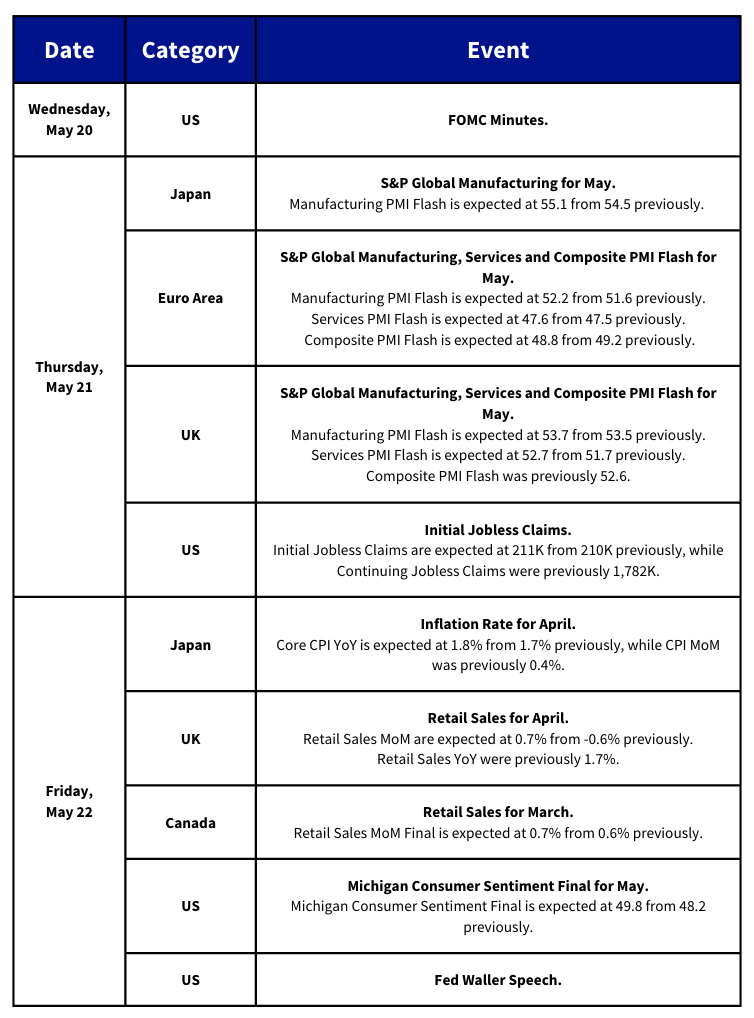
This Week's Calendar


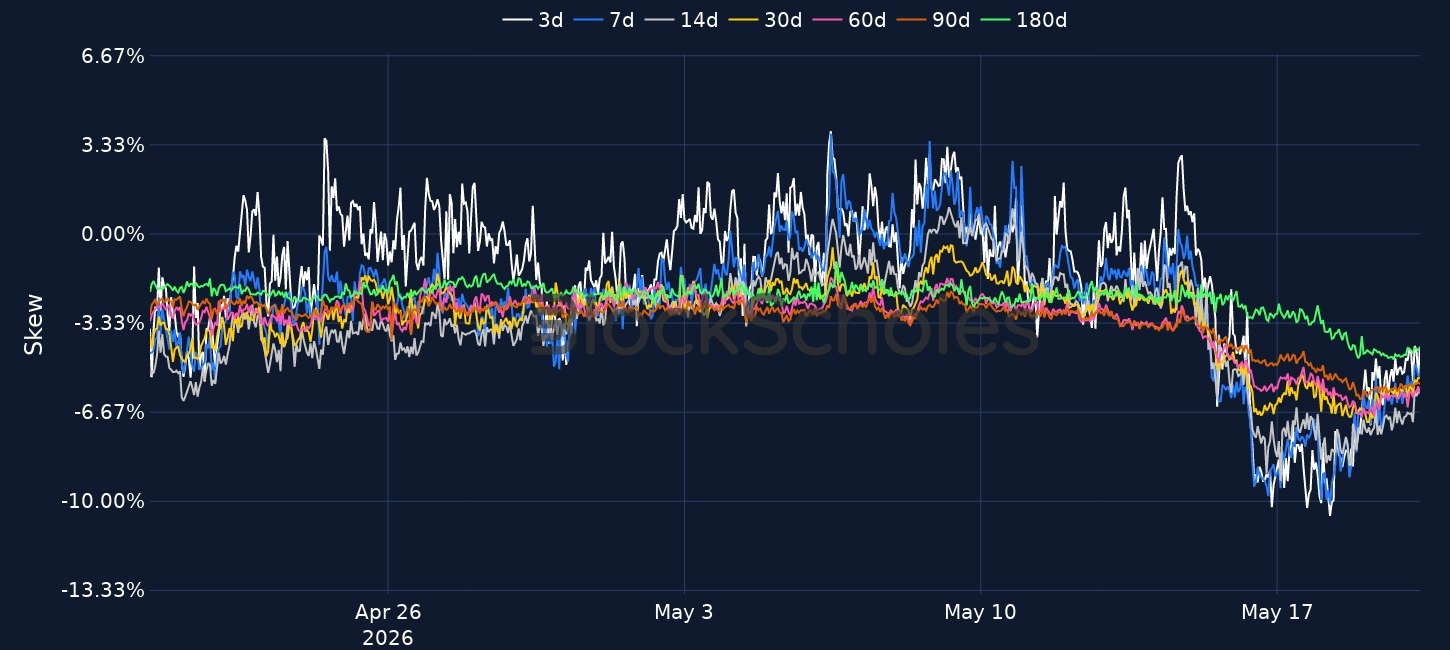
Charts of the Day