SEC Expected To Release Innovation Exemption For Tokenized Stocks
US equities whipsawed while BTC held around $76K–$77K, as risk sentiment was pressured by US-Iran escalation before partially recovering after Trump delayed a planned strike. BTC spot ETFs saw $648.6M of outflows, the largest single-day redemption since Jan 29, with cumulative selling of more than $1.6B since Monday last week. Despite the macro/geopolitical backdrop, short-dated implied vol remains near YTD lows, with 7D BTC IV at 35% and ETH at 43%, though both markets show defensive put skew.
Block Scholes is an FCA-regulated institutional crypto derivatives analytics platform. Live data, IV surfaces, and backtesting available via blockscholes.com.
BTC stayed under pressure, trading between $76K and $77K as spot Bitcoin ETFs saw another major day of outflows.
Markets whipsawed on US–Iran headlines, with risk sentiment improving after Trump said he had delayed a planned strike to allow more time for diplomacy.
Options markets remain unusually calm despite downside hedging, with BTC and ETH implied volatility near year-to-date lows while put-call skew still favours puts.
Market Snapshot: Overnight Moves
Macro & Markets
US equities whipsawed in yesterday’s trading session while BTC traded between $76K and $77K.
The S&P 500 finished at 0.074% paring back most of its intraday losses, after President Trump said that he had called off a strike on Iran planned for Tuesday as leaders in the Persian Gulf called for more time to reach a diplomatic resolution.
Spot Bitcoin ETFs saw outflows of $648.6M yesterday, their largest since Jan 29, 2026 when single-day outflows amounted to $817.8M — since Monday last week, the funds have collectively sold more than $1.6B worth of bitcoin.
At a White House event yesterday evening the US president said, “I put it off for a little while, hopefully maybe forever, but possibly for a little while, because we’ve had very big discussions with Iran, and we’ll see what they amount to”.
He added that he was “asked by Saudi Arabia, Qatar, UAE, and some others if we could put it off for two or three days, a short period of time, because they think that they are getting very close to making a deal”, cautioning that the main point of contention is ensuring that “there’s no nuclear weapon going into the hands of Iran”.
Trump’s comments reflected a Truth Social announcement that he made prior to the White House event, where he wrote “Based on my respect for the above mentioned Leaders, I have instructed … The United States Military, that we will NOT be doing the scheduled attack of Iran tomorrow”.
Earlier in the day, risk-sentiment had taken a hit after both the US and Iran said that they had rejected fresh proposals to bring an end to the war.
The White House said an offer was delivered by Iran through Pakistani mediators on Sunday but failed to offer meaningful commitments around Iran’s surrender of its uranium stockpile, according to Axios. Similarly, Iran had indicated that US demands remained unacceptable.
Implied volatility in both BTC and ETH options markets still remains close to its year-to-date lows however.
After falling to 31% earlier last week, 7-day BTC options now trade with an implied vol of 35%. That low vol environment has occurred alongside a considerable increase in put-call skew towards put options (an interesting divergence given that we would expect higher volatility if the market is worried about a selloff). Short dated put options currently trade with a 5 vol point premium over similar-delta call options.
The same can be seen in ETH, where put-call skew is trading at -7% and short-tenor implied vol is around 43%. On Friday last week, 7-day ETH options implied volatility fell to a year-to-date low of 37%.
For live, recent or historical access to our entire universe of crypto data for derivatives and beyond, including our implied volatility data, access our data plans here and find our API docs here.
According to Bloomberg, Iran has launched an insurance platform backed by Bitcoin for Iranian shipping companies passing through the Strait of Hormuz, citing documents from the nation’s Ministry of Economy and Financial Affairs.
Iranian news agency, Fars, said that the platform’s website, hormuzsafe.ir, which appears to be accessible from within Iran only will provide “Cryptographically verifiable insurance policies” for ships travelling in the Persian Gulf, the Strait of Hormuz, and surrounding waterways and “payments will be settled in Bitcoin” and other cryptocurrencies.
DeFi & TradFi
The SEC is expected to release its “innovation exemption” for tokenized stocks as soon as this week, creating a new framework for trading digital versions of publicly listed securities, according to Bloomberg.
The framework would create a simplified regulatory pathway for tokenized stock trading, potentially allowing approved platforms to issue and trade digital representations of equities without each initiative going through the full registration process.
Rather than immediately authorising 24/7 or DeFi-based stock trading, the exemption would mark a step towards regulated experimentation in tokenized equities.
This impact will depend on the final SEC framework, the types of platforms allowed to participate, and how approved venues implement tokenized trading, settlement, custody, and investor protection requirements.
Bitwise said it will allocate 10% of management fees generated from its new Bitwise Hyperliquid ETF (NYSE: BHYP) toward holding HYPE on its corporate balance sheet.
Bitwise said the move reflects Hyperliquid's own community-aligned structure, in which roughly 99% of protocol revenue is used to buy and burn HYPE, directly linking platform growth to tokenholder value accrual and supply reduction.
Vitalik Buterin has argued that advances in AI and mathematical code verification could materially change the future of cybersecurity and software development, particularly for high-value crypto infrastructure.
His concern is that more powerful AI models may make it easier to identify vulnerabilities at scale, increasing the potential volume of exploits and software bugs. In that context, he pointed to “mathematically provable” code as a potential defence mechanism, where programme safety and correctness are validated through automatically verifiable mathematical proofs.
The broader implication is that AI should not only be used to generate more code, but also to help write and verify security proofs.
BNB Chain has launched the BNBAgent SDK on mainnet, introducing a modular framework for AI agents that combines onchain identity, escrow-based commerce, autonomous payments, and persistent storage.
The release reflects growing interest in the infrastructure layer required for AI agents to operate beyond standalone applications.
Rather than focusing only on model capability, the SDK addresses practical requirements such as identity verification, task execution, payment flows, and memory across runtimes.
The framework is built around four modules: identity and trust, commerce and escrow, payments, and memory storage through BNB Greenfield.
AI Financial (NASDAQ: AIFC), a WLFI treasury company chaired by World Liberty Financial CEO Zachary Witkoff, reported a quarterly net loss of $271.5M and warned that its financial condition “raises substantial doubt” about its ability to continue operating within one year.
The losses were driven largely by unrealized markdowns on its 7.28B WLFI tokens, which were valued at $706M as of March 28 versus more than $1B at the end of 2025, implying a $348.3M unrealized loss against a $1.46B cost basis.
AI Financial also disclosed a $5.5M working capital deficit, $39.1M in current liabilities against $32.2M in current assets, and ongoing financial ties to World Liberty Financial, including a $15M loan facility and equity-linked warrants tied to up to 99M additional AIFC shares.
Revolut has launched its first physical crypto payment card, featuring a Dogecoin-theme, LED tap-to-pay functionality, and support for spending crypto anywhere Visa and Mastercard are accepted across the UK and most EEA markets.
The card converts crypto at the point of transaction, with payments treated as taxable crypto disposals in some jurisdictions, while exchange-rate and fair-usage fees may apply depending on the user’s subscription tier.
Ethereum Foundation researchers Carl Beek and Julian Ma announced their departures on Monday, extending a broader wave of senior exits and internal restructuring across the organization following earlier resignations from Protocol cluster leads, executive staff, and long-time core contributors.
Beek, known for work on Ethereum’s Beacon Chain and proof-of-stake transition, and Ma, who contributed to Ethereum scaling, cryptoeconomics, FOCIL (EIP-7805), and the Fast Confirmation Rule reducing L2-to-mainnet bridging latency to 13 seconds, are the latest high-profile developers to leave amid ongoing debate over the Foundation’s governance, roadmap priorities, and internal mandates.
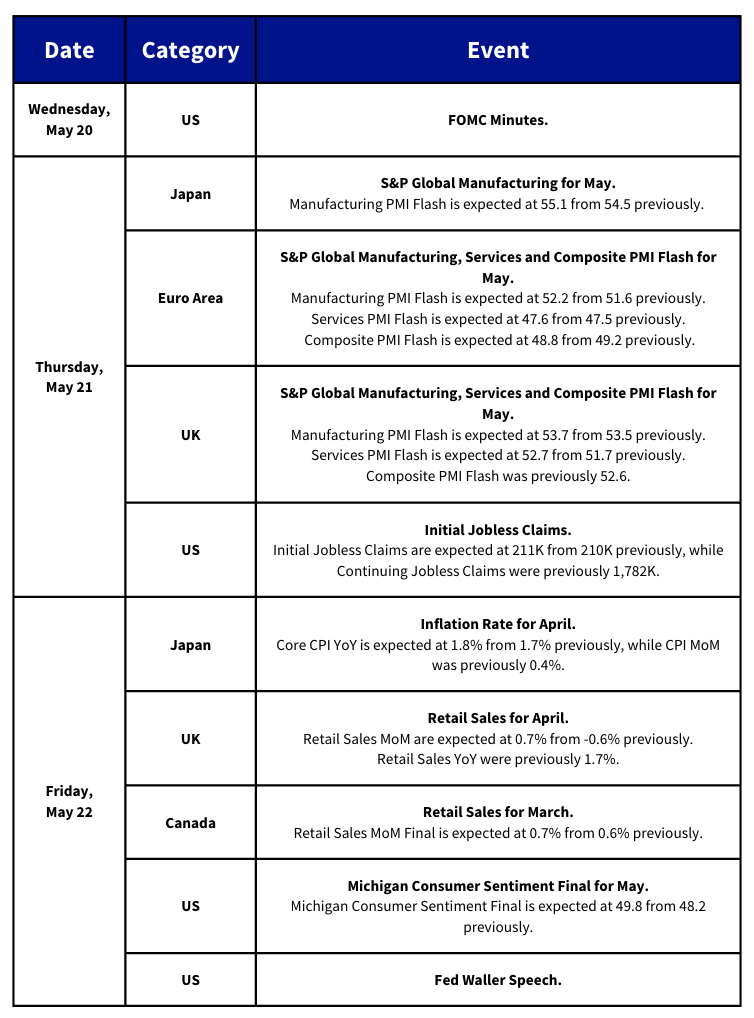
This Week's Calendar
Charts of the Day
Figure 1. Block Scholes BTC Risk-Appetite Index (white, left-hand axis) and BTC spot price (orange, right-hand axis).
Figure 2. Block Scholes ETH Risk-Appetite Index (white, left-hand axis) and ETH spot price (purple, right-hand axis).
Block Scholes is an FCA-regulated institutional crypto derivatives analytics platform. Live data, IV surfaces, and backtesting available via blockscholes.com.
BTC stayed under pressure, trading between $76K and $77K as spot Bitcoin ETFs saw another major day of outflows.
Markets whipsawed on US–Iran headlines, with risk sentiment improving after Trump said he had delayed a planned strike to allow more time for diplomacy.
Options markets remain unusually calm despite downside hedging, with BTC and ETH implied volatility near year-to-date lows while put-call skew still favours puts.
Market Snapshot: Overnight Moves
Macro & Markets
US equities whipsawed in yesterday’s trading session while BTC traded between $76K and $77K.
The S&P 500 finished at 0.074% paring back most of its intraday losses, after President Trump said that he had called off a strike on Iran planned for Tuesday as leaders in the Persian Gulf called for more time to reach a diplomatic resolution.
Spot Bitcoin ETFs saw outflows of $648.6M yesterday, their largest since Jan 29, 2026 when single-day outflows amounted to $817.8M — since Monday last week, the funds have collectively sold more than $1.6B worth of bitcoin.
At a White House event yesterday evening the US president said, “I put it off for a little while, hopefully maybe forever, but possibly for a little while, because we’ve had very big discussions with Iran, and we’ll see what they amount to”.
He added that he was “asked by Saudi Arabia, Qatar, UAE, and some others if we could put it off for two or three days, a short period of time, because they think that they are getting very close to making a deal”, cautioning that the main point of contention is ensuring that “there’s no nuclear weapon going into the hands of Iran”.
Trump’s comments reflected a Truth Social announcement that he made prior to the White House event, where he wrote “Based on my respect for the above mentioned Leaders, I have instructed … The United States Military, that we will NOT be doing the scheduled attack of Iran tomorrow”.
Earlier in the day, risk-sentiment had taken a hit after both the US and Iran said that they had rejected fresh proposals to bring an end to the war.
The White House said an offer was delivered by Iran through Pakistani mediators on Sunday but failed to offer meaningful commitments around Iran’s surrender of its uranium stockpile, according to Axios. Similarly, Iran had indicated that US demands remained unacceptable.
Implied volatility in both BTC and ETH options markets still remains close to its year-to-date lows however.
After falling to 31% earlier last week, 7-day BTC options now trade with an implied vol of 35%. That low vol environment has occurred alongside a considerable increase in put-call skew towards put options (an interesting divergence given that we would expect higher volatility if the market is worried about a selloff). Short dated put options currently trade with a 5 vol point premium over similar-delta call options.
The same can be seen in ETH, where put-call skew is trading at -7% and short-tenor implied vol is around 43%. On Friday last week, 7-day ETH options implied volatility fell to a year-to-date low of 37%.
Don't miss what's next
Upgrade your Block Scholes account to unlock this article and other exclusive insights
Block Scholes is an FCA-regulated institutional crypto derivatives analytics platform. Live data, IV surfaces, and backtesting available via blockscholes.com.
BTC stayed under pressure, trading between $76K and $77K as spot Bitcoin ETFs saw another major day of outflows.
Markets whipsawed on US–Iran headlines, with risk sentiment improving after Trump said he had delayed a planned strike to allow more time for diplomacy.
Options markets remain unusually calm despite downside hedging, with BTC and ETH implied volatility near year-to-date lows while put-call skew still favours puts.
Market Snapshot: Overnight Moves
Macro & Markets
US equities whipsawed in yesterday’s trading session while BTC traded between $76K and $77K.
The S&P 500 finished at 0.074% paring back most of its intraday losses, after President Trump said that he had called off a strike on Iran planned for Tuesday as leaders in the Persian Gulf called for more time to reach a diplomatic resolution.
Spot Bitcoin ETFs saw outflows of $648.6M yesterday, their largest since Jan 29, 2026 when single-day outflows amounted to $817.8M — since Monday last week, the funds have collectively sold more than $1.6B worth of bitcoin.
At a White House event yesterday evening the US president said, “I put it off for a little while, hopefully maybe forever, but possibly for a little while, because we’ve had very big discussions with Iran, and we’ll see what they amount to”.
He added that he was “asked by Saudi Arabia, Qatar, UAE, and some others if we could put it off for two or three days, a short period of time, because they think that they are getting very close to making a deal”, cautioning that the main point of contention is ensuring that “there’s no nuclear weapon going into the hands of Iran”.
Trump’s comments reflected a Truth Social announcement that he made prior to the White House event, where he wrote “Based on my respect for the above mentioned Leaders, I have instructed … The United States Military, that we will NOT be doing the scheduled attack of Iran tomorrow”.
Earlier in the day, risk-sentiment had taken a hit after both the US and Iran said that they had rejected fresh proposals to bring an end to the war.
The White House said an offer was delivered by Iran through Pakistani mediators on Sunday but failed to offer meaningful commitments around Iran’s surrender of its uranium stockpile, according to Axios. Similarly, Iran had indicated that US demands remained unacceptable.
Implied volatility in both BTC and ETH options markets still remains close to its year-to-date lows however.
After falling to 31% earlier last week, 7-day BTC options now trade with an implied vol of 35%. That low vol environment has occurred alongside a considerable increase in put-call skew towards put options (an interesting divergence given that we would expect higher volatility if the market is worried about a selloff). Short dated put options currently trade with a 5 vol point premium over similar-delta call options.
The same can be seen in ETH, where put-call skew is trading at -7% and short-tenor implied vol is around 43%. On Friday last week, 7-day ETH options implied volatility fell to a year-to-date low of 37%.
Don't miss what's next
Upgrade your Block Scholes account to unlock this article and other exclusive insights
Premium
$30/mo
Access previous and future reports, market insights & deep dives.
The SEC has proposed a new crypto custody framework that would let investment advisers and regulated funds use state trust companies as crypto custodians and, in limited cases, self-custody digital assets. US equities posted their first green day of the week as the 10-year Treasury yield eased to around 5.23% from a 5.34% high after Fed Vice Chair Jefferson said policymakers may need more time, cutting the odds of an October hike to 26% from 71% at the start of the week. BTC rallied to almost $87K, while Evernorth shareholders approved its merger ahead of a planned Nasdaq listing on Oct. 8.
US inflation rose less than expected in August, with the PCE Price Index up 0.3% on the month and 3.4% over the year against expectations of 0.4% and 3.7%, partly reflecting changes to the BEA's methodology. Fed funds futures now price a 37% probability of an October rate move, down from 70% on Monday, while the BEA revised Q2 GDP growth up to a 2.2% annualised rate from 1.5%, sending long-end Treasury yields higher. The S&P 500 ended 0.25% lower to close out its worst month since June 2026, while BTC briefly jumped past $85K before falling back to $83K.