Strategy Buys $2.54B in Bitcoin, Largest Since Nov 2024
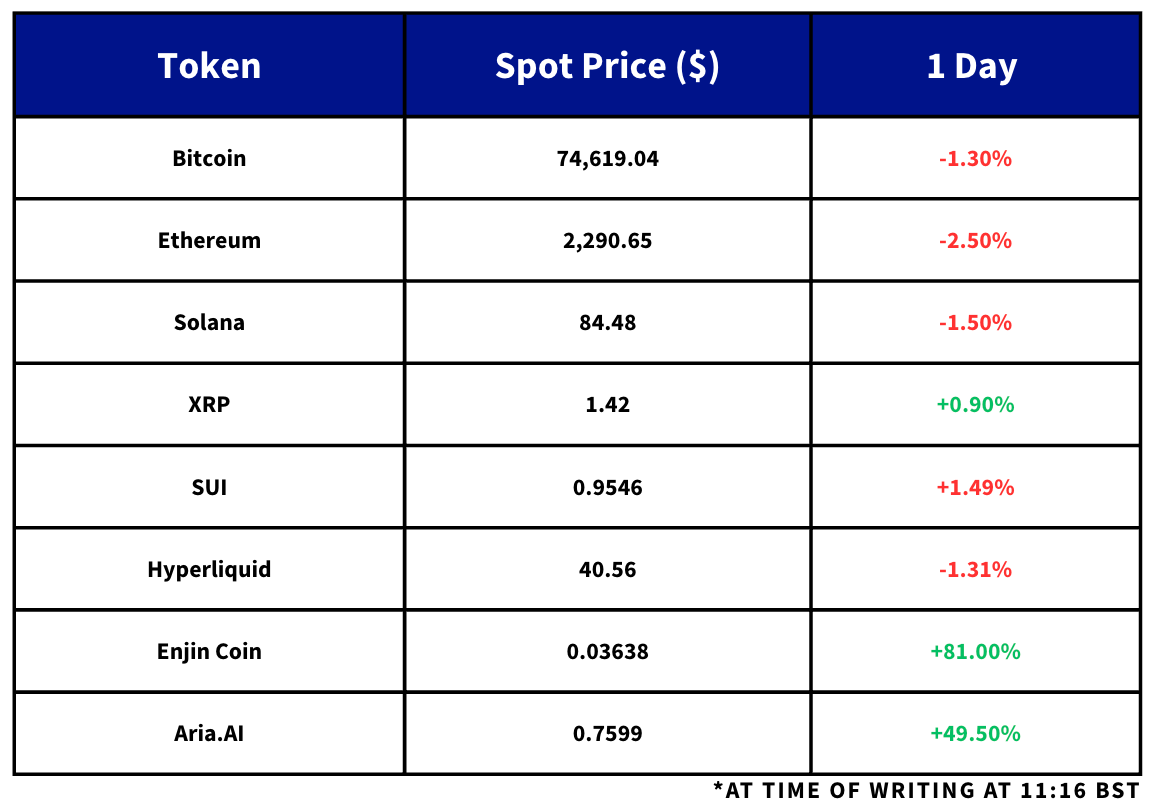
Bitcoin is up 2% over the past 24 hours and back above $76K, supported by Strategy’s $2.54B BTC purchase — its largest since November 2024 — and more than $1.5B of spot ETF inflows over the past five trading days, even as Brent crude returned to $95/bbl and the S&P 500 and Nasdaq-100 fell 0.24% and 0.31%, respectively. More broadly, the newsflow remains constructive for digital asset market structure, with Japan testing blockchain-based JGB collateral, South Korea prioritising CBDCs and deposit tokens, Ripple targeting full XRPL post-quantum readiness by 2028, and RedotPay expanding stablecoin payments to users in 100+ countries, although the US CLARITY bill now looks set to slip from April into May.

Find out our latest reports, listed below:
- Tokenised Markets on Bitget UEX: How Traders Are Utilising 24/7 Real-World Assets For Real Time Macro Hedging
- Block Scholes x Panoptic: Bridging The Onchain Convexity Gap
- Volatility Report: February 2026
Market Snapshot: Overnight Moves

Daily Updates:
- Despite the US and Iran’s fragile ceasefire due to expire on Wednesday, BTC is up 2% over the past 24 hours in a rebound that’s pushed it above $76K.
- Michael Saylor’s Strategy Inc, the largest Bitcoin digital asset treasury company in the world, announced yesterday that it had bought $2.54B worth of bitcoins over the last seven days — its largest purchase for the currency since November 2024.
- Additionally, Spot Bitcoin ETFs saw their fifth straight day of inflows yesterday, with more than $1.5B flowing into the funds since Tuesday last week.
- President Trump said in a phone interview with Bloomberg yesterday that the ceasefire announced April 7 will expire “Wednesday evening Washington time” and that it’s “highly unlikely” that he’d extend the ceasefire if no deal is reached before then.
- Trump said in the interview “I’m not going to be rushed into making a bad deal. We’ve got all the time in the world” and reiterated that the Hormuz Strait would continue to stay blockaded “until a deal is signed”.
- Despite the comments, Trump said that Vice President JD Vance will leave for Pakistan to lead negotiations due to begin “either Tuesday night or Wednesday morning” and still showed optimism that a deal can be reached — “They want a meeting, and they should want a meeting. And it can work out well”.
- Officials from Iran have equally displayed mixed messages. Iran’s Parliament Speaker Mohammad Bagher Ghalibaf wrote on X that the country is “prepared to reveal new cards on the battlefield” in response to President Trump’s threats that the US would hit Tehran with “problems like they’ve never seen before” should no deal be reached before Wednesday.
- Nonetheless, according to Bloomberg and other news sources, Iran has also agreed to send out representatives for another round of negotiations in Pakistan.
- Despite crypto spot prices holding up, on Wall Street US equities fell from their all-time highs amidst the comments from Trump.
- With Brent crude settling around $95 per barrel once again, the S&P 500 ended its five-day win streak, closing 0.24% lower. The Nasdaq-100 ended a 13-day win streak, its longest since 1992, finishing at -0.31% in yesterday’s session.
- Smaller cap US equities, as measured by the Russel-2000 however closed at a record all-time high (+0.58%).
- Japan Securities Clearing Corporation (JSCC), the central clearing house owned by Japan Exchange Group, has launched a blockchain-based collateral trial with Mizuho Financial Group, Nomura Holdings and Digital Asset Holdings.
- The project will test the transfer and management of Japanese government bonds on the Canton Network. The focus is on enabling real-time collateral movement while remaining within existing regulatory constraints.
- The broader significance is the digitisation of high-quality collateral – if sovereign bonds can move more efficiently between institutions, settlement friction could fall.
- Bank of Korea Governor Shin Hyun-song used his inaugural speech on Monday to reaffirm support for CBDCs and deposit tokens.
- He said the central bank would expand both through the next phase of Project Hangang as part of broader efforts to strengthen South Korea’s digital payments infrastructure.
- The omission of any reference to stablecoins was also notable.
- That comes despite ongoing legislative efforts to establish a framework for won-denominated stablecoins.
- The speech suggests the Bank of Korea continues to place greater emphasis on digital money issued within the regulated banking system and subject to central bank oversight.
- The CLARITY bill on the structure of the crypto market in the USA is being postponed – the vote may be rescheduled for May.
- Senator Tom Tillis stated that the banking committee will not have time to review and put the document to a vote in April.
The parties need additional time to reach a compromise on the profitability of stablecoins. - At the same time, Senator Bernie Moreno warned that if the law is not passed by May, the regulation of digital assets in the USA could be postponed indefinitely.
- Ripple has outlined a multi-phase roadmap to prepare XRPL for a post-quantum environment on their official page, with full readiness targeted by 2028.
- The near-term focus is on testing quantum-resistant cryptography, assessing the performance impact of larger keys and signatures, and introducing hybrid models that can operate alongside existing systems before any full transition.
- For XRPL, the issue is particularly relevant because public keys become visible onchain once an account signs a transaction, creating potential long-term exposure as quantum capabilities develop. That makes post-quantum planning less a theoretical exercise and more a question of long-term network security.
- Ripple’s approach includes a Q-Day recovery framework, testing of NIST-recommended post-quantum standards, validator and Devnet experimentation with Project Eleven, and a longer-term amendment process to support native post-quantum signatures across the network.
- The Arbitrum Security Council initiated an emergency intervention to freeze 30,766 ETH located at an Arbitrum One address associated with the KelpDAO exploit, acting in coordination with law enforcement insights regarding the exploiter’s identity.
- As of April 20 at 11:26pm ET, the assets were successfully transferred into an intermediary frozen wallet, rendering them inaccessible to the KelpDAO exploit- associated address and subject only to future movement through actions governed by Arbitrum governance in coordination with relevant stakeholders.
- Kelp have published further context on the $292M exploit, stating that on April 18 rsETH was drained from the bridging adapter through a forged cross-chain message after two LayerZero-hosted RPC nodes were compromised and a simultaneous DDoS attack disabled the third node, confirming the attack originated from LayerZero infrastructure rather than Kelp’s systems.
- Kelp reported that it mitigated further damage by pausing affected smart contracts across Ethereum mainnet and L2s and blacklisting exploiter-linked wallets, which prevented an additional attempt to drain 40,000 rsETH (approximately $95M).
- Kelp have specified that their 1-of-1 DVN configuration was consistent with LayerZero’s documented default for OFT deployments and previously validated during Kelp’s L2 expansion.
- Kelp is now collaborating with partners including Aave and LayerZero to assess impact, determine mitigation strategies, and plan the safe resumption of operations.
- RedotPay, a global stablecoin-based payments fintech, has entered a strategic partnership with Sui to integrate SUI and native USDC-Sui into its payments stack, enabling users across 100+ countries to access SUI-based stablecoin-denominated transactions and global payout functionality via the RedotPay app.
- RedotPay is also extending its multi-currency wallet and card infrastructure, supported by Apple Pay and Google Pay, by leveraging Sui’s layer 1 blockchain to facilitate low-fee transfers, near-instant finality, and integrated fiat on/off-ramps for real-world merchant payments.
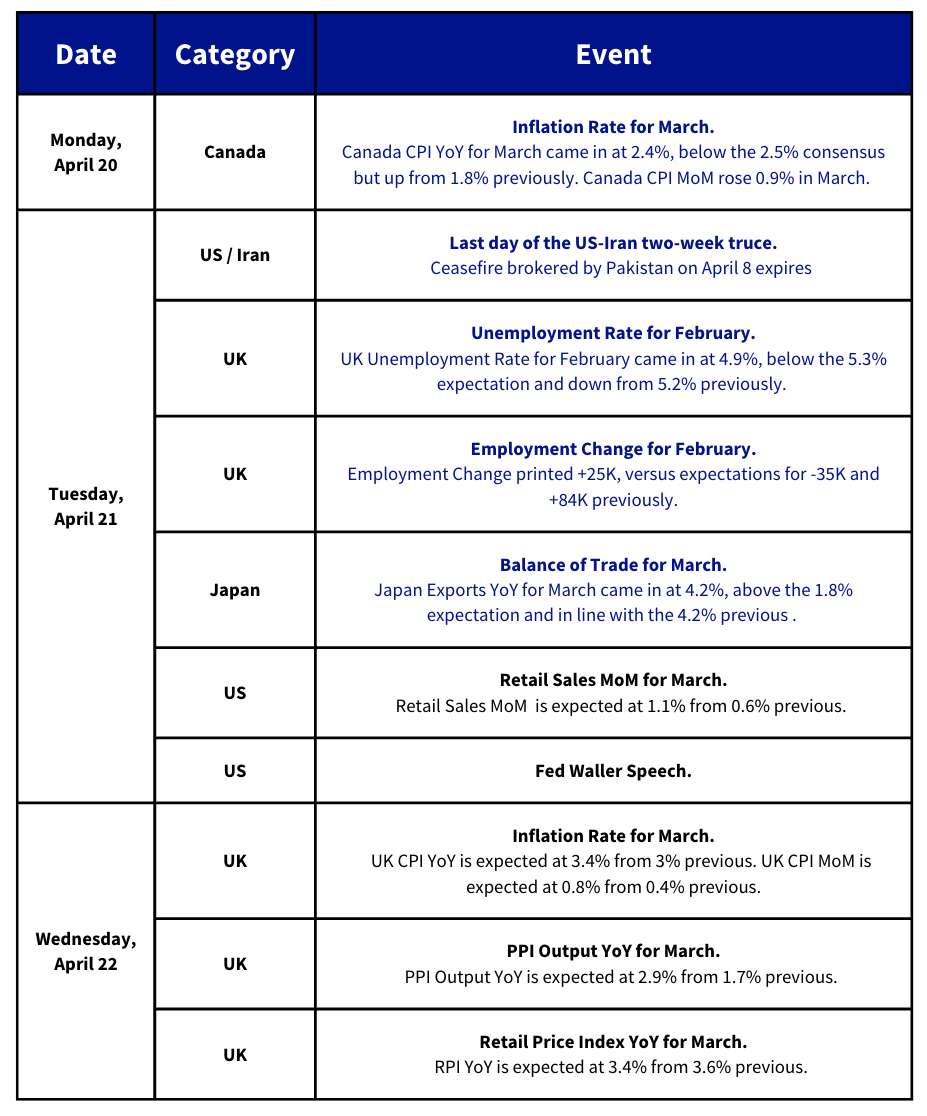
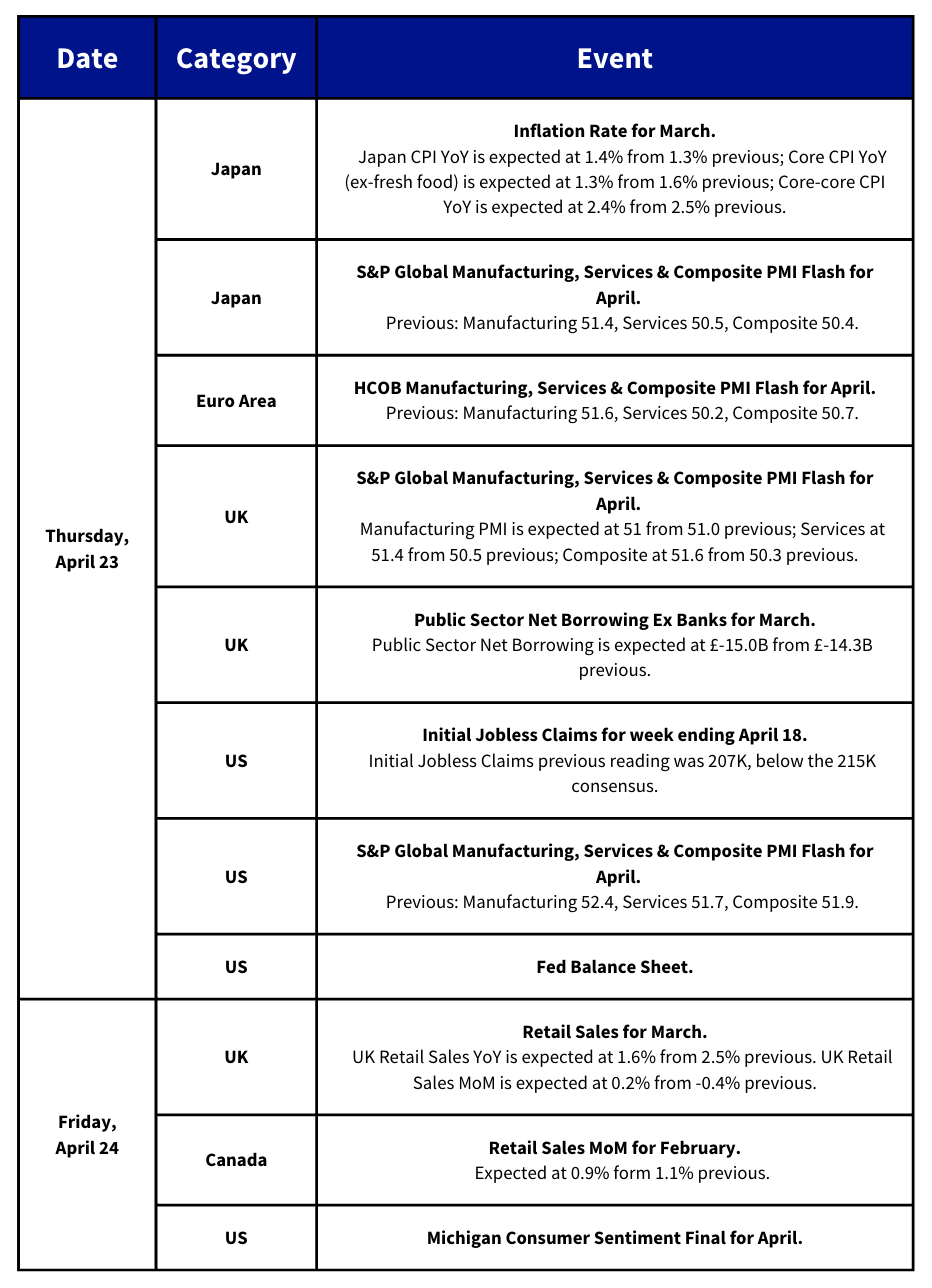
This Week’s Calendar:


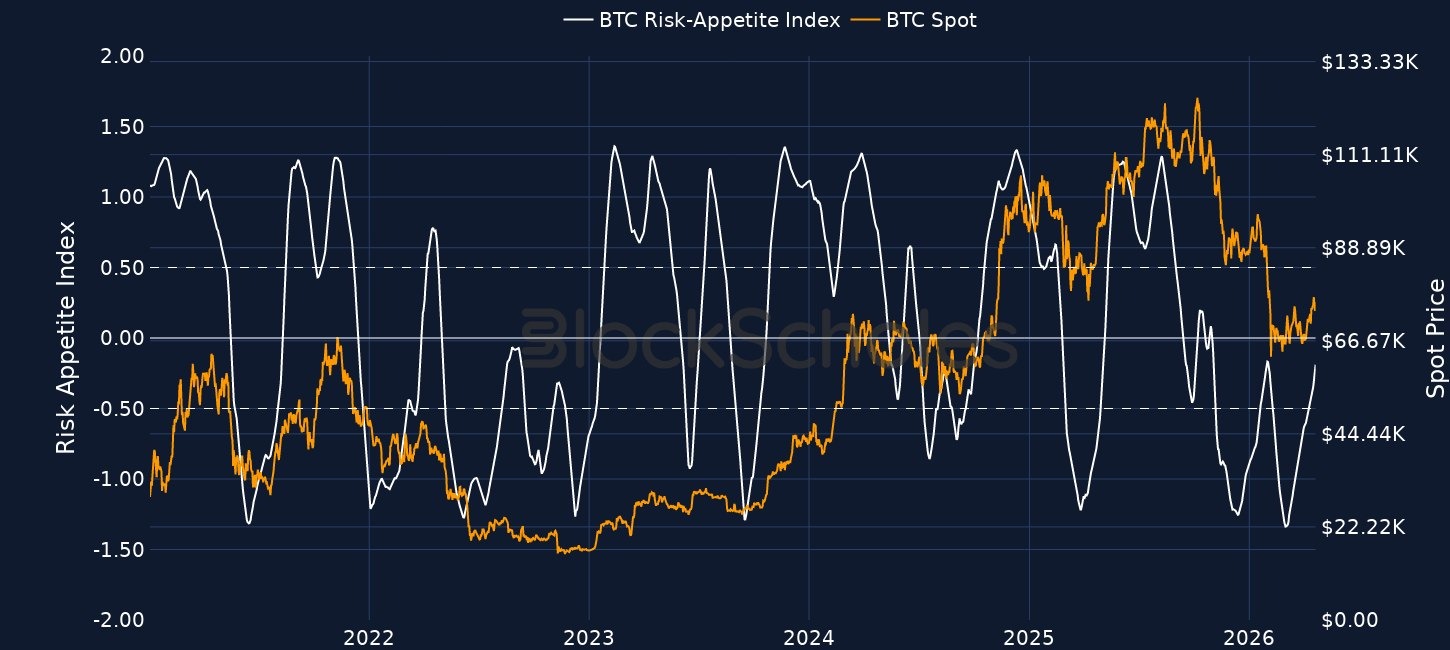
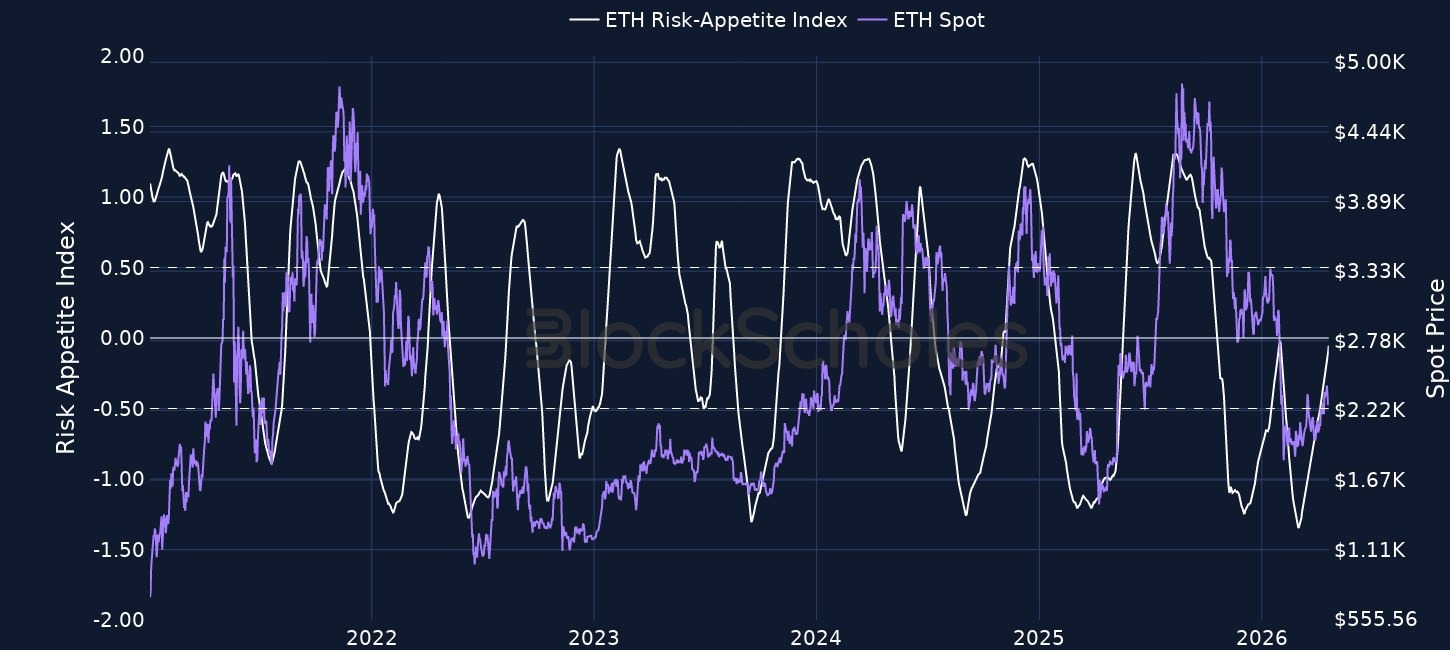
Charts of the Day: