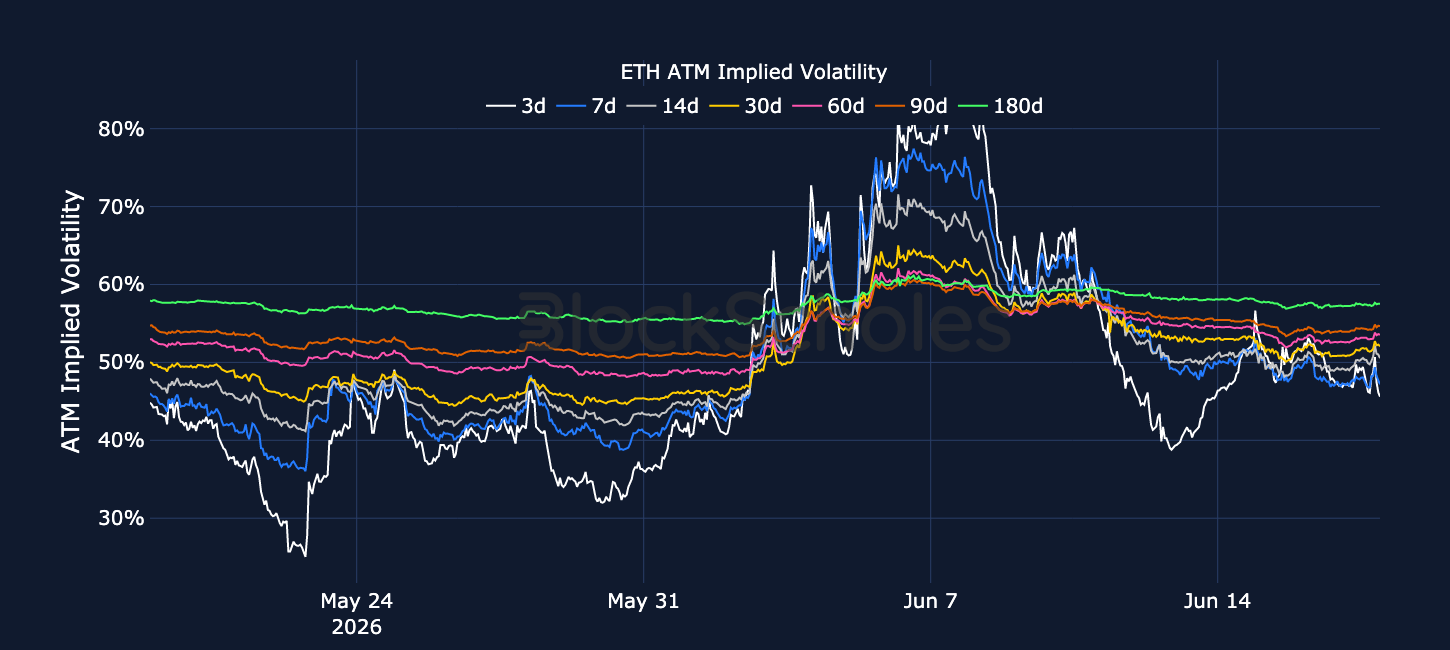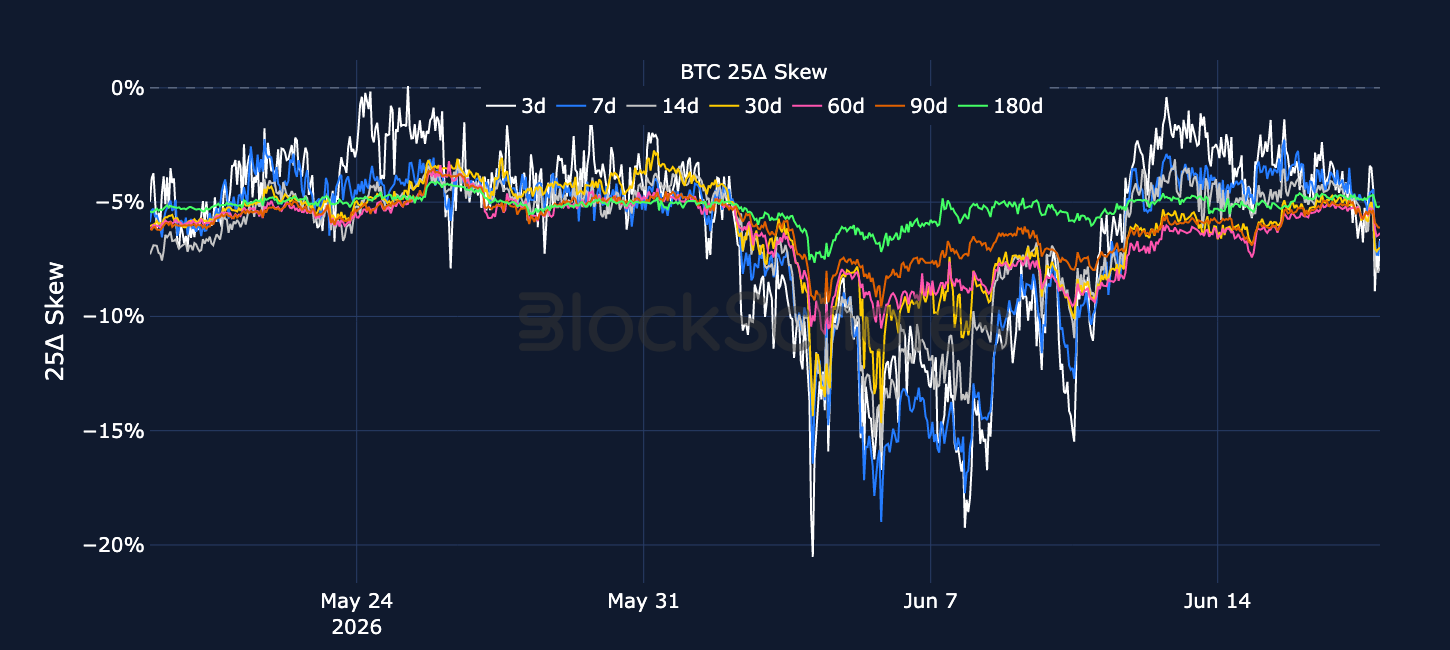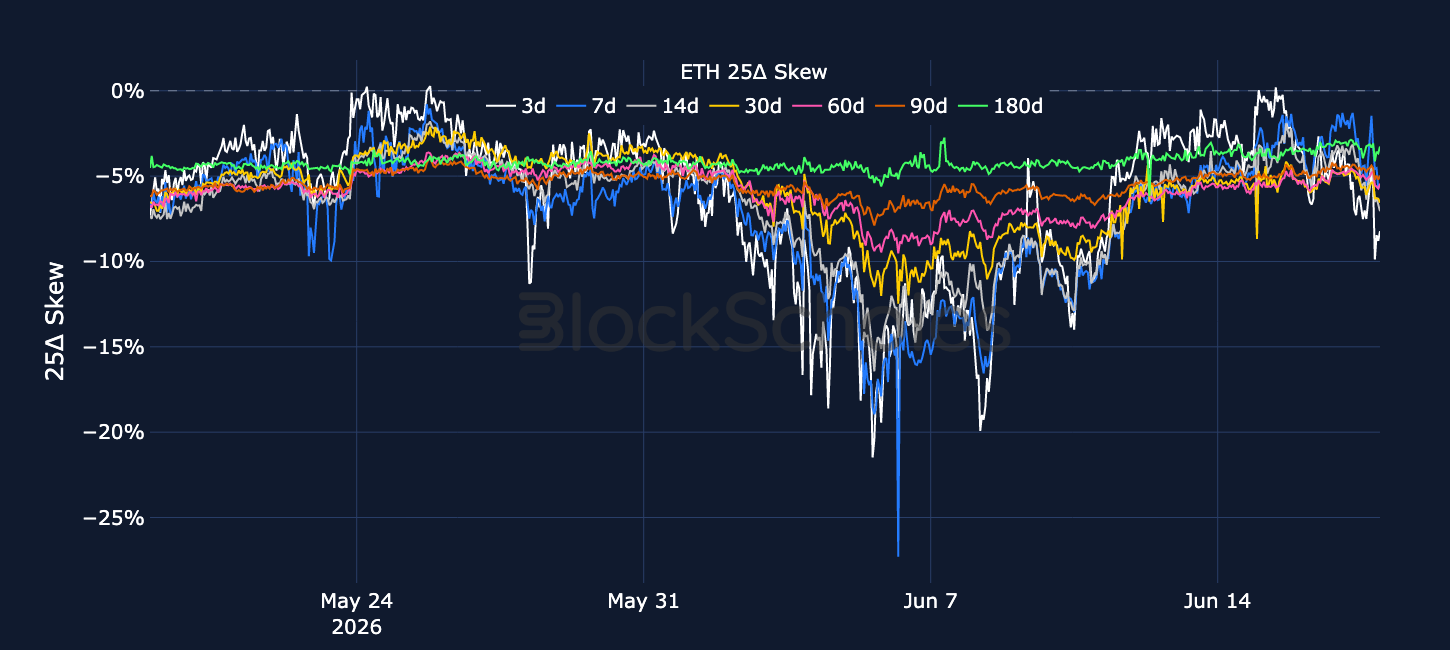
Fed Holds Rates Steady for Warsh’s First FOMC
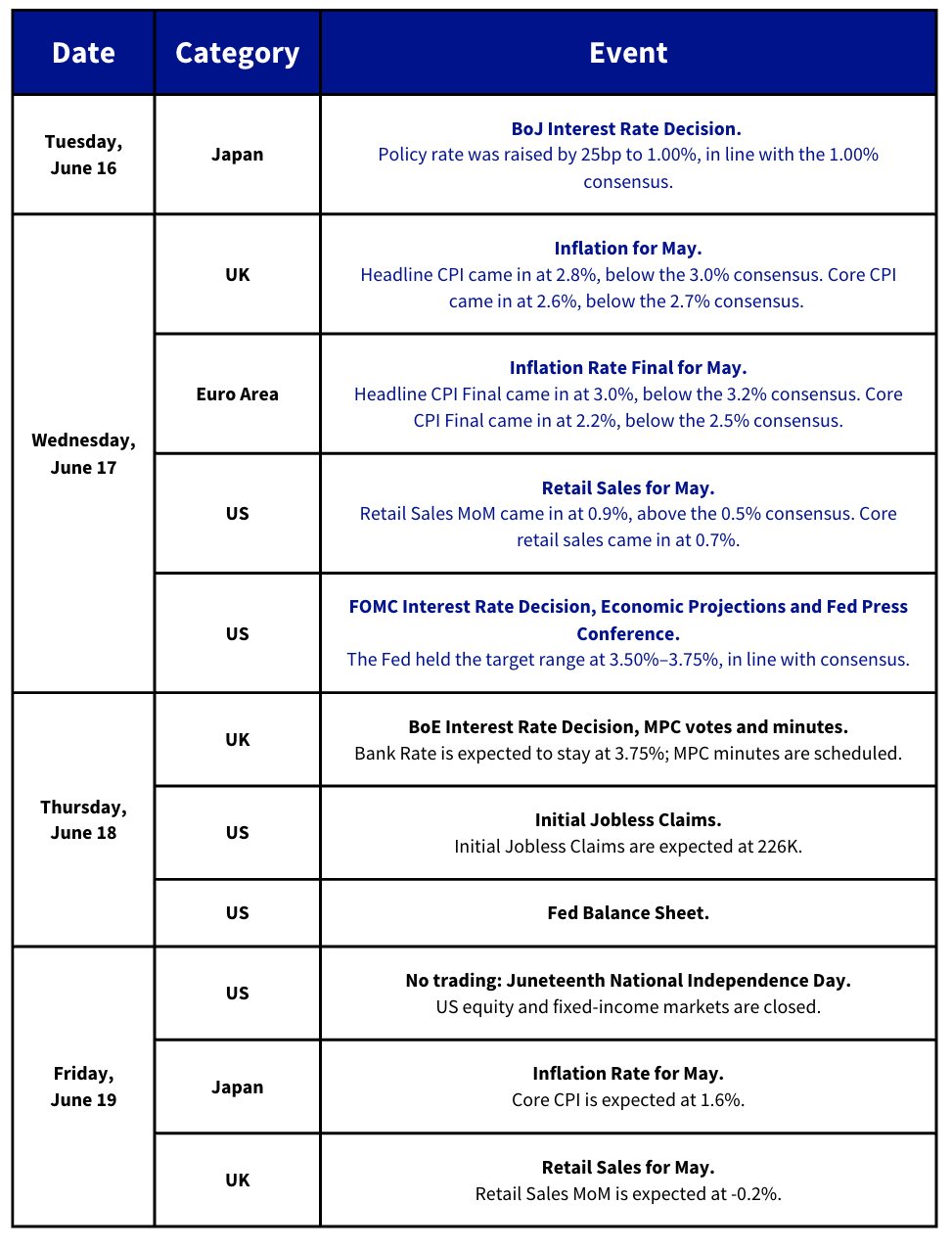
BTC sold off from $66K to just above $63.6K after the FOMC held rates unchanged at 3.5%–3.75%, while risk assets broadly weakened, with the S&P 500 down 1.21% and the Nasdaq-100 down 0.99%. The move was led by a sharp repricing in rates: the 2Y Treasury yield rose 15bps to 4.21%, the 10Y yield rose 7bps to 4.49%, and the 2s10s curve compressed from 37bps to 28bps. The dot plot skewed meaningfully more hawkish, with nine officials projecting at least one hike this year, contrasting sharply with March’s SEP, where no members expected hikes.

is an FCA-regulated institutional crypto derivatives analytics platform. Live data, IV surfaces, and backtesting available via blockscholes.com.
Recent Research from Block Scholes
- Tokenised Markets on Bitget UEX: Liquidity Conditions in Bitget’s Real World Asset Perpetual Markets
- Tokenised Markets on Bitget UEX: How Traders Are Utilising 24/7 Real-World Assets For Real Time Macro Hedging
- Block Scholes x Panoptic: Bridging The Onchain Convexity Gap
- 2026 – the year of RWA perps?
In Today's Note
- BTC fell back towards $63.6K after the Fed decision, while US equities sold off and Treasury yields moved higher after the FOMC left rates unchanged.
- Warsh dropped forward guidance at his first meeting, while the dot plot shifted more hawkish, with several officials now pencilling in rate hikes this year.
- Tether is shutting down Alloy and aUSDT, while CME prepared to sue the CFTC over perpetual futures, Kentucky sued Kalshi, Polymarket and affiliates over sports event contracts, Aster changed its tokenomics, STRC closed below par, and Satori Finance began winding down.
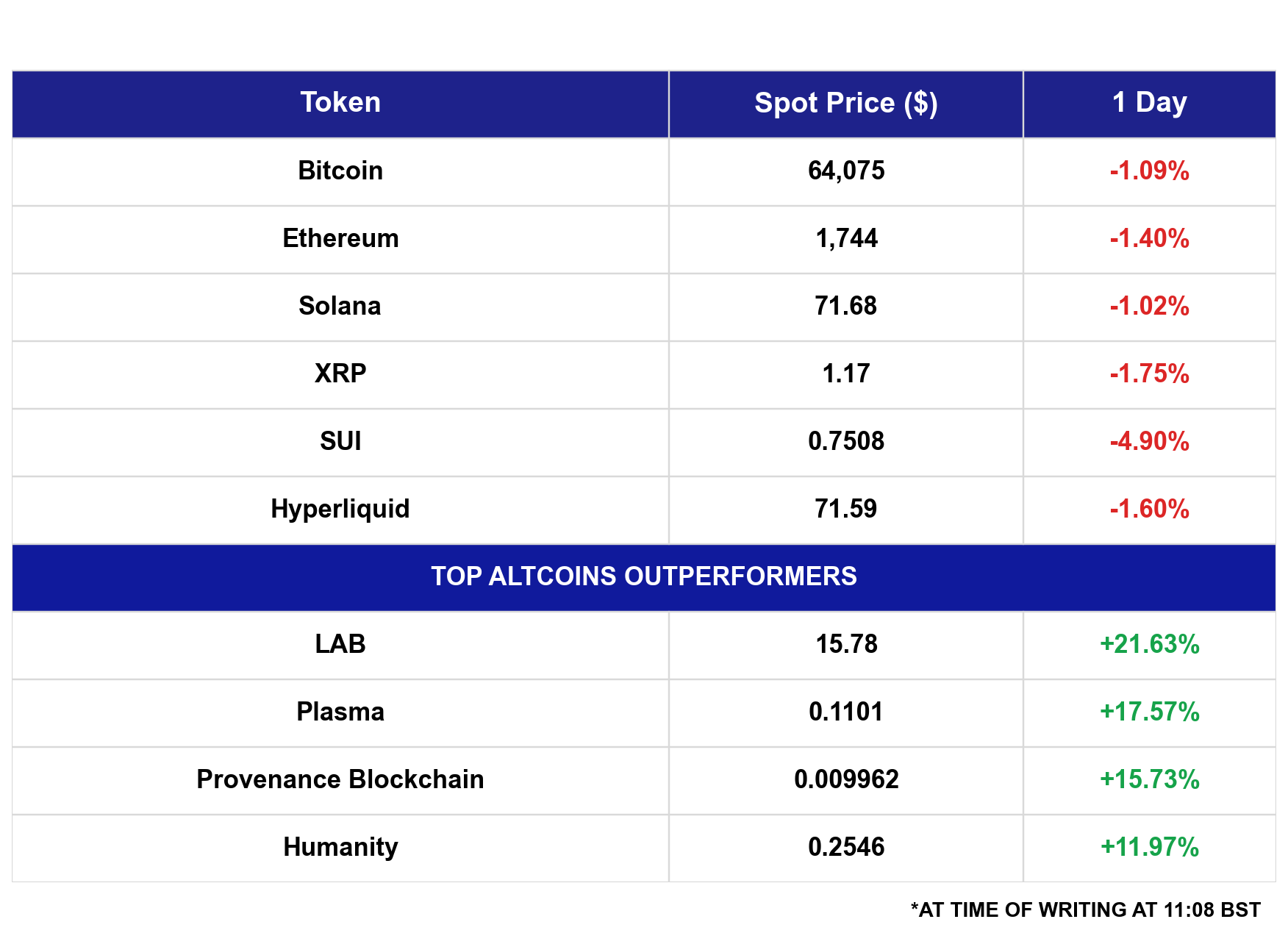
Market Snapshot: Overnight Moves

Macro & Markets
- The FOMC’s first meeting with new Chairman Kevin Warsh at the helm ended with a largely risk-off move across financial markets, as members of the Fed unanimously voted to leave its benchmark interest rate unchanged between 3.5% and 3.75% — for the fourth time this year.
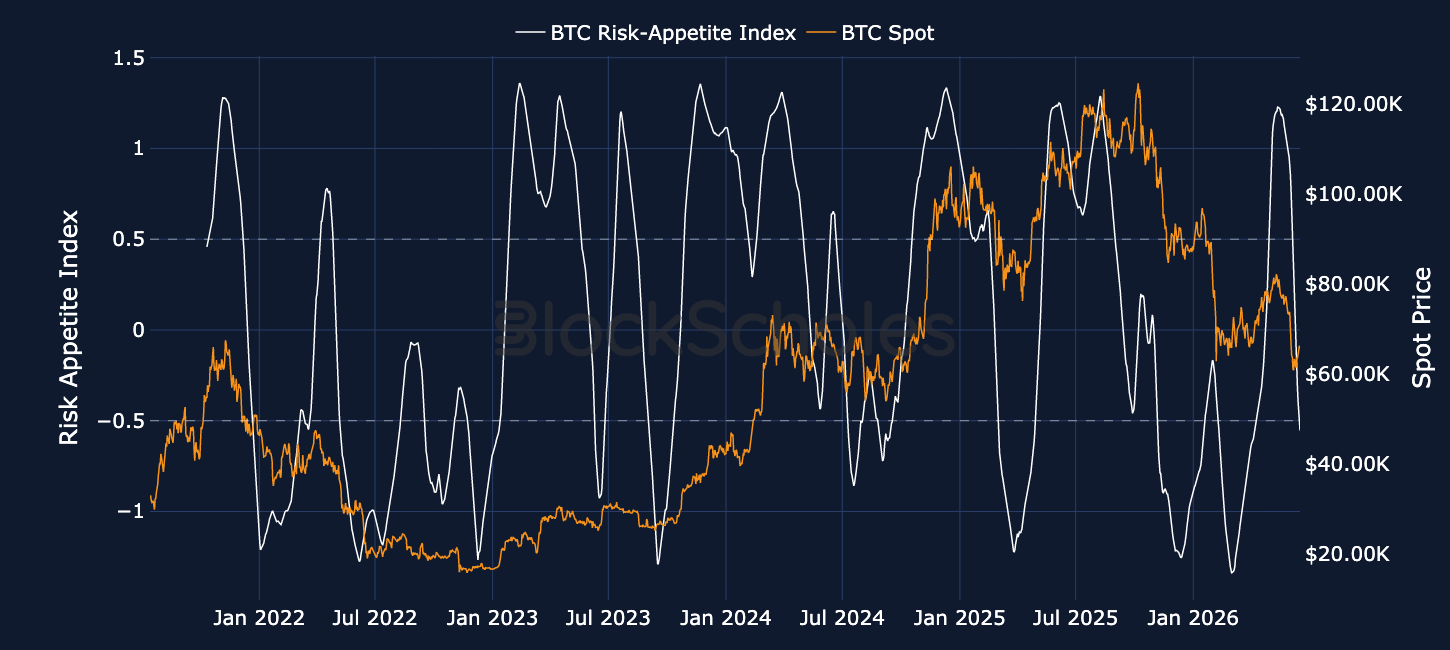
- BTC fell sharply from $66K to a low just above $63.6K over the past 24 hours, while US equities across the board traded lower and bond yields moved higher.
- The S&P 500 declined 1.21% while the Nasdaq-100 fell by 0.99%. Elon Musk’s SPACEX – which had traded higher every day since its IPO – closed lower for the first time, falling 4.95%.
- The yield on the benchmark 2-year US treasury, which tracks Fed expectations, rose significantly from 4.06% to 4.21% following the Chair’s presser. The 10-year treasury yield rose by a smaller 7bps to 4.49%, resulting in a sharp drop in the 2s10s curve (10Y minus 2Y) from 0.37% down to 0.28%.
- Kevin Warsh announced the creation of a new task force across five key verticals central to monetary policy.
- These included a task force focused on Fed communication (dot plot, FOMC press conferences etc), the Fed’s balance sheet (designed to “review the benefits and risks of the current ample reserves regime and the composition of the Fed balance sheet”), use and reliance on existing data sources, productivity and jobs (which will “survey the pace, reach, economic impact of new general purpose technologies, including AI”) and the Fed’s inflation frameworks (with a remit of understanding “what are the drivers of inflation and what’s the Fed’s responsibility for inflation”).
- One key change Warsh has implemented from his first conference is the removal of forward guidance. In response to a number of journalist questions, the new Chair said some variation of “We’ve dropped forward guidance”, “I can’t give any forward guidance”, or “The rest of your question sounded like an encouragement for me to give forward guidance”.
- By providing no forward guidance on the potential next steps the Fed will take, the more hawkish aspect of the meeting came from the FOMC members summary of economic projections and so-called dot plot, which Warsh declined to partake in.
- According to the dot plot, “The median participant judges the appropriate federal funds rate to be at 3.8% at the end of this year and 3.6% at the end of next”.
- Three officials see one quarter-point hike, five officials foresee two quarter-point increases this year with one member expecting three 25bps hikes.
- On the other side, eight members expected no move and one member projected a potential cut.
- Those projections sharply contrast the SEP from the March meeting, where the median forecast was for one rate cut in 2026 and two in total by the end of 2027. In that dot plot, no FOMC members had pencilled in expectations of a hike.
- Warsh did caveat the projections delivered by his colleagues however. During the Q&A he jokingly said, “I noted that all the [dot plot] submissions were coming in with pencils. You know those kind with the big erasers. That’s to say that my colleagues understand the world is changing quite quickly”. Additionally he said, “I didn’t hear a ton of conviction” about the forecasts from other officials.
- During his opening statement he said, “I, however, have refrained from offering any projections of my own, consistent with my longheld views on the SEP, at least as currently structured”.
- Speaking to reporters in France after the Fed’s decision, President Trump responded “it’s alright, whatever”. When asked about the prospects of a rate hike he said, “It’s hard to believe. It just keeps the country down and it’s so unusual … But we have a very good guy over there right now, so I’m guided by what he wants”.
- Regarding geopolitics, Trump told reporters he had signed the interim deal with Iran, while a US official said that the memorandum of understanding is now in effect.
DeFi / Web3 / Altcoins / Crypto3
- Tether is shutting down Alloy by Tether and ending support for aUSDT, its gold-backed synthetic dollar product, according to their statement on Wednesday.
- New minting and positions are now closed, while existing users have three months to return aUSDT and reclaim their XAUT collateral.
- Aster, a decentralized trading platform with the ASTER token, upgraded its tokenomics so 99% of daily platform fees are used to buy ASTER from the market, with those purchased tokens distributed to veASTER stakers as additional rewards each epoch.
- Separately, for every ASTER bought back and given to stakers, Aster burns an equal amount of ASTER from its reserve supply, starting with the team allocation, so stakers receive rewards while total supply is still reduced.
- The mechanism is designed to cut ASTER supply from the original 8 billion tokens toward a target of 3 billion ASTER, with reserve burns executed bi-weekly alongside the ongoing fee-funded buybacks.
- CME is preparing to sue the CFTC over its approval of perpetual futures in the US - a sharp escalation in the fight over how crypto-style derivatives should be regulated.
- CEO Terrence Duffy argues perps should be treated as swaps under Dodd-Frank, not futures, and warned that high-leverage perpetual contracts could expose retail users to products they do not fully understand.
- Strategy’s STRC preferred stock closed at $89, roughly 11% below par, marking what appears to be its weakest daily close since launch.
- The product is designed to behave like high-yield digital credit, using variable dividends to anchor the price near $100.
- Strategy’s SEC filings show that proceeds from its at-the-market stock offering programme are used to fund bitcoin purchases, including STRC sales when issued.
- In its 16 March 2026 Form 8-K, Strategy disclosed selling 11.8M STRC shares, raising $1.18B in net proceeds, alongside bitcoin purchases made using ATM proceeds.
- Kentucky Attorney General Russell Coleman filed three lawsuits against Kalshi, Polymarket, VGW and affiliated entities including Coinbase and Robinhood, accusing the platforms of offering unlicensed sports gambling in the state.
- The lawsuits claim Kalshi and Polymarket bypassed Kentucky gaming laws, consumer protection rules and tax requirements by offering sports-related event contracts without a state gaming license.
- Kentucky said 89% of Kalshi’s $23B contract volume came from sports wagering and argued that Polymarket offers traditional sportsbook-style bets such as money lines, spreads, point totals, parlays and prop bets while marketing them as event contracts.
- Satori Finance is winding down, adding to the growing list of crypto protocols unable to convert activity into sustainable economics.
- The multi-chain DEX, backed by Polychain, Coinbase Ventures and Jump Crypto, cited prolonged unfavourable market conditions and insufficient revenue to keep operations running. Users have until 16 July to withdraw funds before the platform shuts down.
This Week's Calendar

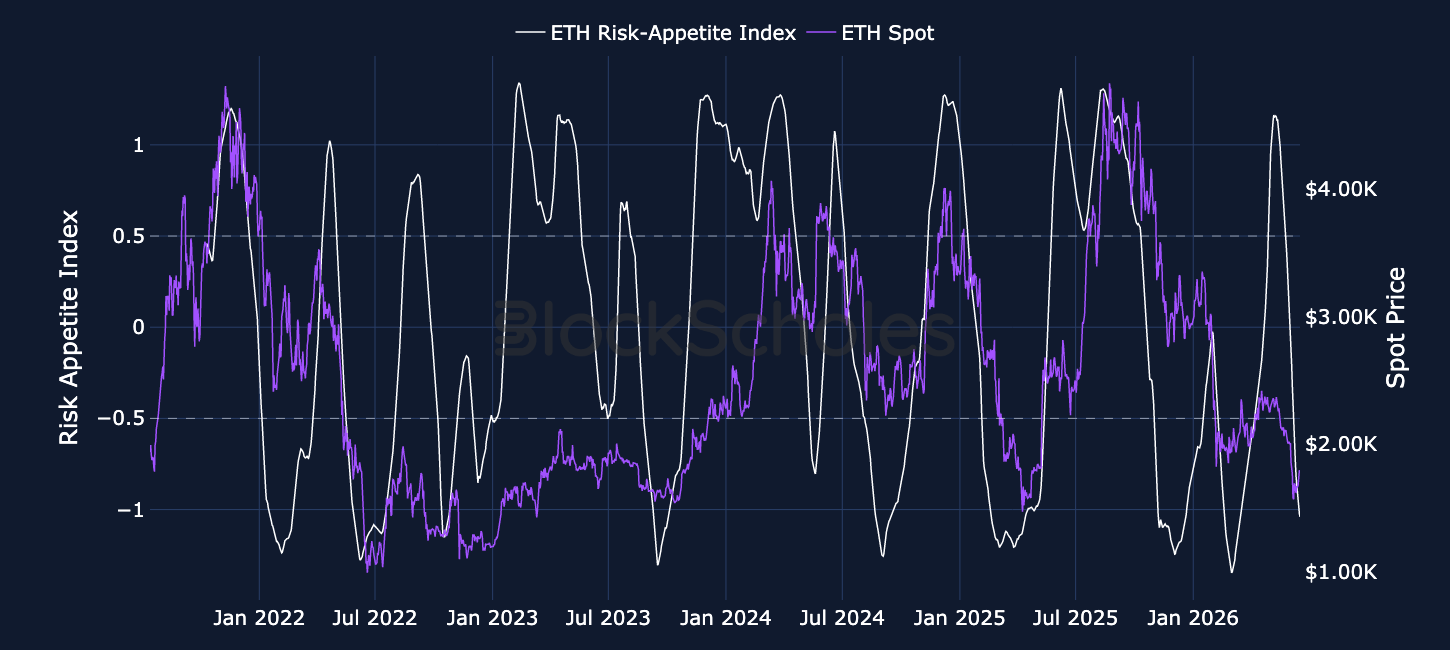
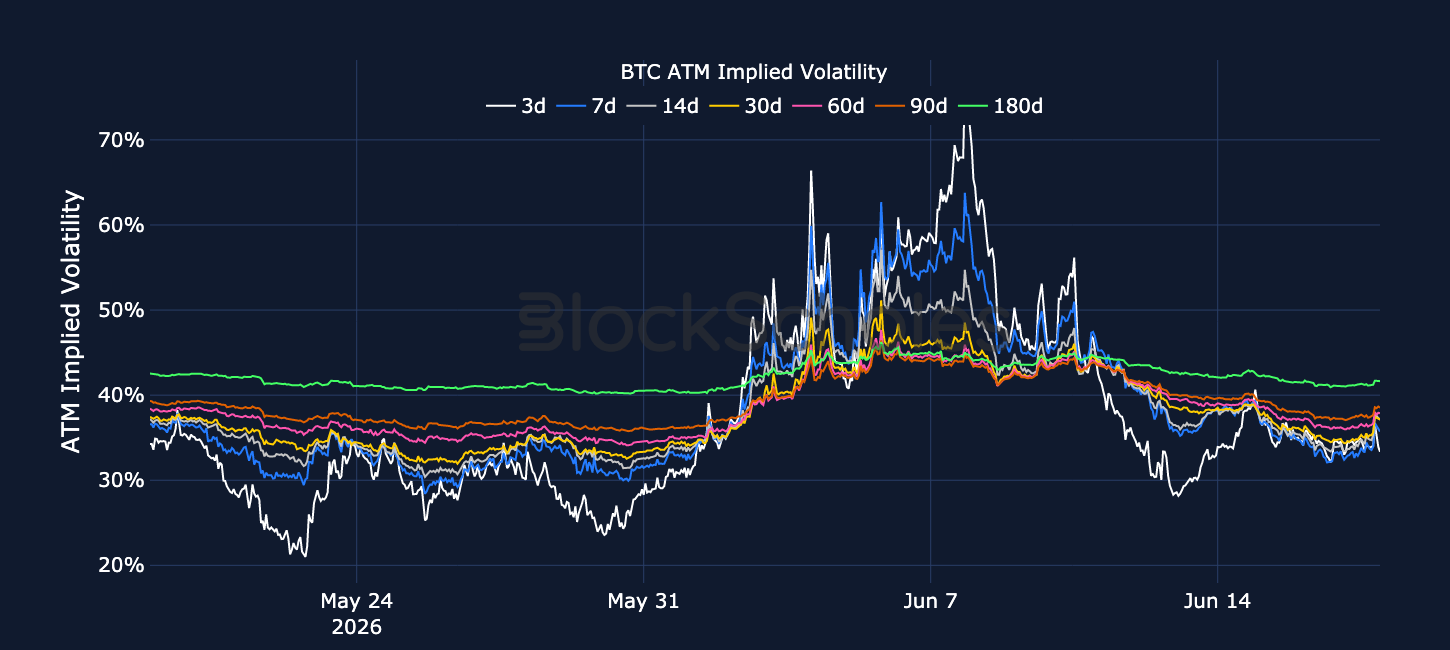
Charts of the Day