Bitwise Launched Hyperliquid ETF
BTC’s rally above $82,000 faded quickly as resistance held, while ETH remains unable to break through $2,400. Broader risk sentiment was supported by record US equities, resilient retail sales, and AI-led megacap gains, but rising global bond yields show markets are still pricing inflation risks from the US-Iran war. In crypto, the CLARITY Act’s committee approval marks regulatory progress, though the removal of noncustodial developer protections leaves DeFi exposed to potential AML and KYC obligations.

Block Scholes is an FCA-regulated institutional crypto derivatives analytics platform. Live data, IV surfaces, and backtesting available via blockscholes.com.
Recent Research from Block Scholes
- Tokenised Markets on Bitget UEX: How Traders Are Utilising 24/7 Real-World Assets For Real Time Macro Hedging
- Block Scholes x Panoptic: Bridging The Onchain Convexity Gap
- Volatility Report: February 2026
- 2026 – the year of RWA perps?
In Today's Note
- BTC briefly broke above $82K but failed to hold the move, with ETH also struggling to break past $2,400 despite support from the CLARITY Act vote and stronger US equities.
- US equities extended their rally while bond yields climbed globally, as AI-linked stocks and resilient retail sales supported risk sentiment, but inflationary pressure from the US-Iran war continued to weigh on US, Japanese and UK bond markets.
- The CLARITY Act advanced out of committee, preserving the stablecoin rewards compromise while removing proposed protections for noncustodial developers, leaving DeFi builders potentially exposed to AML and KYC obligations.
Market Snapshot: Overnight Moves

Macro & Markets
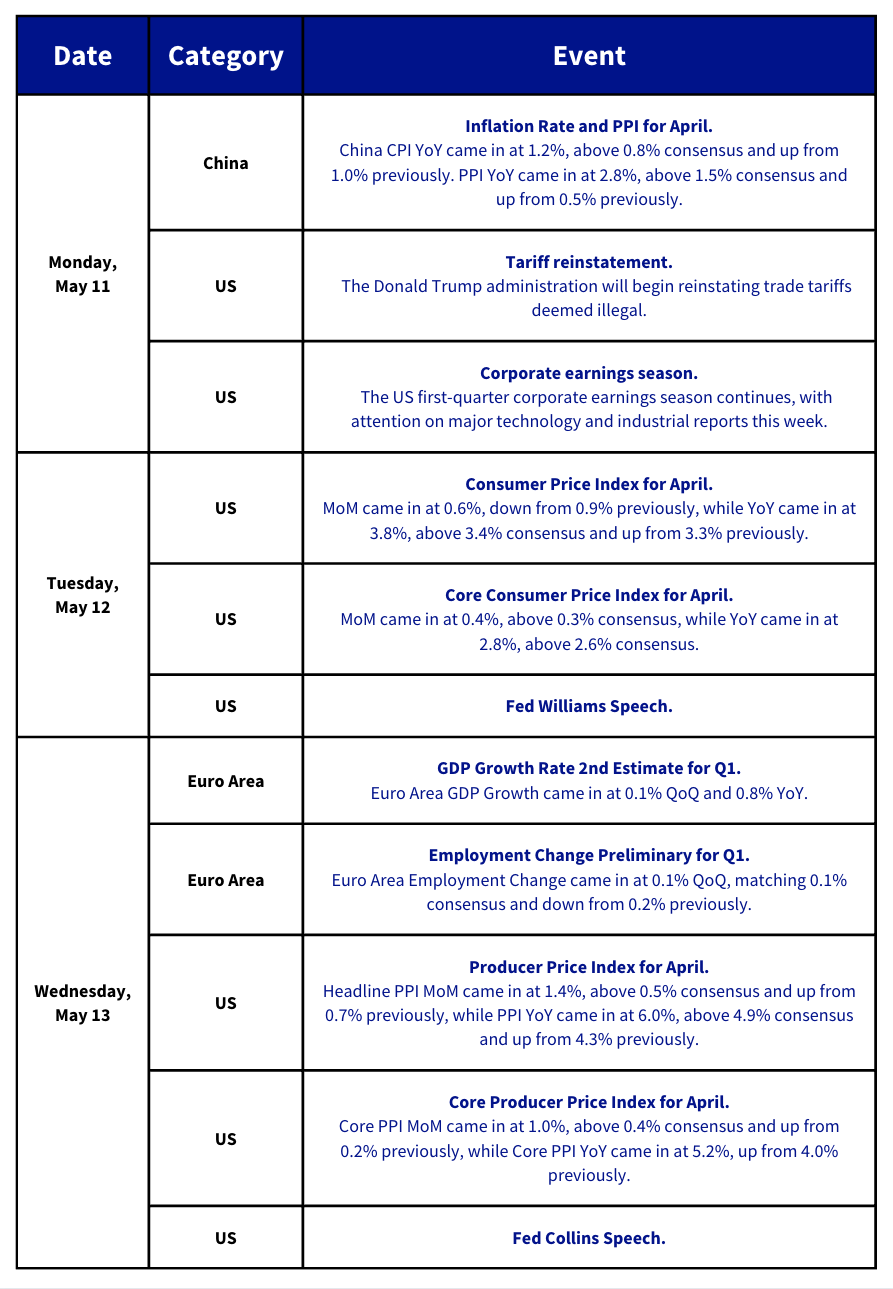
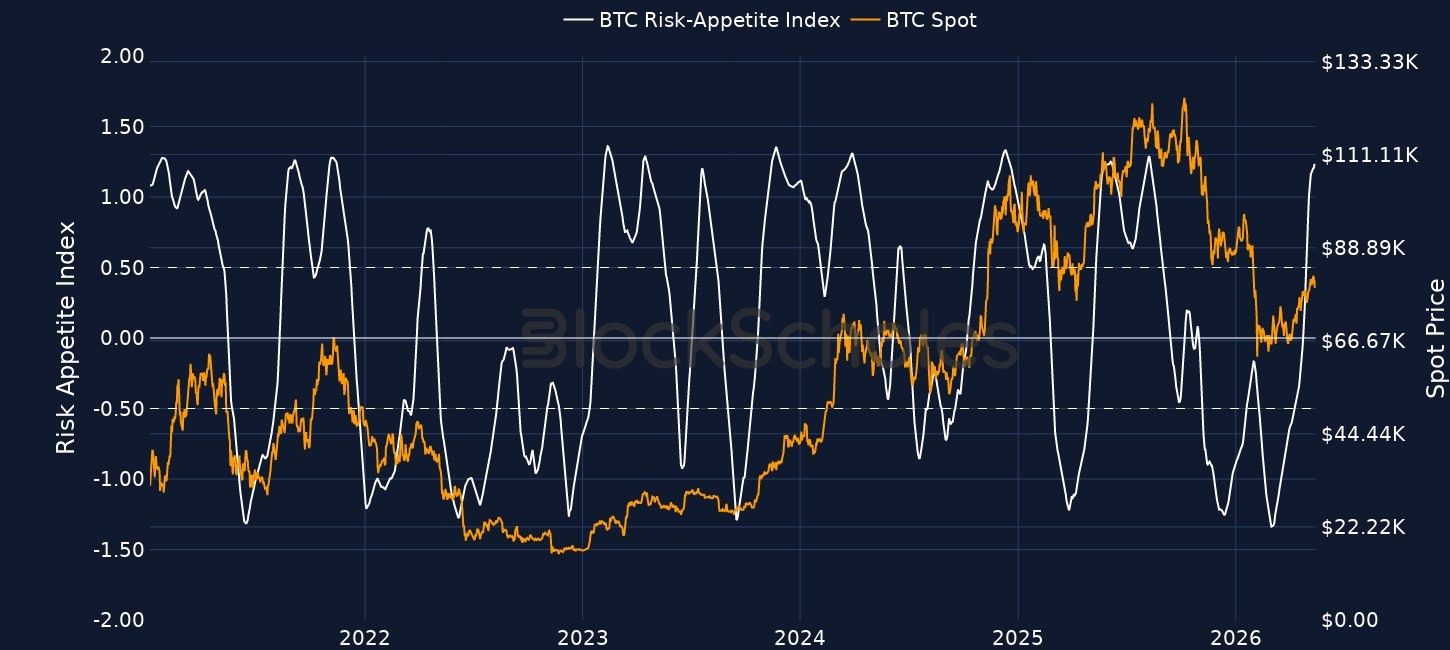
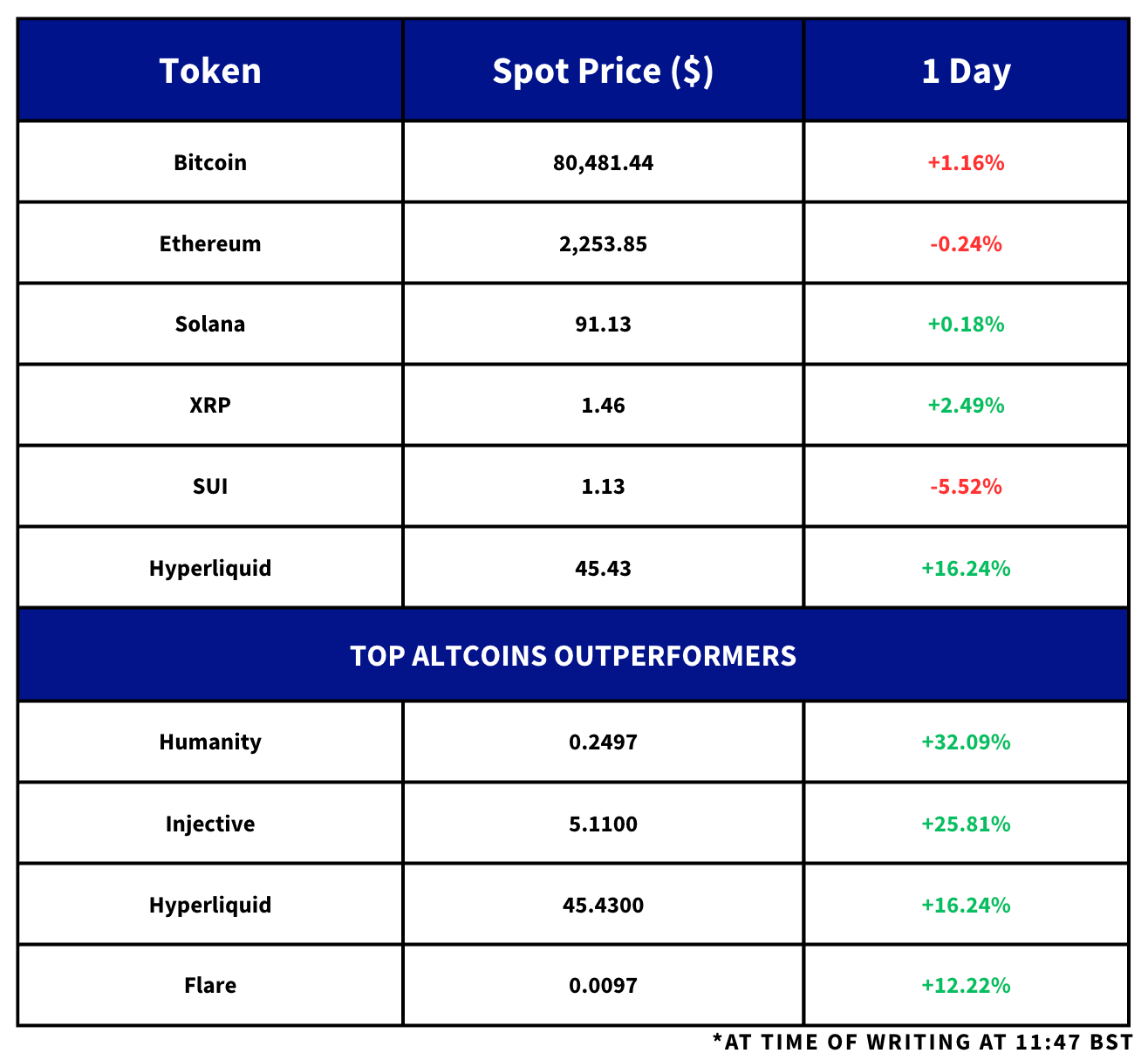
- A brief boost to momentum following the Senate Banking Committee’s approval of the CLARITY Act and a rally in US equities saw BTC trade above $82,000.
- However, as we saw the last time it reached that level (earlier this week on Monday), strong resistance meant BTC struggled to hold $82,000 for long and it now trades at $80,000.
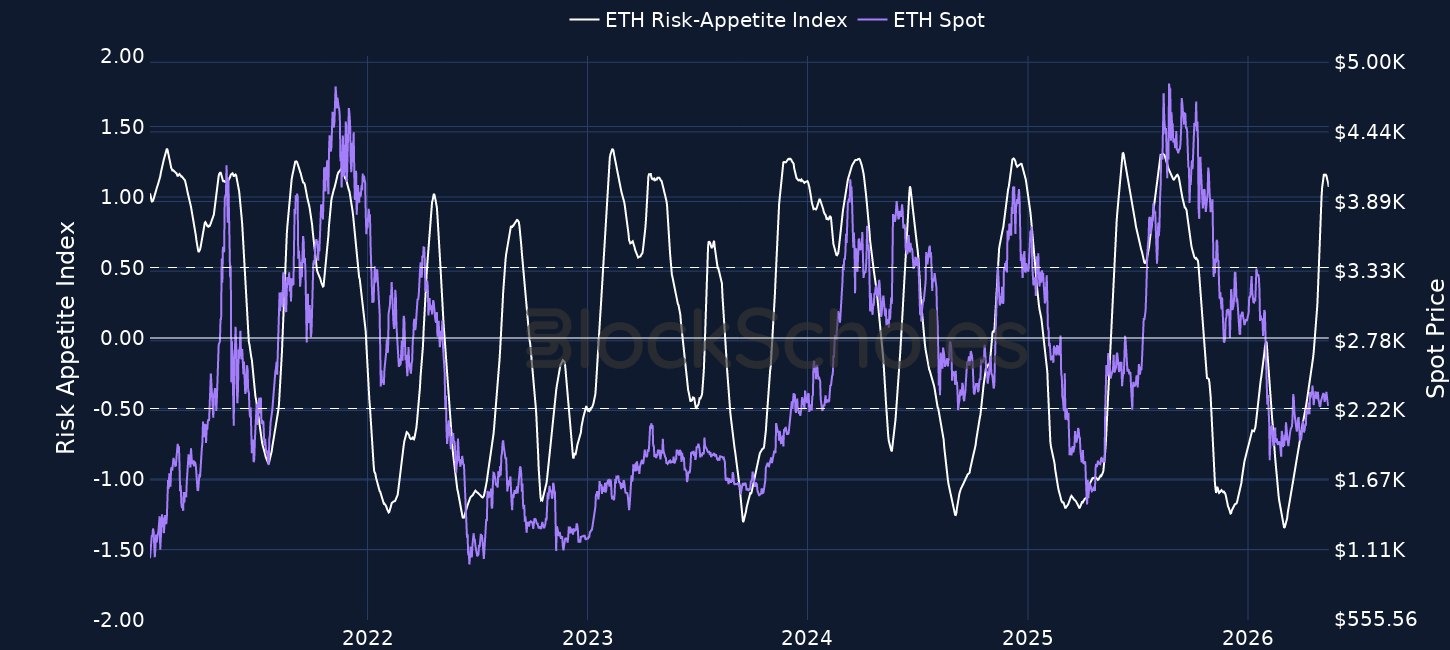
- ETH held a smaller rally as it continues to struggle to break past $2,400 and is currently changing hands around the $2,250 level.
- On Wall Street, continued momentum in the artificial-intelligence narrative saw the S&P 500 close above 7,500 for the first time in history.
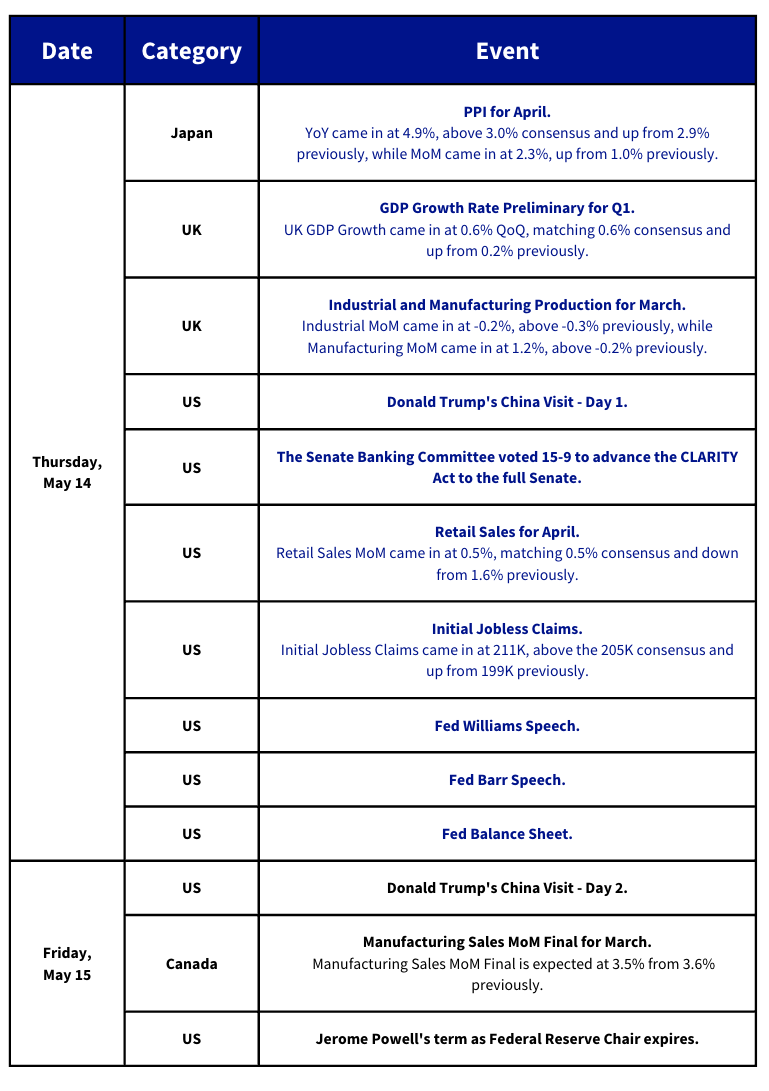
- Markets were also supported by a US retail sales report which showed signs of consumer resilience despite the US-Iran war.
- The Nasdaq-100 finished 0.73% higher while the Dow Jones and Russell-2000 were up 0.75% and 0.67% respectively.
- Gains were once again concentrated in megacap tech stocks and chipmakers as Nvidia Corp ended the day up 4.39%.
- While increasing at a slower pace in April than the month before, retail sales still rose for the third month in a row suggesting consumers continue to spend despite higher gasoline prices in the US.
- Month-over-month retail sales were up 0.5%, compared to March’s 1.6% gain, according to data from the Commerce Department. Nine out of 13 categories in the report also posted increases in spending.
- In an interview with Fox News that aired yesterday, President Trump said the US aim of recovering Iran’s highly enriched uranium is mostly “for public relations than it is for anything else”.
- According to Trump, the US already has “nine cameras … 24 hours a day” on the three nuclear sites where the uranium is thought to be buried under, and that “We know exactly what’s happening. Nobody’s even gotten close to it.”
- Still, in the interest of “public relations”, Trump would like to extract the uranium from Iran.
- The US president also said that President Xi of China has offered to help bring an end to the Middle East conflict — “He did offer, he said, ‘If I can be of any help at all, I would like to be of help’”.
- Speaking aboard Air Force One, US Secretary of State Marco Rubio also said that the US has urged China to persuade Iran to reopen the Strait of Hormuz.
- Rubio said “We made the argument to the Chinese, it’s in their interest to resolve this … We’re hoping to convince them to play a more active role in getting Iran to walk away from what they are doing and trying to do now in the Persian Gulf.”
- Bond yields across the globe have marched higher as inflationary pressures from the US-Iran war continue to wear on the bond market.
- The yield on the 10-year US treasury bond rose 8bps in yesterday’s session, and at 4.54%, is at its highest since May 2025.
- The 20-year bond yield in Japan rose more than 10bps to 3.64%, its peak since 1996.
- Similar moves are apparent in UK bond markets also — today alone, 10-year gilt yields have jumped from 5.0% to 5.14%. That move comes amidst mounting pressure on Prime Minister Keir Starmer to resign after the Labour party faced significant losses in local elections this month.
- Japanese Finance Minister Satsuki Katayama said earlier today that Group of Seven finance chiefs will likely discuss the recent volatility in global bond markets.
- At a press conference she said, "We've seen bond yields rise across all three major markets", referring to the bond selloffs in Japan, the US and the UK.
- She added that the "moves appear to be reinforcing each other across the major markets. How to assess this situation is likely to be a topic of discussion at the G7 finance meetings".
- The Senate Banking Committee voted 15-9 to advance the CLARITY Act to conclude yesterday’s markup session. Democratic Sens. Ruben Gallego and Angela Alsobrooks joined Republicans to advance the bill.
- The markup preserved the compromise stablecoin provision banning rewards “economically or functionally equivalent” to interest-bearing bank deposits, while still permitting “activity-based or transaction-based rewards and incentives” tied to “bona fide” platform activity including payments, transfers, staking, governance, and market-making.
- A late-stage concession during the Senate Banking Committee markup removed proposed Blockchain Regulatory Certainty Act-linked protections that would have clarified noncustodial developers and software providers are not “money transmitters” under Bank Secrecy Act rules. This leaves DeFi builders potentially exposed to AML and KYC compliance obligations. The change was not voted on as a standalone amendment and instead appeared in revised substitute bill text negotiated before the committee’s final 15-9 vote to advance the CLARITY Act.
DeFi & TradFi
- Donald Trump’s latest Office of Government Ethics disclosure shows multiple Q1 2026 trades across crypto and crypto-adjacent firms, including Coinbase (COIN), Strategy (MSTR), Robinhood (HOOD), Block Inc. (XYZ), and SoFi Technologies (SOFI).
- The filing includes Coinbase purchases ranging from $100,001 to $250,000, multiple Strategy share purchases and sales including transactions between $50,001–$100,000 and $15,001–$50,000, as well as smaller disclosed trades in Robinhood, Block, and SoFi.
- The disclosure also reflects broader positioning across digital infrastructure and AI-linked equities, with additional purchases in companies including Amazon, Microsoft, Oracle, CME Group, Fortinet, Applied Materials, Lam Research, and Super Micro Computer, many in disclosed ranges between $250,001 and $1M.
- Bitwise Asset Management has launched the Bitwise Hyperliquid ETF (NYSE: BHYP), set to begin trading today, one of the first U.S. spot Hyperliquid exchange-traded products and the first to include native in-house staking, allowing the fund to generate additional HYPE rewards through Bitwise Onchain Solutions.
- The fund is designed to give institutional and retail investors regulated market exposure to Hyperliquid’s HYPE token without directly custodying crypto, while also capturing staking yield inside the ETF structure rather than relying on third-party staking providers.
- BHYP will begin trading on May 15 with a 0.34% sponsor fee, waived on the first $500M in assets for the first month, as Bitwise continues expanding its lineup of crypto-native investment products tied to onchain infrastructure and digital asset ecosystems.
- Bit Digital (NASDAQ: BTBT), a crypto infrastructure company focused on Ethereum treasury strategies and AI infrastructure through its majority ownership in WhiteFiber (NASDAQ: WYFI), reported Q1 2026 revenue of $27.9M and held 155,444 ETH worth approximately $327M at quarter-end while continuing to shift capital allocation away from bitcoin mining.
- The company generated $2.3M in ETH staking revenue and disclosed that around 70,000 ETH had been repositioned into liquid-staked ETH products to improve treasury flexibility, while roughly 60,677 ETH remained natively staked as of April 30.
- Bit Digital reported a net loss of $146.7M largely driven by non-cash mark-to-market crypto losses, while cloud services revenue reached $16.8M, colocation revenue rose 23.9% quarter-on-quarter to $4.8M, and management reiterated its thesis that Ethereum settlement infrastructure and AI compute infrastructure are converging into a single long-term digital financial stack.
- Gemini (NASDAQ: GEMI) reported Q1 2026 revenue of $50.3M, up 42% year-over-year, while narrowing its net loss to $109M and securing a $100M strategic investment from Winklevoss Capital funded in bitcoin as the exchange pushes beyond spot crypto trading into prediction markets, derivatives, and AI-driven trading infrastructure.
- The company said services and interest income rose 122% to $24.5M and now account for nearly half of total revenue, while OTC revenue climbed to $6.3M from just $0.1M a year earlier, prediction markets generated $0.4M in their first full quarter, and Gemini’s credit card business nearly tripled revenue to $14.7M as managed receivables expanded from $69M to $217M.
- Gemini also highlighted major regulatory and product milestones including receiving a CFTC Derivatives Clearing Organization (DCO) license, surpassing 100M prediction market contracts traded since launch, and rolling out “Agentic Trading,” which allows AI agents including ChatGPT and Claude to autonomously connect to Gemini’s trading APIs to execute and manage crypto trading strategies.
This Week's Calendar


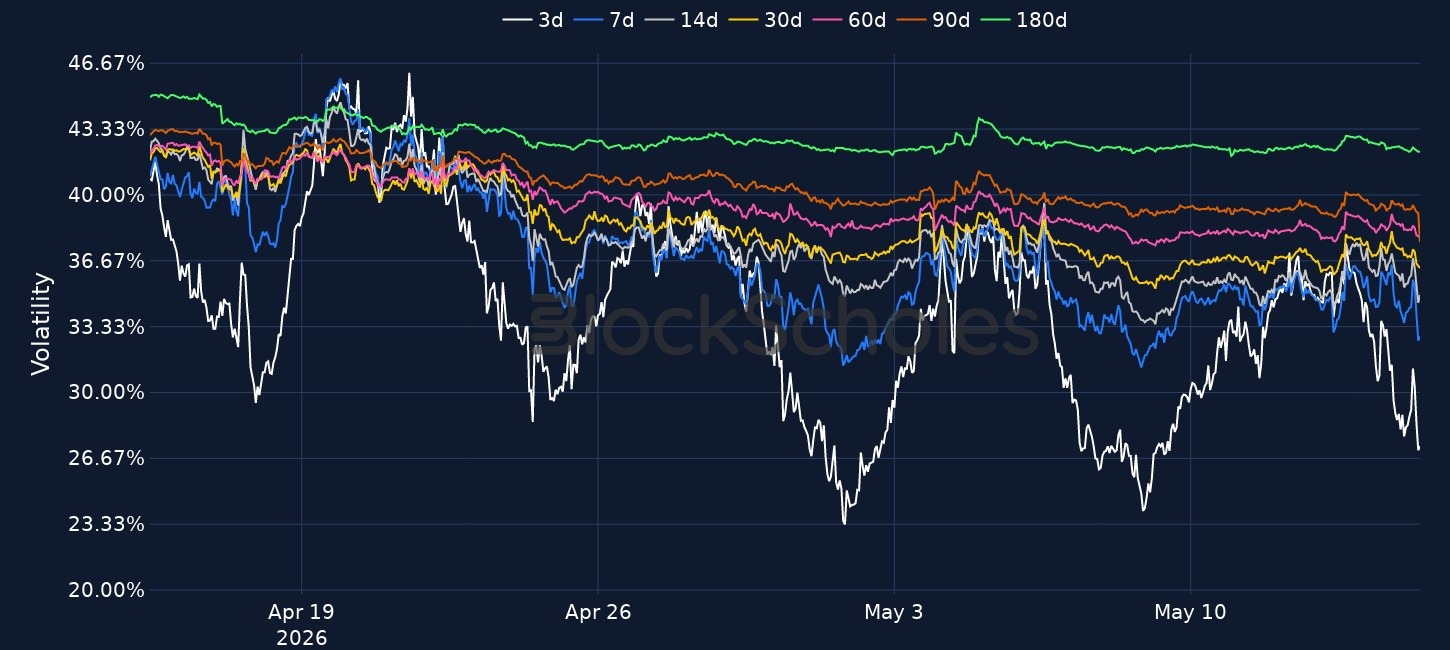
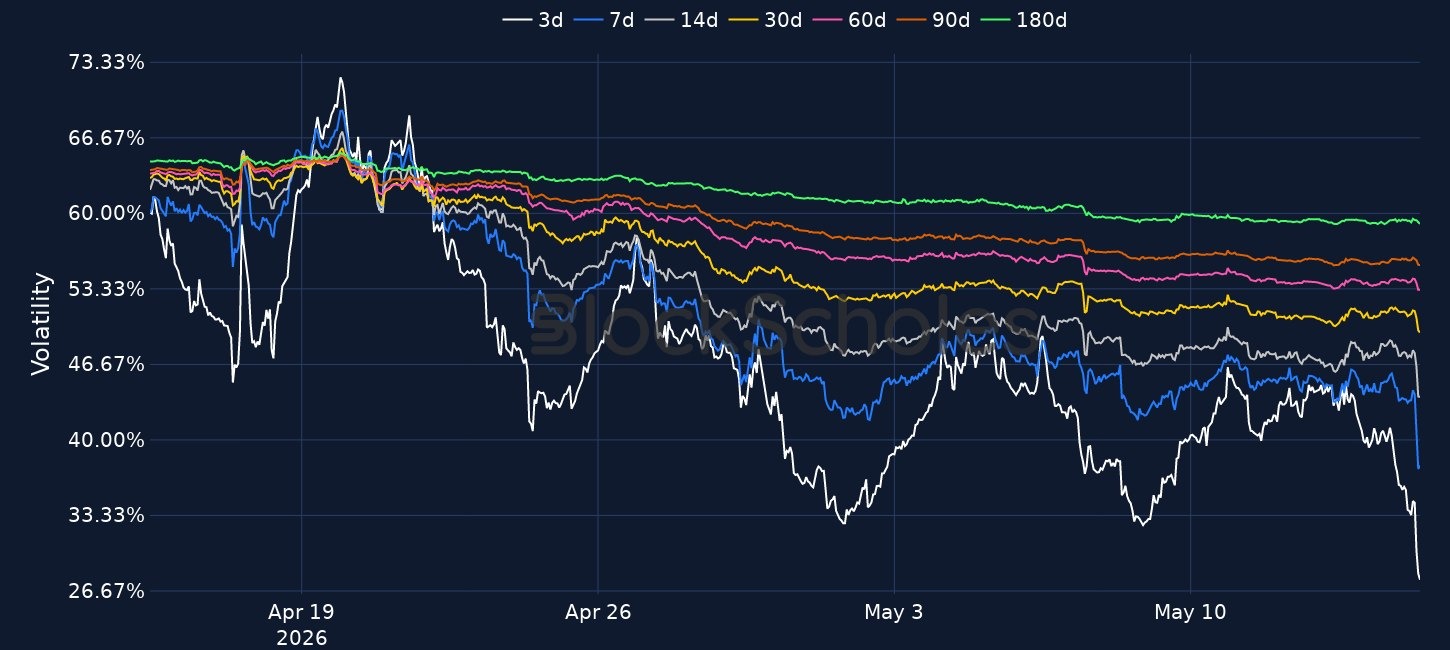
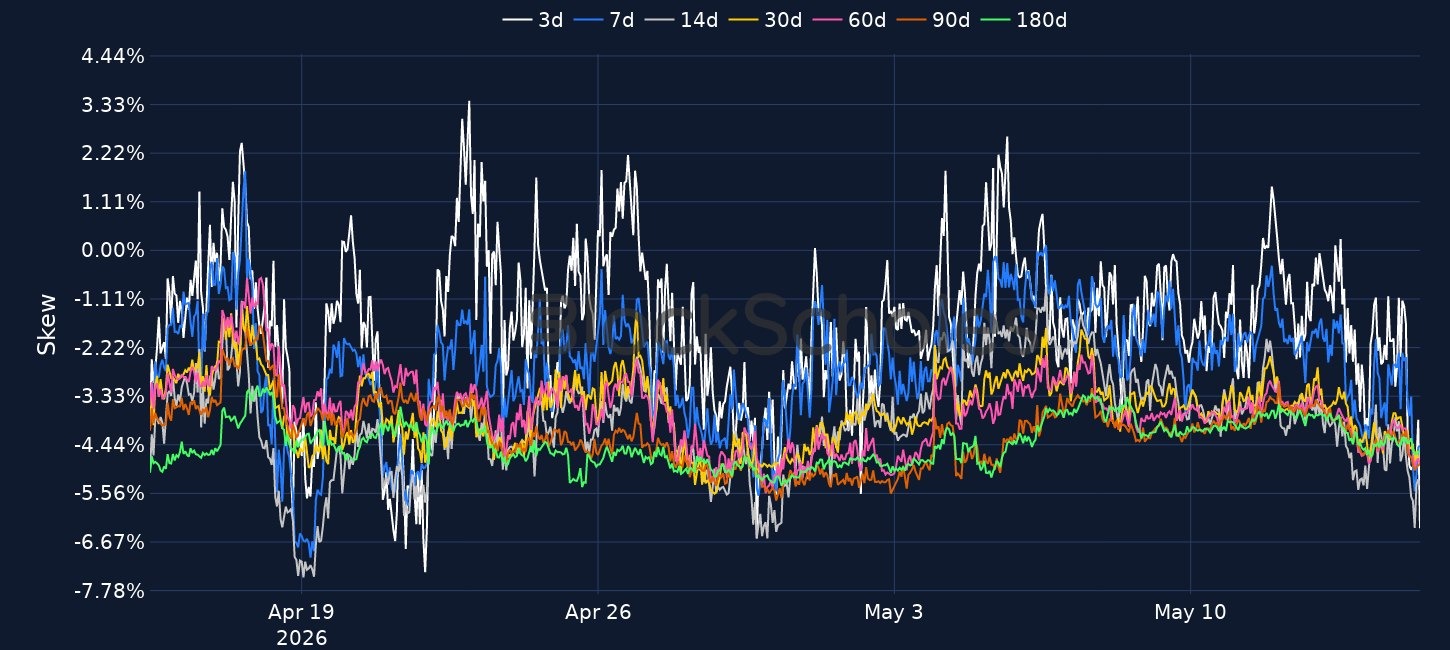
Charts of the Day