Back to Research
Last Updated:  
June 8, 2026
8 mins

BTC Erases Post-Trump Gains

The S&P 500’s run toward its longest weekly winning streak since 1985 ended Friday after a stronger-than-expected jobs report sent Treasury yields higher and triggered a risk-off selloff. BTC fell more than 7% on Friday, briefly dropping below $60K, while ZEC rebounded around 40% after developers patched a critical Orchard vulnerability.

Block Scholes is an FCA-regulated institutional crypto derivatives analytics platform. Live data, IV surfaces, and backtesting available via blockscholes.com.

Recent Research from Block Scholes

In Today's Note

  • The S&P 500’s run toward its longest weekly winning streak since 1985 ended Friday after a stronger-than-expected jobs report sent Treasury yields higher and triggered a risk-off selloff.
  • BTC fell more than 7% on Friday, briefly dropping below $60K, while ZEC rebounded around 40% after developers patched a critical Orchard vulnerability.

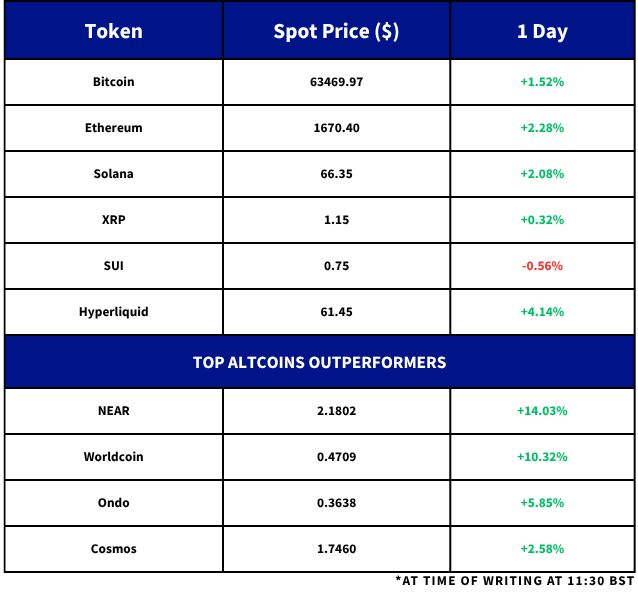
Market Snapshot: Overnight Moves

Macro & Markets

  • Until Friday last week, the S&P 500 was on track to complete its longest weekly streak of gains since 1985. That historic run came to an end in Friday’s session, driven by a major selloff in US tech stocks and a significant move higher in US treasury yields following a much stronger-than-expected jobs report. 
  • The S&P 500 closed the session 2.64% in the red, while the tech-heavy Nasdaq-100 plunged 4.77%, its largest drop since April 2025 around Liberation Day. 

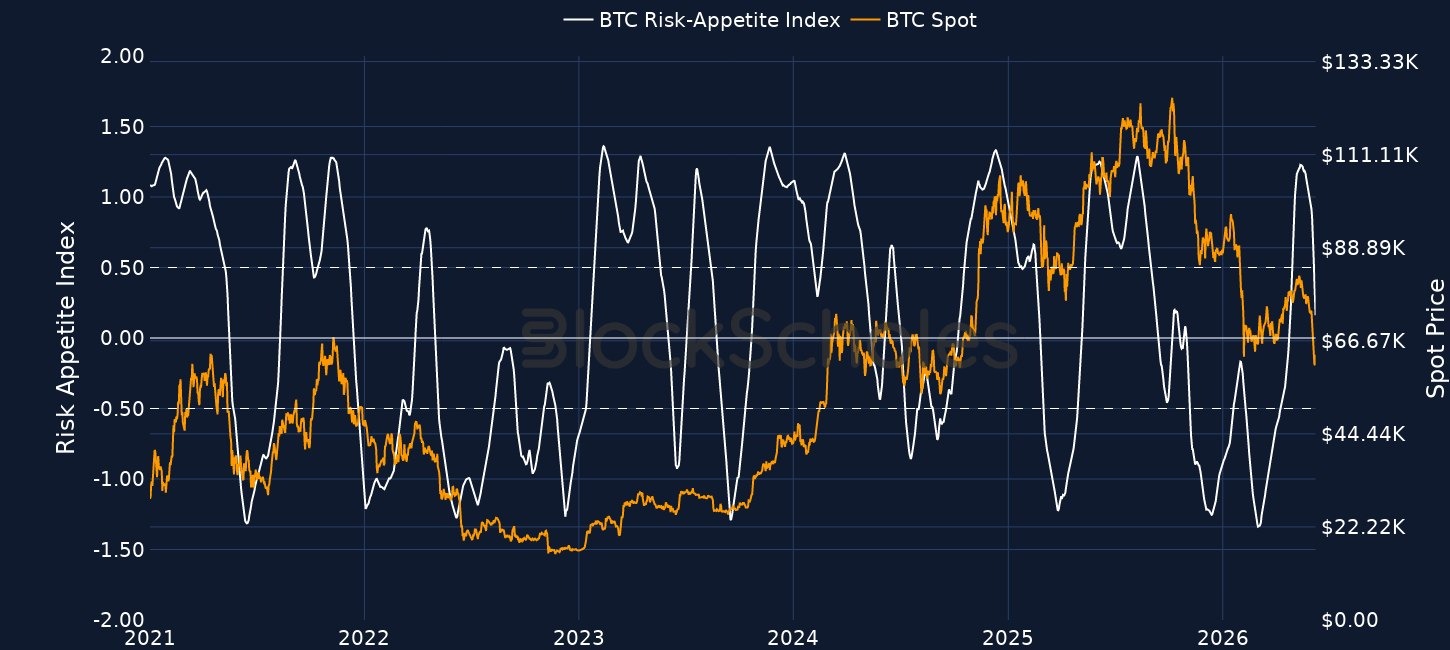
  • The selloff was not contained to just Wall Street however. BTC fell more than 7% on Friday, dropping below a key support level of $60K for the first time since October 2024. That meant it erased all of its gains since President Trump’s re-election into the White House. 
  • Over the weekend it then steadied around $60K and even jumped back to $64K late Sunday after Strategy Executive Chairman Michael Saylor signaled a potential new bitcoin purchase by posting the company’s bitcoin acquisition tracker on X with the caption “A good time to add more dots,” a message that has historically preceded disclosures of additional BTC buys.
  • Strategy’s disclosure of a small 32 BTC sale last week, its first since 2022, contributed to a near-20% decline over the past week that has dragged most of the crypto market down with it. 
  • As of May 31, Strategy held 843,706 BTC acquired at an average price of $75,699, leaving the company with an unrealized loss of roughly $11.7B based on current bitcoin prices.

  • US treasuries also sold off on Friday, with two-year yields jumping more than 13bps to an intraday high of 4.17% following the BLS’ nonfarm payrolls report. 
  • Overnight interest swap contracts now show traders fully pricing in a quarter-point rate hike by the Fed before the end of the year, and a 60% chance of a hike as soon as October.

  • The report showed job growth in May exceeding all forecasts, as nonfarm payrolls rose 172,000 against expectations of 80,000. The solid figures were taken as a sign from traders that the Fed would be able to focus more squarely on the inflation side of its mandate which has been above target for five years. 
  • The unemployment rate held steady at 4.3%, while payrolls for March and April were also upwardly revised. 
  • A large driver for the advance in hiring was however driven by what could be temporary increases in the leisure and hospitality sector, which added 70,000 jobs — the most in more than three years and well above its 14,000 per month average over the past year. 
  • Economists attributed much of that strength in this sector to increased hiring in preparation of the FIFA World Cup.
  • Healthcare and social assistance, two sectors which have been the primary driver of job growth over the last year also drove increases in the payrolls rise.

  • In geopolitics, the US and Iran appear to be making little progress toward an interim deal to end the conflict that began more than 100 days ago now. 
  • On Sunday, the Iranian army fired ballistic missiles towards Israel, prompting Israel to launch strikes on military targets in western and central Iran. 
  • During a phone call later on Sunday, President Trump reportedly told Israeli Prime Minister Benjamin Netanyahu not to retaliate against Iran's missile attacks and to allow more time for diplomacy. 

  • Negotiations between Washington and Tehran have recently faltered over disagreement around billions of dollars of frozen Iranian assets as well as a parallel conflict between Israel and the Iranian-backed Hezbollah in Lebanon.
  • Israel has insisted that any agreement between the US and Iran won't cover its conflict with Hezbollah, while Iran has maintained that any ceasefire with the US must involve an end to the conflict in Lebanon. 
  • President Trump's administration has also floated a plan to steer Iranian assets that have been frozen in the US towards helping Gulf countries rebuild from damage during the conflict. 
  • Trump said in an interview broadcasted yesterday that he would not unfreeze any Iranian assets or lift any sanctions against Iran as part of an initial deal — “If they behave, if they do a good job, we start talking", he said in the NC Meet the Press interview. 

DeFi / Web3 / Altcoins / Crypto3

  • Zcash (ZEC) rebounded roughly 40% from its June 5 low, recovering to around $429 after last week's sharp selloff triggered by the disclosure of a critical vulnerability in the network's Orchard privacy pool.
  • In an X post, Zcash Open Development Lab (ZODL) founder Josh Swihart outlined the project's two-step emergency response, which first used a soft fork to disable Orchard transactions and reduce exploitation risk before a hard fork was activated on June 3 to fix the underlying issue and restore functionality.
  • Swihart also said mining pools including ViaBTC and Foundry helped coordinate the response, while ZODL and other ecosystem groups are now proposing a new shielded pool called Ironwood, which would build on Orchard with formal verification and additional security audits.

  • Cypherpunk Technologies, the largest known public Zcash treasury company, saw its shares fall more than 40% after Zcash disclosed and patched a critical vulnerability that could have enabled the undetectable creation of counterfeit ZEC within the network's Orchard privacy pool.
  • Despite the market reaction, Chief Investment Officer Will McEvoy said the company remains committed to its goal of accumulating 5% of Zcash’s fixed 21M token supply, arguing that the incident demonstrated a strong security culture rather than a failure of the protocol.
  • Cypherpunk pushed back against concerns over the bug, stating there is “literally zero evidence of a hack” and describing the incident as a vulnerability that was identified and patched through AI-assisted security research.

  • HTX announced it will delist USD1, the stablecoin issued by the World Liberty Financial (WLFI) project, on June 7, citing risk-management considerations and the need to protect users and maintain a fair trading environment.
  • The exchange said eligible USD1 balances will be automatically converted into USDT at a 1:1 ratio, with the resulting USDT credited to users’ spot accounts following completion of the conversion process.

This Week's Calendar

Charts of the Day

Figure 1. Block Scholes BTC Risk-Appetite Index (white, left-hand axis) and BTC spot price (orange, right-hand axis).
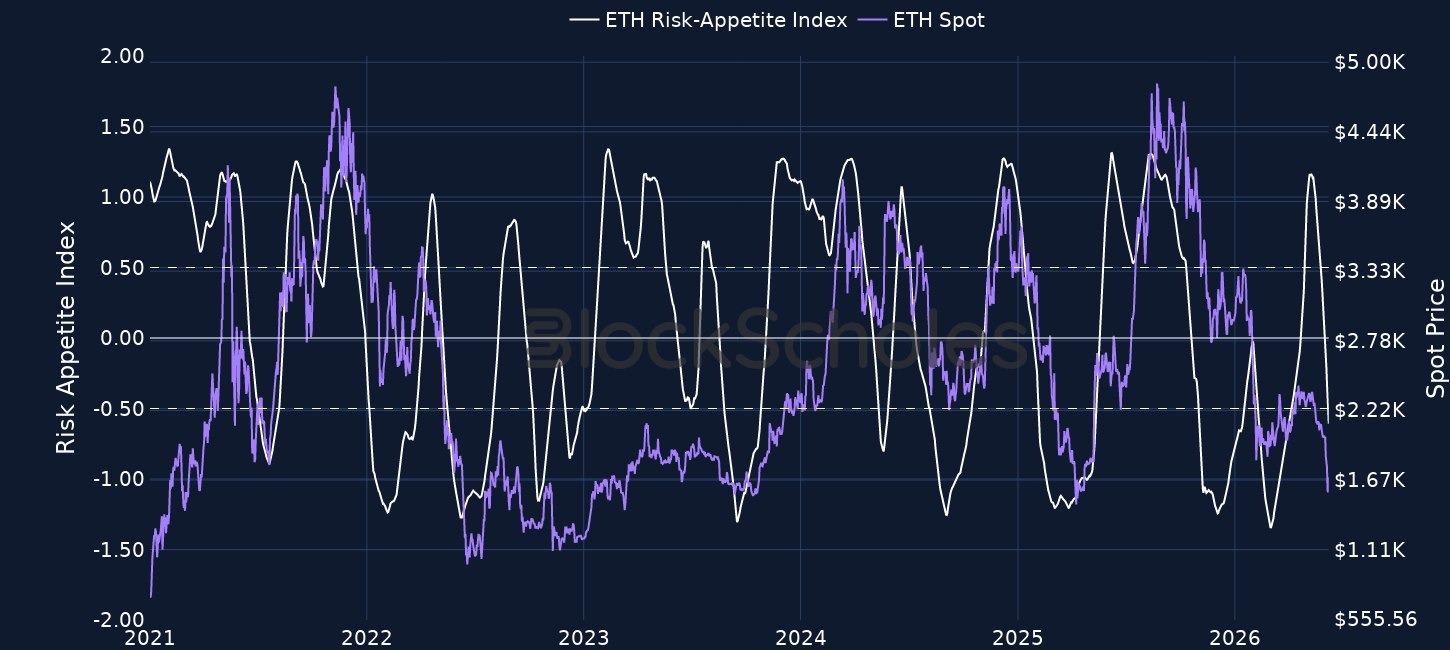
Figure 2. Block Scholes ETH Risk-Appetite Index (white, left-hand axis) and ETH spot price (purple, right-hand axis).
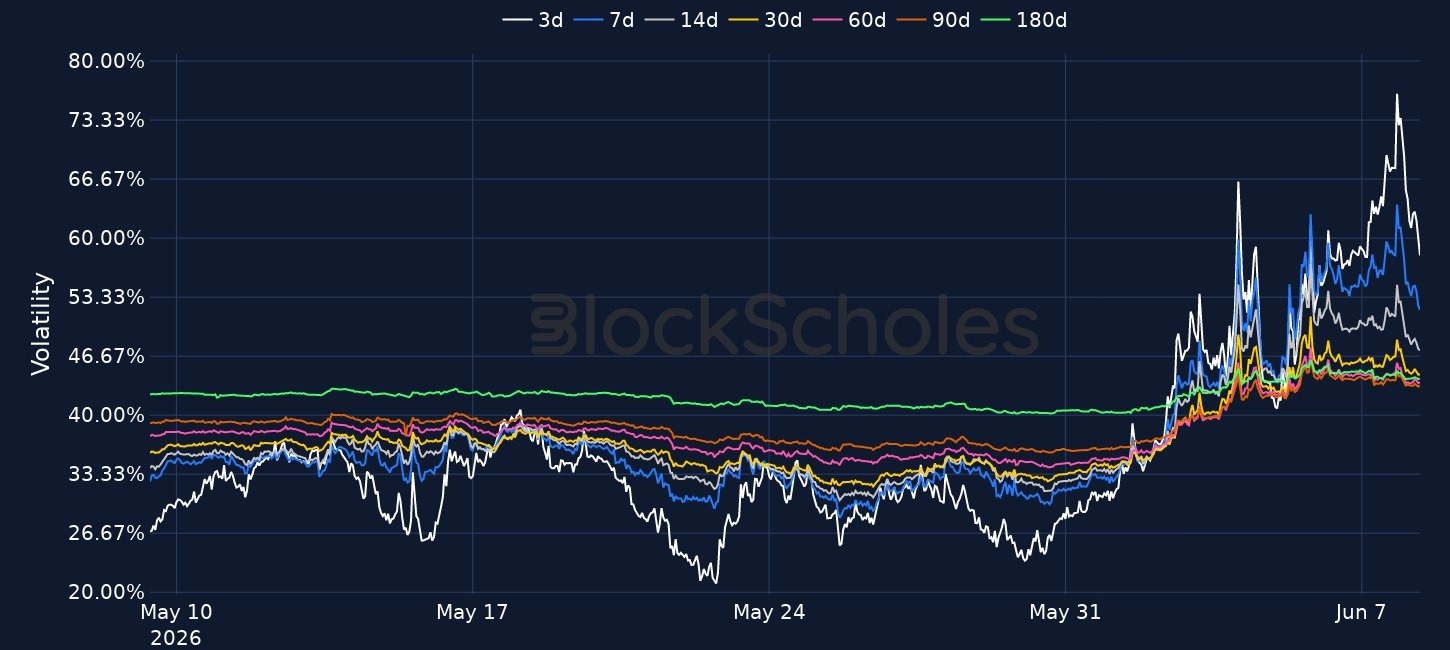
Figure 3. BTC at-the-money implied volatility across selected tenors. Source: Deribit, Block Scholes.
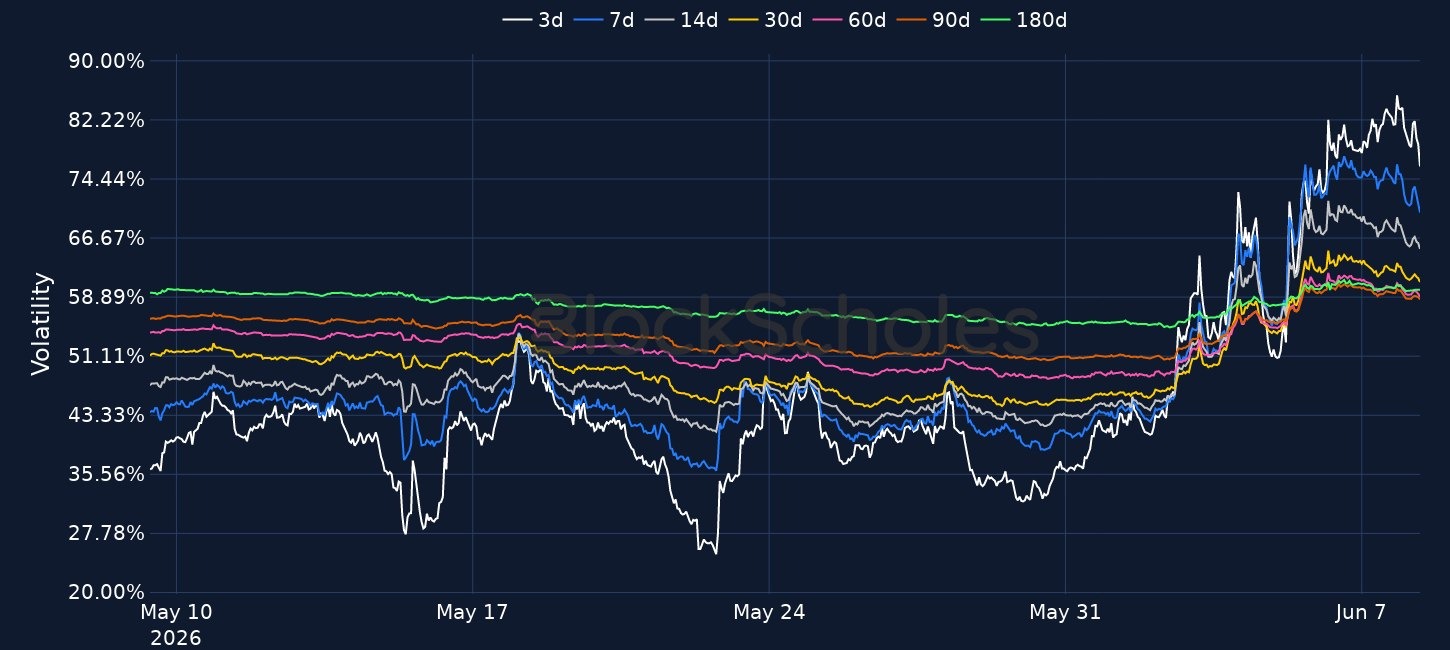
Figure 4. ETH at-the-money implied volatility across selected tenors. Source: Deribit, Block Scholes.
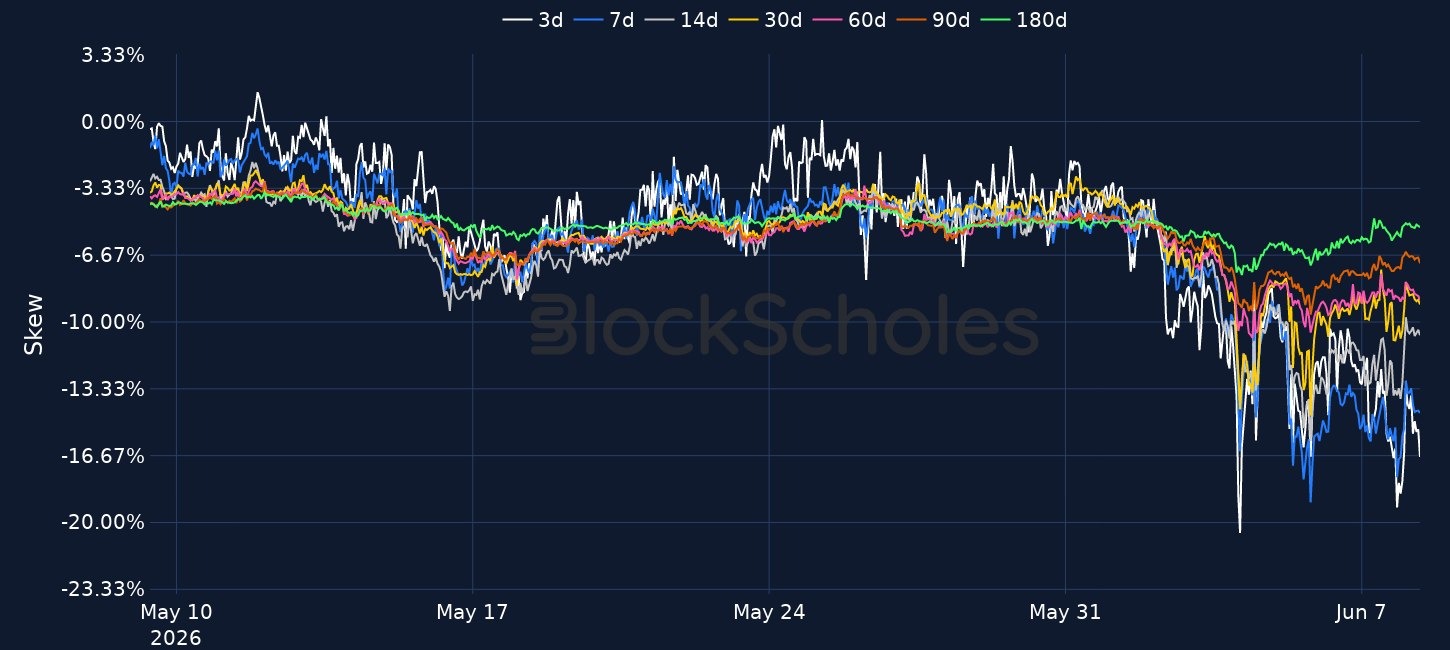
Figure 5. BTC 25-delta put-call skew ratio across selected tenors. Source: Deribit, Block Scholes.
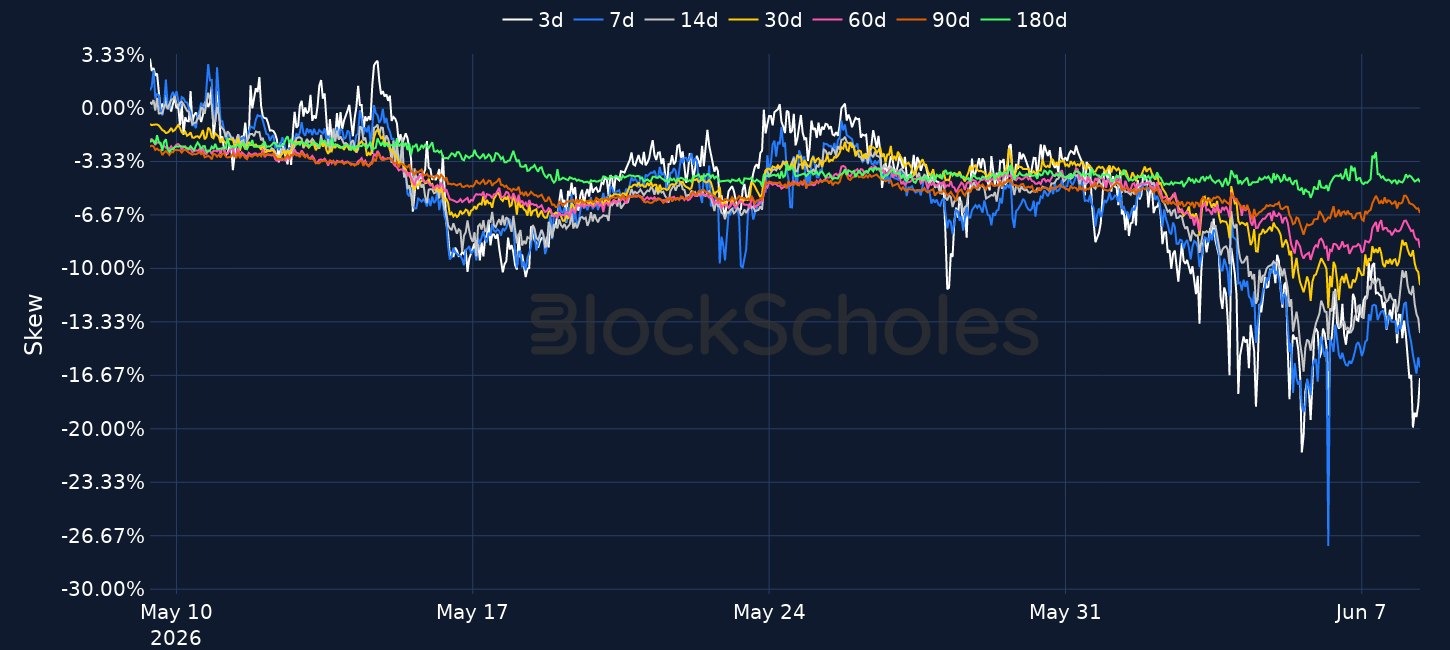
Figure 6. ETH 25-delta put-call skew ratio across selected tenors. Source: Deribit, Block Scholes.

Share this post
Copy URL
www.blockscholes.com/premium-research/btc-erases-post-trump-gains

Block Scholes is an FCA-regulated institutional crypto derivatives analytics platform. Live data, IV surfaces, and backtesting available via blockscholes.com.

Recent Research from Block Scholes

In Today's Note

  • The S&P 500’s run toward its longest weekly winning streak since 1985 ended Friday after a stronger-than-expected jobs report sent Treasury yields higher and triggered a risk-off selloff.
  • BTC fell more than 7% on Friday, briefly dropping below $60K, while ZEC rebounded around 40% after developers patched a critical Orchard vulnerability.

Market Snapshot: Overnight Moves

Macro & Markets

  • Until Friday last week, the S&P 500 was on track to complete its longest weekly streak of gains since 1985. That historic run came to an end in Friday’s session, driven by a major selloff in US tech stocks and a significant move higher in US treasury yields following a much stronger-than-expected jobs report. 
  • The S&P 500 closed the session 2.64% in the red, while the tech-heavy Nasdaq-100 plunged 4.77%, its largest drop since April 2025 around Liberation Day. 

  • The selloff was not contained to just Wall Street however. BTC fell more than 7% on Friday, dropping below a key support level of $60K for the first time since October 2024. That meant it erased all of its gains since President Trump’s re-election into the White House. 
  • Over the weekend it then steadied around $60K and even jumped back to $64K late Sunday after Strategy Executive Chairman Michael Saylor signaled a potential new bitcoin purchase by posting the company’s bitcoin acquisition tracker on X with the caption “A good time to add more dots,” a message that has historically preceded disclosures of additional BTC buys.

Block Scholes is an FCA-regulated institutional crypto derivatives analytics platform. Live data, IV surfaces, and backtesting available via blockscholes.com.

Recent Research from Block Scholes

In Today's Note

  • The S&P 500’s run toward its longest weekly winning streak since 1985 ended Friday after a stronger-than-expected jobs report sent Treasury yields higher and triggered a risk-off selloff.
  • BTC fell more than 7% on Friday, briefly dropping below $60K, while ZEC rebounded around 40% after developers patched a critical Orchard vulnerability.

Market Snapshot: Overnight Moves

Macro & Markets

  • Until Friday last week, the S&P 500 was on track to complete its longest weekly streak of gains since 1985. That historic run came to an end in Friday’s session, driven by a major selloff in US tech stocks and a significant move higher in US treasury yields following a much stronger-than-expected jobs report. 
  • The S&P 500 closed the session 2.64% in the red, while the tech-heavy Nasdaq-100 plunged 4.77%, its largest drop since April 2025 around Liberation Day. 

  • The selloff was not contained to just Wall Street however. BTC fell more than 7% on Friday, dropping below a key support level of $60K for the first time since October 2024. That meant it erased all of its gains since President Trump’s re-election into the White House. 
  • Over the weekend it then steadied around $60K and even jumped back to $64K late Sunday after Strategy Executive Chairman Michael Saylor signaled a potential new bitcoin purchase by posting the company’s bitcoin acquisition tracker on X with the caption “A good time to add more dots,” a message that has historically preceded disclosures of additional BTC buys.